


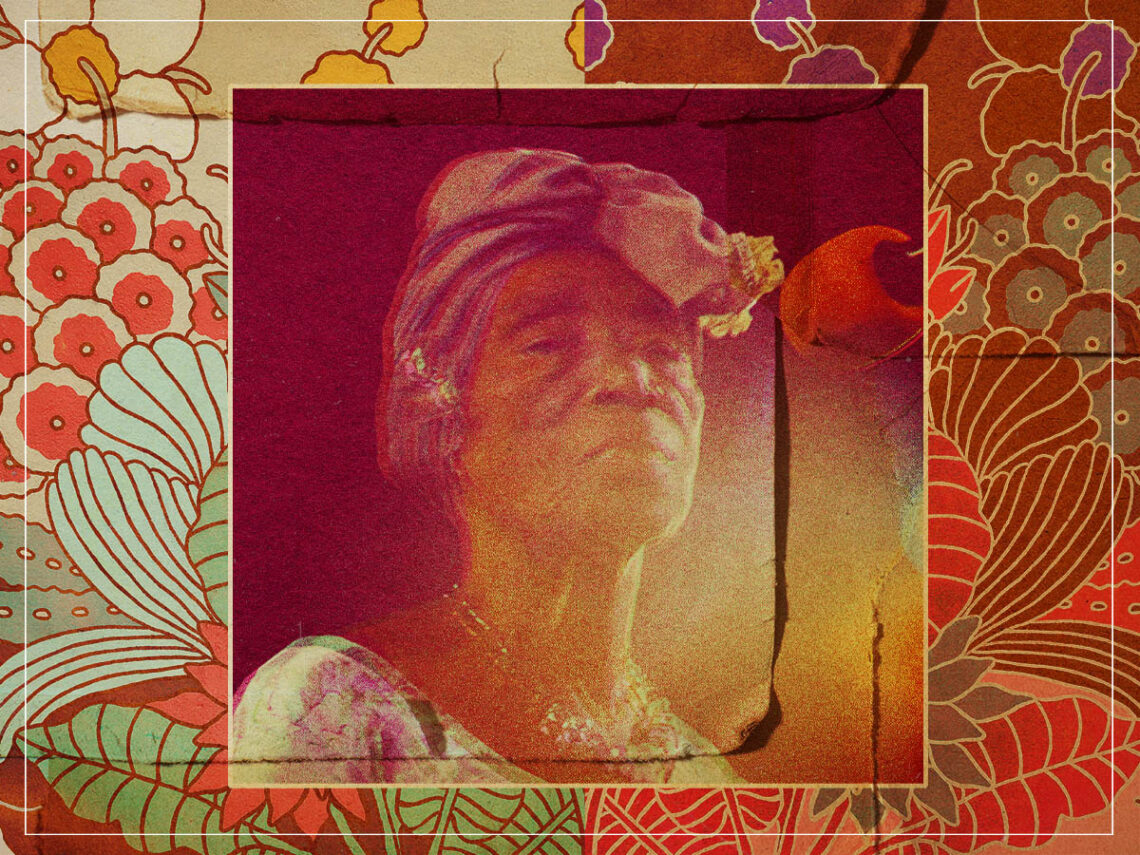
Bi Kidude: The woman who transformed the music of Zanzibar

Everybody wants to believe that their lives will change or impact the world in some way, but these changes are often intangible or ambiguous. Within the vibrant cultural sphere of Zanzibar, in East Africa, one figure who undoubtedly made their mark was Bi Kidude. With a name meaning ‘Little Granny’ in Kiswahili, the prolific artist and singer revolutionised the musical output of her nation and continues to inspire artists across the world to this day, over 120 years since her birth.
Kidude was born Fatuma Binti Baraka in 1910. The daughter of a coconut seller, she found a penchant for rebellion and artistic expression at an impressively young age. When she was only ten years old, the story goes that Kidude ran away from her school to pursue her own musical studies, crossing over to Tanzania in the process. Initially, Kidude was inspired to embark upon this coming-of-age journey by Siti binti Saad – an icon of taarab music and a staunch anti-colonial activist in Tanzania. Throughout her own musical career, Kidude never really lost these early influences of rebellion, following in the footsteps of Saad and becoming one of the first women to sing publicly in the pious region of Zanzibar.
Following her self-education around Tanzania and the wider area of East Africa, the gifted vocalist returned to the region of Zanzibar. Soon, she became involved in Unyago ceremonies, during which teenage girls entering puberty are given a lesson in sex education and are guided into their coming-of-age years. Unable to conceive children herself, Kidude immersed herself in helping the next generation of Zanzibarians, becoming something of a local hero in the process. Throughout all this time she continued to write and perform music in the taarab tradition.
Taarab first rose to prominence in the 1920s, influenced by age-old traditions of African Great Lakes in addition to Middle Eastern music. By the time Kidude got involved in the local taarab scene in Zanzibar, there was a growing movement of all-female taarab singers, who would often use the infectious musical style to denounce regressive patriarchal attitudes in society and discuss complex issues of misogyny and sexual violence – think riot girrrl, but with more East African instruments.
For many years, the groundbreaking sounds of Bi Kidude were restricted to the local clubs and venues of Zanzibar, receiving almost no notoriety outside of East Africa. However, it would not remain that way forever. In her 70s, after decades of performing at a low-level in Zanzibar, and helping the local youth like her namesake would imply, she would begin to inspire the next generation of East African musicians. This allowed Kidude to keep her legacy alive, in addition to exposing her music to much wider audiences.
One such artist who found inspiration in the vibrant music of Kidude is the Zanzibar-born, Sheffield-based singer Mim Suleiman, who recalled to PAM, “I’ll never forget it. We were living in Stone Town in Zanzibar. There was only one television channel and we were watching it and there were some elders talking to a singer. She was in her seventies then and was being interviewed and I was just watching her and I was… mesmerised.. by her”.
After this renaissance in the career of Kidude, she was able to bring her music to the world stage, beginning to release records and touring around the world during the 1990s. Those of you who have been paying attention will have noted that, by this point, Kidude was firmly in her old age, but that certainly did not stop her from sharing her haunting improvisational music with the world. The Zanzibari artist continued to perform well into old age, even surpassing the age of 100, and she still found the time and energy to continue her distinctive taarab performances.
Kidude eventually passed away in 2013, but her music remains incredibly influential on the cultural landscape of Zanzibar, and that will likely be the case for years to come.
