


‘Between 10th and 11th’: The most underrated Charlatans album

Some records are inextricably tied to the culture that spawned them and the moment in which they were recorded, but in a lot of cases, removing all of those external factors can actually breathe new life into an old album, allowing the listener to experience a set of tunes on their own terms.
I think The Charlatans’ 1992 sophomore album Between 10th and 11th is a good example of this phenomenon, and I can speak to this in large part because I heard it for the first time about seven years after it came out, and about 4,000 miles from where it was recorded.
This record was pretty well run over the coals when it arrived in shops in March 1992, deemed another dreaded case of ‘the sophomore slump’ following the promising success of the band’s 1990 debut Some Friendly, which had arrived in the midst of the post-Stone Roses ‘Madchester’ explosion. The Charlatans, appropriate to their name, were already deemed by some to be pretenders to the Roses’ throne and thus, not a band to be taken seriously; the expectation was another set of baggy, organ-driven dance-pop songs to be briefly enjoyed at the club and then forgotten.
The fact that the band actually delivered something quite different and significantly more interesting would presumably have been received with some level of admiration, but the consensus seemed to be that they had lost the plot. Falling off trend, or perhaps being caught up in an entire scene that had gone off trend, was a worse sin than being trendy in the first place.
Fortunately, by listening to Between 10th and 11th in what might as well have been an alternate dimension, Akron, Ohio, USA, circa 1999, I had none of these UK music tabloid political undertones to worry about. I had heard a few Charlatans songs over the years, but as an American teenager, I had no sense whatsoever of where they existed in the Britpop ecosystem or beyond, and purchased this CD only with the vague notion that it might bear some resemblance to some other British records I already liked from the same time period.
I wasn’t disappointed either, because while I did anticipate a bit of a Stone Roses vibe going in, I was rewarded more by the other, unexpected sonic touchstones the band had sneakily baked into its pie with this long since forgotten ‘failure’; namely, it’s kind of a shoegaze record, and a proto-Britpop record, and a weird electro psychedelic record, and sort of a spooky record with cobwebby corners and some mystical, bubbling pools. Basically, it’s a trip! And it’s all complemented by loads of nonsensical Tim Burgess lyrics that, while widely ridiculed in their own time, instantly worked for me in the same way those early indecipherable Michael Stipe lyrics had added to the mood of REM’s first few albums.
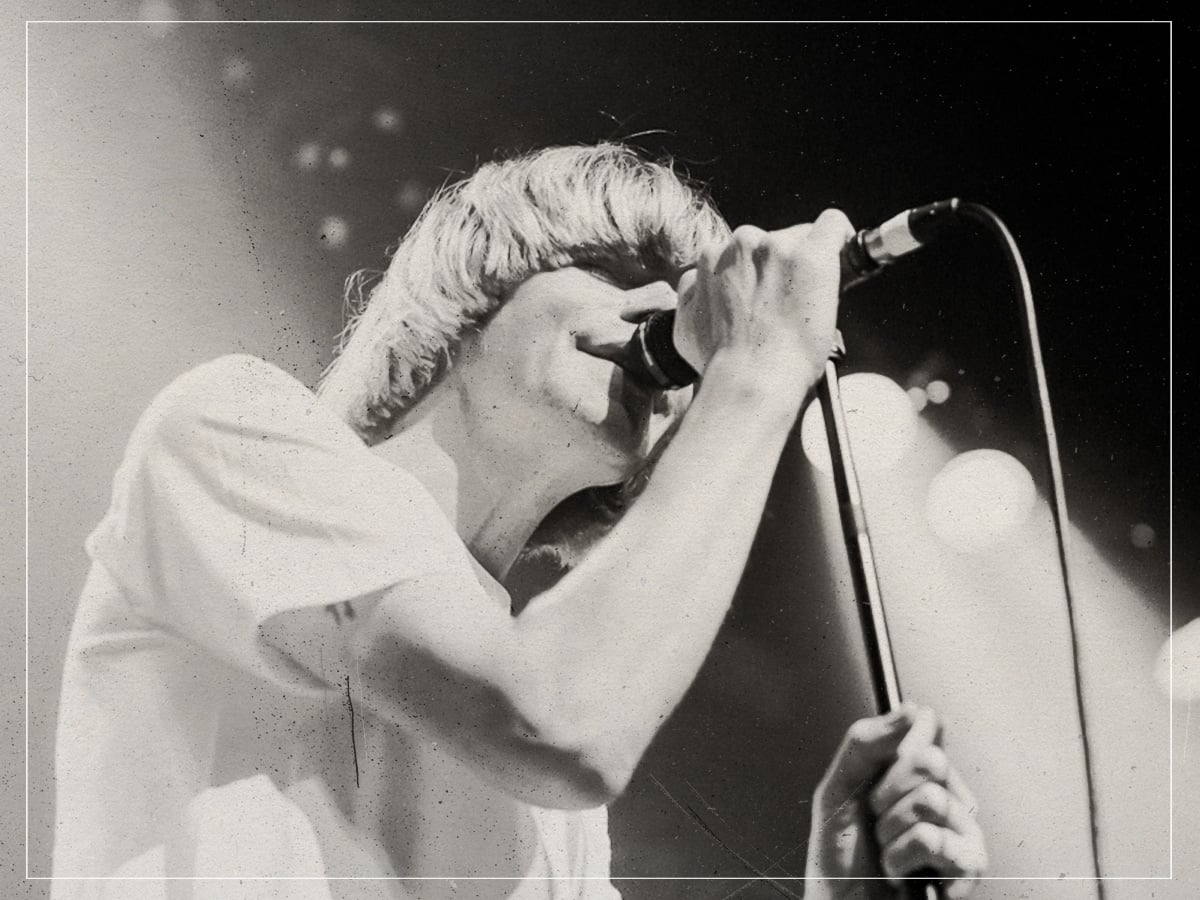
Mark Collins’ guitar and the late Rob Collins’ keyboard weave together some lovely, trippy textures, but the actual song composition and hooks are much stronger than they got credit for. ‘Tremelo Song’ and ‘Weirdo’ were the selected singles, and that makes sense from a 1992 assessment, but tracks like ‘Page One’, ‘The End of Everything’, and ‘I Don’t Want to See the Sights’ now look like stronger entries, more liberated from their narrow geographical scene constraints.
I hesitate to compare Between 10th and 11th to another album released two weeks earlier, Ride’s Going Blank Again, because the latter is definitely better. Still, whereas Ride were widely praised for the way they pushed forward their original shoegaze sound into something bigger and harder to pigeonhole on their second studio album, The Charlatans weren’t granted a lot of the same credit for their undeniably ‘difficult’ follow-up.
By the time Burgess was doing press for this record during The Charlatans’ US tour in 1992, he already sounded beaten down by the negativity around it, telling a Baltimore Sun reporter, “I don’t know what we did [with this album], but it felt right at the time. I suppose we’ve just got vivid imaginations”.
In the same interview, Burgess noted that the band’s label, Beggar’s Banquet, basically left them to their own devices, but he sounds more like a boy abandoned by his parents rather than the rebel who was trusted with the keys to the chopper.
“Sometimes you need a bit of help, but we didn’t have any,” he said, highlighting that one important exception was the album’s famed producer Flood, aka Mark Ellis. Fresh off working with the likes of Nine Inch Nails, Depeche Mode, Nick Cave, and The Jesus and Mary Chain, Flood was well equipped to inject some darker tones and eeriness into The Charlatans’ previously bouncy and more docile sound.
“I think what Flood did for us was made it a lot easier for us to actually be able to translate what we get in the rehearsal room onto record,” Burgess said, “It was a bit telepathic”.
All of this is not to suggest that Between 10th and 11th is an unjustly forgotten all-time classic, or that it doesn’t still sound like an early ‘90s record in every bit of its DNA. The more layers of context you can remove from it, though, and the more you give each song a chance, the more it emerges as one of the better albums of their career (I might even put it ahead of Tellin’ Stories), and one I’ve happily revisited more often than a lot of the other more revered records of the same period; I don’t even hate the stupid banana album cover art.
