


Hear Me Out: ‘Best Voice Performance’ should be an Oscars category

There is one type of acting performance that has never received any recognition at the Academy Awards. Indeed, method actors have taken home multiple Oscars, as have blockbuster stars and even five-minute cameo performers, like Beatrice Straight in 1976’s Network, but never, in the 96 years of the ceremony’s history, has a voice performer ever taken home an acting Oscar.
Such performances as Andy Serkis as Gollum in the Lord of the Rings trilogy and Brad Bird in The Incredibles were certainly eligible for such acting Oscars. It’s just that the Academy, much like their approach to the animation mode in general, never cares to take these actors’ work seriously. Despite being covered by the Screen Actors Guild, such performances are considered ‘lesser’, presumably just because, for the most part, they feature in films aimed at younger audiences.
Yet, the Academy isn’t the stuffy institution it used to be, with innovations in the form of the new ‘Best Casting’ category coming in 2026 showing that they are listening to the industry that has propped up its existence for almost a century. In keeping with this alteration, there’s no reason why the Academy shouldn’t also introduce a new category that focuses on voice performances, shining a light on the SAG individuals who so rarely see the plaudits they deserve.
Such an introduction would not dilute the existing acting categories since none of these voice actors even come close to being recognised in these mainstream classes. Indeed, more focus on the beloved world of animation, where fandoms organically fester, would, in turn, encourage more people to watch the Oscars broadcast, which has undoubtedly been waning in viewership in recent years and might even give a renewed weight to the otherwise ignored ‘Best Animated Movie’ category.
Things become just a little sticky, however, when you begin to break down just how much an animated performance is down to the person behind the computer or the actor behind the voice. As the creator of the Despicable Me series, Sergio Pablos told Variety, “I used to be an animator, and I always believed that animation was a joint effort of the voice actor and animator…I don’t think you could reward one without the other. I think both contribute equally.”
Perhaps the Oscar could be shared as a collaborative effort between the lead animator and the voice actor. After all, while Serkis’ aforementioned performance as the scrawny goblin humanoid Gollum involved a perfection of pitch, vocal control and delivery, it was the visual effects work of Jim Rygiel, Joe Letteri, Randall William Cook and Alex Funke who did so well in making the creature an enigmatic master manipulator.
Such veiled industry voters do care about such performances in some capacity, too. Back in 2002, Eddie Murphy received a rare Bafta nod for ‘Best Supporting Actor’ for his performance as Donkey in Shrek, showing such feats are possible, even if they occurred over two decades ago.
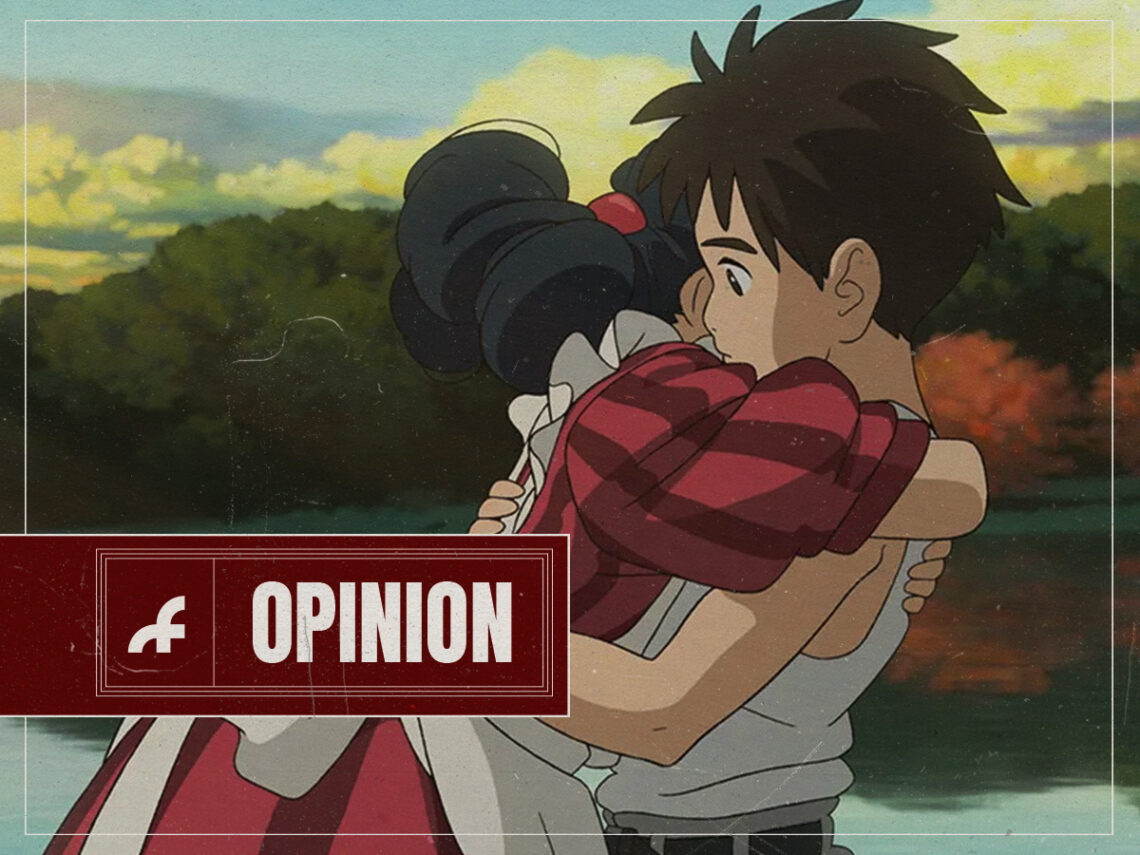
Just think how much more vibrant the 2024 Academy Awards could have been with Robert Pattinson’s gravelly performance in Studio Ghibli’s The Boy and the Heron filling the walls of LA’s Dolby Theatre. Or, consider Brian Tyree Henry’s soothing tones in Spider-Man: Across the Spider-Verse and Hokuto Matsumura, who brings great gravity to his role as Souta Munakata in Suzume.
Animation has never been more potent; it’s time that the Academy Awards reflected this reality.
