


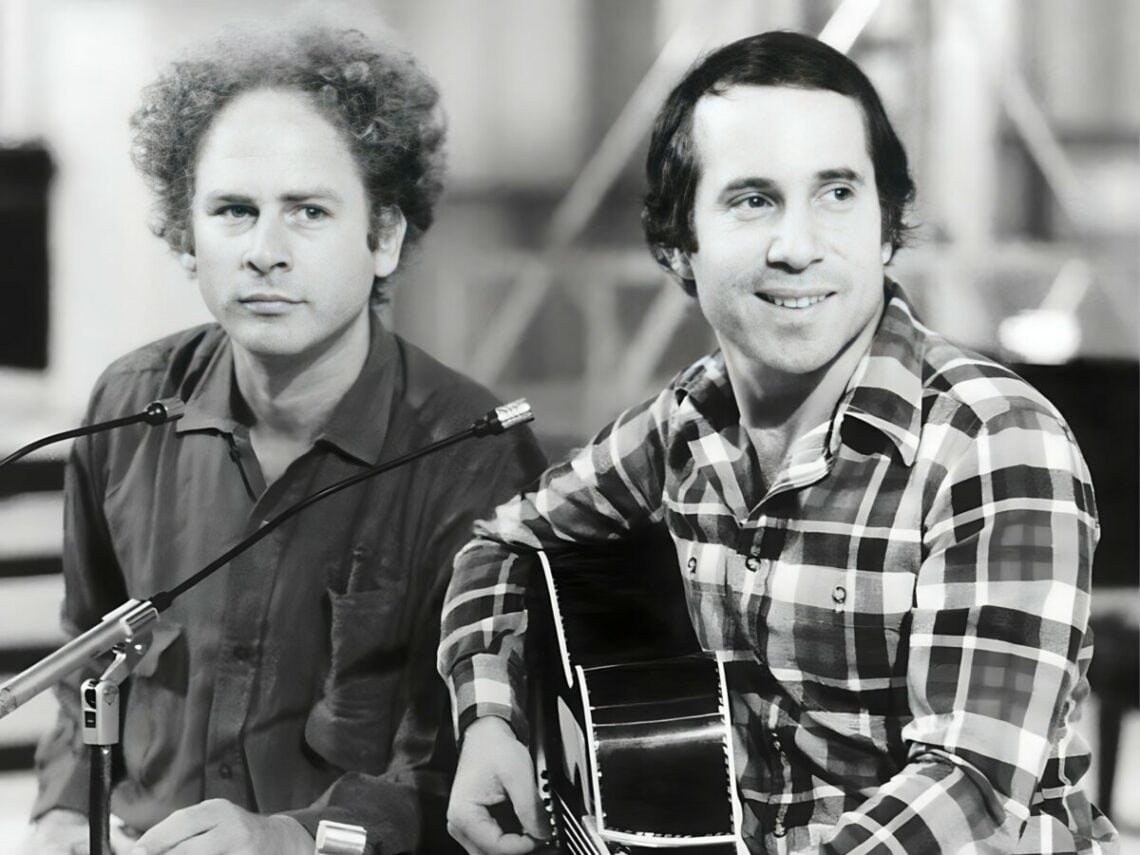
The best Simon and Garfunkel album, according to Paul Simon

Following a formative spell as Tom and Jerry in the 1950s, singer-songwriter Paul Simon and harmonising vocalist Art Garfunkel reunited as Simon and Garfunkel. The duo was undoubtedly the most significant in the 1960s pop scene, thanks to enduring hits like ‘Mrs. Robinson’ and ‘The Sound of Silence’. However, no success could reconcile the pair’s turbulent working relationship.
The friction between Simon and Garfunkel was rooted in creative dissonance but elevated to volatility by the former’s controlling nature. Speaking to the Sunday Telegraph in 2015, Garfunkel described his former musical partner as a “monster” at times due to his overbearing “Napoleon complex”.
The singer later recalled a conversation he once had with George Harrison, who endured a similar situation in The Beatles in the late 1960s. “George came up to me at a party once and said, ‘My Paul is to me what your Paul is to you,’” Garfunkel recalled. “He meant that psychologically, they had the same effect on us. The Pauls sidelined us. I think George felt suppressed by Paul and I think that’s what he saw with me and my Paul.”
The disagreements that erupted between Simon and Garfunkel throughout the late 1960s, eventually leading to their first major disbandment in 1970, may not have occurred had the pair harboured the same creative vision. Alas, as the songwriter, Simon sought to drive the duo towards more pop-conscious pastures while continuing to evolve from their roots in folk. In contrast, Garfunkel preferred a more traditional folk sound, as achieved in their famous 1966 cover of ‘Scarborough Fair’.
With this in mind, one could understand why Garfunkel might choose one of the duo’s early releases as his favourite. However, as far as Simon was concerned, each album bettered the last, winding up with a conclusive masterpiece in 1970, Bridge over Troubled Water. Many fans would agree with Simon in his opinion that the pair bowed out on a high. Still, many would maintain that 1968’s Bookends is a superior record.
Speaking to Rolling Stone in 1972, Simon discussed the Simon and Garfunkel catalogue, explaining why he felt Bridge over Troubled Water was the best. “Bridge has better songs. And it has better singing. It is freer, in its own way,” he said before recalling how he started work on the album. “‘Cecilia’, for example, was made in a living room on a Sony. We were all pounding away and playing things. That was all it was. Tick-a-long-tick -a-tick-a-tong-tuck a-tong-tuck on a Sony, and I said, ‘That’s a great rhythm set; I love it.’ Every day, I’d come back from the studio, working on whatever we were working on, and I’d play this pounding thing.”
The clicking percussion sound Simon had created on his Sony tape recorder was initially a short sample. “I said, ‘Let’s make a record out of that.’ So we copied it over and extended it to double the amount, so now we have three minutes of track, and the track is great. […] It was like a little piece of magical fluff, but it works.”
As the album began to take shape, Simon wrote an introspective ballad that would ultimately serve as the title track. Picking it out as another personal favourite, Simon said, “‘Bridge’ is a very strong melodic song.” He also had a lot of time for ‘El Condor Pasa’, a cover of a traditional Peruvian song by instrumental composer Daniel Alomía Robles. “The track is originally a recording on Phillips, a Los Incas record that I love,” Simon remembered. “I said, ‘I love this melody. I’m going to write lyrics to it. I just love it, and we’ll just sing it right over the track.’”
