


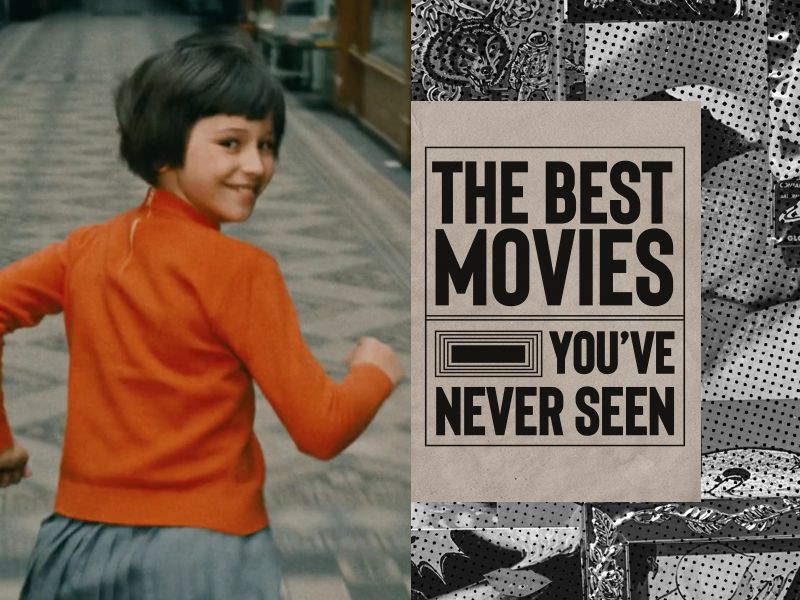
The Best Movies You’ve Never Seen: Louis Malle’s sizzling dynamic joy ‘Zazie dans le Métro’

Cinema, in its most basic form, is the equivalent of a painter’s canvas, with all the tools of the trade intended to be used to create a brand new dynamic vision. Filmmakers such as Quentin Tarantino, David Lynch, Alejandro Jodorowsky, René Laloux, Louis Malle and Denis Villeneuve recognise this more than most, imprinting their own aesthetic on the artform which flourished into creative life in the mid-20th century.
The 1960s was a decade of fun, fashion, rock ‘n’ roll and dramatic social change, with cinema working to reflect a significant cultural transition shaking itself up as the Hollywood studio era drew close. Indeed, the 1960s were a period of change and disruption for western cinema, with this flux allowing European cinema to make its mark on the international stage.
Whilst the American industry went through a period of struggle, French cinema was enjoying a frenetic time of great flourishing, with the New Wave movement redefining national cinema for a new generation. Jean-Luc Godard’s Breathless was integral in welcoming in such a change, as were the films of François Truffaut, Agnès Varda and Louis Malle, with their films of youthful rebellion embracing the dynamism and pace of a new style of filmmaking.
Whilst Godard, Truffaut and Varda are often discussed, rarely is Malle given the credit he deserves for suffusing French cinema with his electric style of cinema. Utilising jump-cuts and other innovative camera techniques, novel editing, and vibrant use of saturated colour, there is no better film in the director’s early filmography that reflects his energy than the 1960 gem Zazie dans le Métro.
Based on the novel of the same name by Raymond Queneau, Malle’s colourful tale tells the story of a brash ten-year-old, Zazie (Catherine Demongeot), who sets out to explore Paris during a Métro strike under the irresponsible eye of her clumsy uncle (Philippe Noiret). Spritely and speedy, Zazie treats Paris as her playground, traversing its many sights whilst indulging in its cultural delights.
Turning into an anarchic comedy, Malle’s audacious movie is led and, seemingly, controlled by the will of Zazie, an erratic figure who toys with the structures of film form by forcing editing trickery and exciting rudimentary special effects. Stuffed with visual sight gags, Zazie dashes across the city and frequently breaks the fourth wall as she frolics in the city’s joys and the dynamism of cinema itself.
Radiating eccentric European energy, Zazie dans le Métro became a beloved text across the film world, with American arthouse audiences being particularly fond of the liberating film that broke the mould of stagnant national Hollywood cinema. Speaking about the film decades after its release, famous American film critic Jonathan Rosenbaum wrote that it was “arguably Louis Malle’s best work … A rather sharp, albeit soulless, film, packed with ideas and glitter”.
As a vigorous frisson of cinematic glee, Malle’s 1960 classic is an utter pleasure which tempts the viewer toward the magic of the silver screen like a ringmaster about to put on a lavish spectacle.
