


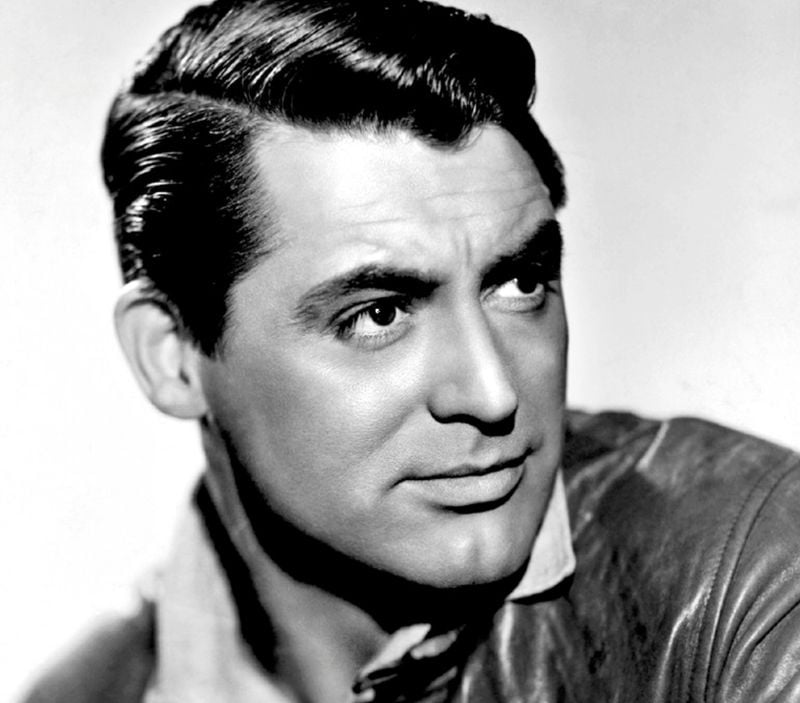
The best director Cary Grant ever worked with: “An understanding deeper than words”

Cary Grant worked with some of the greatest directors in Old Hollywood, who were, by extension, some of the greatest directors of all time. Howard Hawks directed him in multiple films, including His Girl Friday and Bringing Up Baby. George Cukor directed him several times as well, including The Philadelphia Story. Frank Capra directed him in Arsenic and Old Lace. Name a giant of Classic Hollywood filmmaking, and chances are, they directed Grant at some point.
For decades, Grant was the most in-demand male movie star in Hollywood. Many actors turned in some of their most memorable roles in parts that were either written for him or offered to him first. Gregory Peck wasn’t the first choice for Roman Holiday, for example, nor was Humphrey Bogart for Sabrina. Grant was the quintessential leading man that screenwriters had in their minds when they put pen to paper, and it’s fortunate for other actors of the era that he was so picky.
His career went through many iterations. In the beginning, he played eye candy in pre-Code sex comedies, earning his first prominent roles opposite Mae West. In the late 1930s, he became the consummate romantic comedy star, sparring with some of the greatest screwball comedy queens of all time, including Katharine Hepburn and Irene Dunne.
By the 1940s, he’d moved into more dramatic roles, taking on tear-jerker romances and war movies. Against all odds, he hit another peak in the 1950s, long after contemporaries like Clark Gable had faded into the past. From a 21st-century perspective, the 1950s were when his legacy was forged, thanks to his ongoing collaboration with Alfred Hitchcock.
Grant first teamed up with the Master of Suspense all the way back in 1941 in the movie Suspicion, in which he plays a shady playboy who might be trying to murder his wife. It was one of the actor’s first major dramatic roles, and he proved to be a sinister villain. Five years later, the pair reunited for Notorious, a World War II-era spy thriller that again allowed Grant to explore dark territory.
They were instrumental in each other’s evolution in the 1950s. As Hitchcock turned to glamorous capers and switched from black and white to colour, Grant proved to be the perfect leading man again. 1955’s To Catch a Thief is one of the director’s most lavish, starring Grant as a retired cat burglar in the French Riviera who becomes involved with a glamorous heiress played by Grace Kelly. Four years later, he starred in Hitchcock’s mistaken identity thriller North by Northwest, playing an advertising executive who is confused for a secret agent and pursued across the US.
Unlike some actors, particularly the female ones, Grant adored working with the director and developed a close bond with him. “Hitch had a rapport and an understanding deeper than words,” he said in an interview with The Daily Oklahoman in 1984. “Hitch was marvellous. I could try anything in front of him. He was a peculiar fellow with a great sense of humour, very calm and patient… If a fire broke out he would sit there quite calmly and say, ‘Would somebody attend to that, please?’”
There are plenty of actors who could tell a different story about Hitchcock, of course, but as far as Grant was concerned, he was the gold standard as a director, someone with whom he was in perfect sync and who brought out the best in him. Their four movies together are the proof.
