


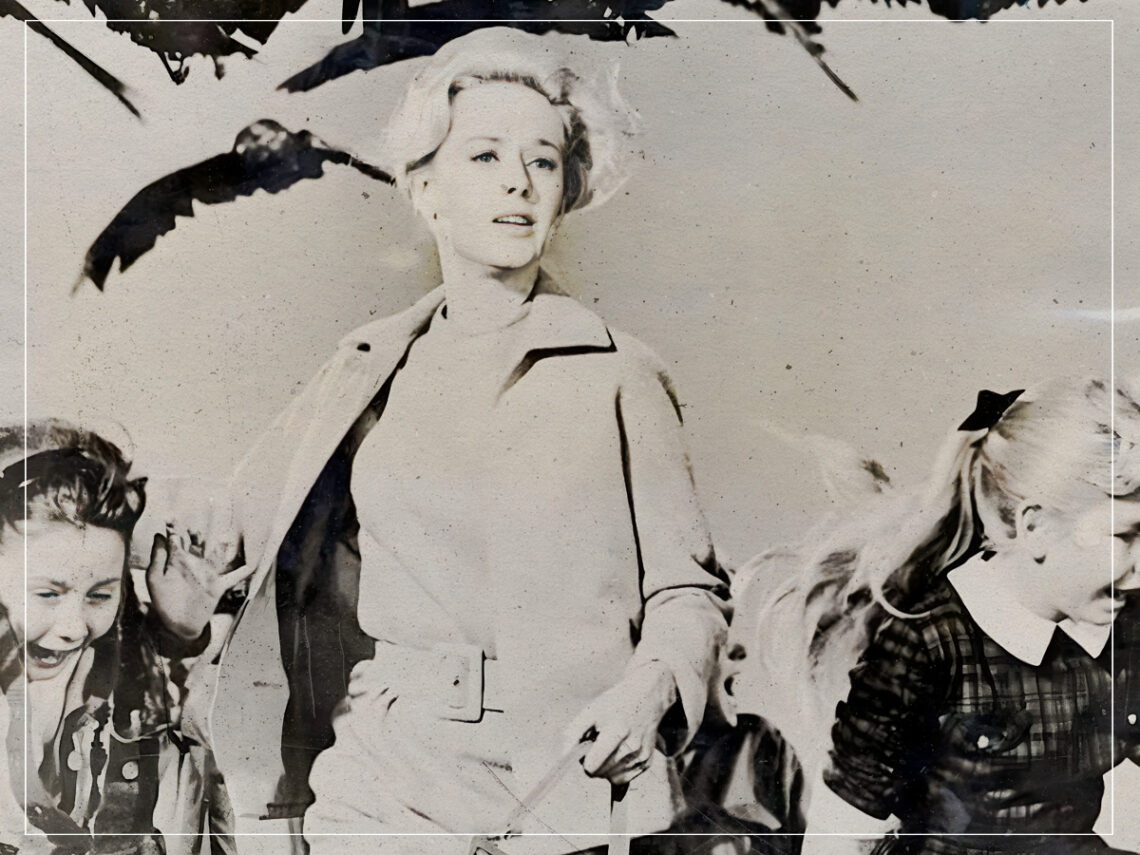
“It was unconscionable”: how Alfred Hitchcock’s obsession ruined Tippi Hedren

History will always remember Alfred Hitchcock as one of cinema’s greatest-ever directors, which is part and parcel of curating a filmography overflowing with technical innovation, marketing masterclasses, nerve-shredding terror, and timeless excellence.
The downside is that the other side of the filmmaker has tended to be shuffled into the background of his legacy, with Tippi Hedren pointing the finger of blame squarely at the ‘Master of Suspense’ for her career failing to live up to the potential repeatedly displayed throughout her early years.
It may have been Hitchcock who plucked her from obscurity, planted her squarely on the map, and transformed her into a star, but the long-term damage was much more significant than the short-term impact. Hedren had her eyes on a long and sustained stint in Hollywood, but instead, she was basically semi-retired by the early 1970s, less than a decade after her debut.
There are certain tropes and trappings that inform many Hitchcock flicks, and his fondness for an attractive blonde is prime among them. He worked with several actors who fit that bill on repeated occasions, but because she was brand new to the business at the time she was discovered, Hedren obliviously signed a contract that allowed the auteur to exert professional dominion over her.
She signed an exclusive seven-year contract with Hitchcock, debuted as Melanie Daniels in The Birds, headlined the cast of Marnie in the title role, and then never worked with him again. What was supposed to be a lengthy engagement became a two-picture deal, but Hedren was shocked at just how much influence and sway he held over her decision-making process.
The double-whammy of The Birds and Marnie had made her a hugely in-demand star, but Hitchcock was having none of it. Because her name was signed on the deal he’d initially agreed with her, he effectively viewed her as being his cinematic property, akin to a piece of equipment that somebody wanted to hire out for a single picture before returning. Except, he wasn’t interested in the idea of sharing.

Things got a lot more unsavoury than that, unfortunately, with Hedren accusing Hitchcock of sexual assault and stalking. She claimed that he threatened to ruin her career when she asked to be released from her contract to both get away from him and pursue other opportunities, which is pretty much exactly what he did.
“I was under contract to him. When I demanded to get out of the contract, he was livid, and he didn’t let me out of the contract. That’s what stopped my career,” she said, per Smashing Interviews. “I don’t know what I was offered. I had no idea of the roles because the offers went through Hitchcock. It was the kind of thing where I had no control. I was under contract to him. It was awful. It was extremely difficult. It was unconscionable.”
Whether it was disillusionment, disenchantment, or a combination of the two, Hedren’s association with Hitchcock and her dismay at his behaviour did eventually lead to the pair severing ties, but from an on-screen perspective she never truly recovered. The world could have been her oyster, but having such a troubling experience so early on in her career was a massive setback she could never seem to reconcile.
Her first post-Hitchcock outing came in Charlie Chaplin’s A Countess from Hong Kong, which was the only movie she appeared in for the rest of the 1960s. She made four films between 1970 and 1973 but none for the remainder of the decade, and only three features for the entirety of the 1980s, one of which was the infamous Roar.
Arriving on the scene bursting at the seams with star potential, it’s not hard to imagine an alternate timeline where Hedren would go on to enjoy a career comparable to other Hitchcock leading ladies like Grace Kelly, Kim Novak, and Ingrid Bergman, to name but three. Instead, he tried to have her all to himself, and when that dangerously possessive and borderline obsessive relationship came to an end, she was left to pick up a collection of shattered pieces she’d never be able to put back together again.
