


The 1975 song that defines Bruce Springsteen: “Past, current and future”

In an aftershock of the success achieved by Elvis Presley and The Beatles in the 1950s and ‘60s, respectively, Bruce Springsteen finally broke through as a cultural milestone in 1975. The New Jersey rocker had grafted over two previous studio albums, but Born to Run was the feather that tipped the scales.
The album transformed Springsteen from a respected cult artist into a household name. Its release marked the moment when years of relentless touring, songwriting and determination finally aligned with public attention on a truly global scale.
Of course, instrumental and vocal talent is necessary when seeking global fame in rock ‘n’ roll, but charisma, timing, and cultural perception mustn’t be disregarded. In a colourful convergence of musical evolution and technological progress, Presley broke out as the King in the 1950s to bring optimism and pep to an inert post-war society. The Beatles and their British Invasion neighbours picked up these threads in the ‘60s, consolidating a generation of rock-centric pop stars.
By the time Springsteen emerged, however, rock music was searching for a new voice. Audiences still craved authenticity and escapism, but they wanted stories that reflected the realities of modern American life rather than the idealism of previous generations.
Like many of his contemporaries, Springsteen learned from the best. “I saw Elvis on TV, and when I first saw Elvis, I was nine, but I was a little young, tried to play the guitar, but it didn’t work out, I put it away,” Springsteen told Rolling Stone. “The keeper was in 1964, ‘I Wanna Hold Your Hand’ on South Street with my mother driving.”

The young American knew in an instant, upon hearing The Beatles, that his place was up on stage. “I ran to the bowling alley, ran down a long neon-lit aisle, down the alley into the bowling alley,” Springsteen remembered romantically. “Ran to the phone booth, got in the phone booth, and immediately called my girl and asked, ‘Have you heard this band called The Beatles?’ After that, it was nothing but rock ‘n’ roll and guitars.”
While The Beatles inspired Springsteen’s early decisions, his approach to rock music needed a personal nuance. Consequently, his early songwriting attempts would hone an artistic reaction to the rock ‘n’ roll spirit of the USA. The quintessential American hero thrived upon palpable imagery of the manifest destiny, the open road and drive-in theatre romance.

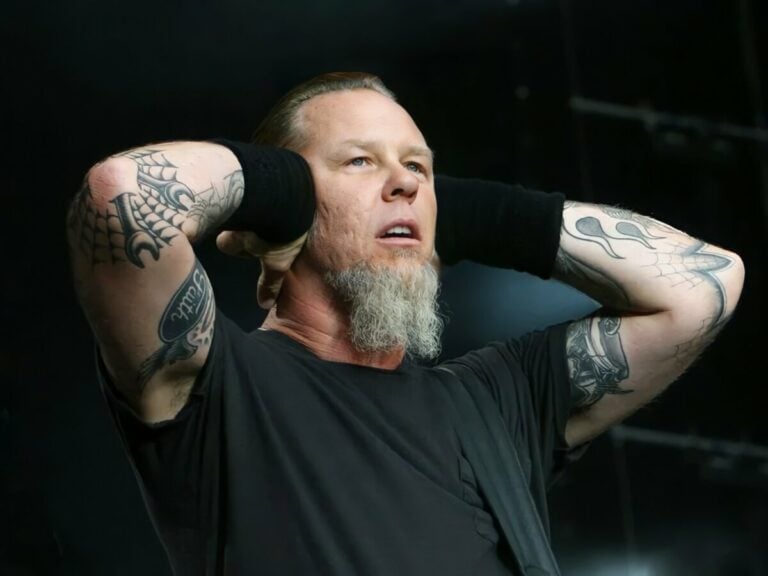

Springsteen seemed to hit the perfect formula in 1975 when he released his third album, with the title track ‘Born to Run’ capturing the imagination of a generation. As a crowd pleaser through and through, Springsteen never minces his words when asked to pick a favourite song from his own catalogue. “I’d have to go with the fans, I guess, who usually say ‘Born to Run’,” he told The Project in 2022.
To a charismatic stage presence like Springsteen, there’s nothing quite like resonating with a packed-out stadium of screaming fans. Further to this, ‘Born to Run’ was the song in which Springsteen “invented” himself. “It carried a certain amount of rock ‘n’ roll past, current and future with it,” he explained.
As a bonafide rock fanatic, Springsteen sought to build upon the success of his heroes by adding personal touches to his lyricism while leaning on discerning stereotypes. “I managed to write well about these classic rock ‘n’ roll archetypes: the car, the girl, the road, the guy, the running,” he pursued. “This is all classic B-movie rock clichés I was able to use and reinvigorate in my own way, bring new life and bring current into 1975.”
Many artists will find picking a personal favourite difficult, but for Springsteen, it’s a simple choice. “I’m always comfortable going with that one,” he said. After all, ‘Born to Run’ is the song he has performed on stage the most, with way over 1800 outings.
That longevity speaks to the song’s enduring power. Decades after its release, ‘Born to Run’ remains a defining centrepiece of Springsteen’s live shows, continuing to evoke the same sense of freedom and possibility that first made it a classic.
Listen to ‘Born to Run’ below.
