


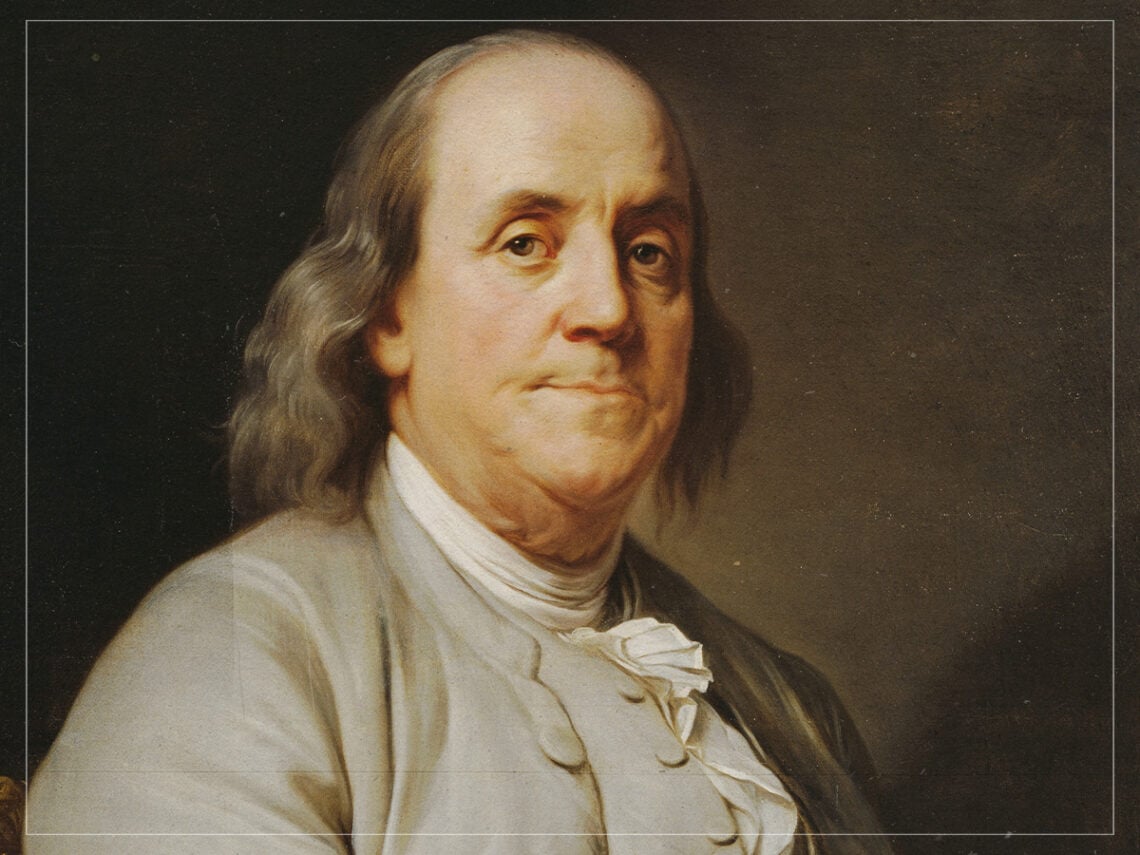
‘Fart Proudly’: Benjamin Franklin’s satire about geniuses

Benjamin Franklin was one of the greatest philosophers, thinkers, inventors and statesmen of our time. His work spanned the entire globe from America to France. His resumé would probably be about eight pages long, but, in brief, he is best known for being one of the founding fathers of the United States and drafting the Declaration of Independence.
That basically means he invented the US, the most powerful country in the world. Not only this, but he also made major scientific advancements, particularly in the field of electricity, establishing founding principles that are still used today in electric car manufacturing.
But Franklin wasn’t one of those zero-personality geniuses without hobbies who would rather mansplain to you incessantly, instead of having a two-way conversation. On the contrary, he was someone you’d want to have at your dinner table if you could invite anyone, living or dead. When he wasn’t coming up with his latest invention, he was instead thinking of something just as eccentric as the movie The Dictator.
Franklin’s career was marked by highs and lows. It’s like for every new diplomatic contract he was able to forge across nations, he came out with something paradoxically ludicrous and hysterical to accompany it. Let me explain.
Franklin was a big fan of satirical stories and enjoyed writing ones that had no intellectually stimulating plot but were just silly. He was the publisher of the Pennsylvania Gazette, and, in it, he’d produce little satirical telenovelas on light-hearted domestic disputes. Then, as he became more involved in colonial resistance against the British crown, his satires began to gear more towards making fun of British officials and their pomposity. However, things reached a peak when he got a little too comfortable with the whole satire genre and published an essay called Fart Proudly. The title is as outlandish as the content that follows. Indeed, Franklin took the meaning of ‘freedom of the press’ to a whole new level. Also known as A Letter to the Royal Academy (the less-catchy title), Franklin wrote pages and pages about the problem of flatulence, which in common parlence alludes to farting.
This is one of those rare cases when you can discard the old saying and actually judge a book by its cover. The whole premise of the essay is Franklin’s belief that the various European societies, artistic and scientific, comprising only the crème de la crème of the time, bankrupted their credibility by being overly pretentious and pompous. Coming from a genius like himself, one can’t help but believe his words.
The piece begins with the following: “It is universally well known that in digesting our common food, there is created or produced in the bowels of human creatures a great quantity of wind. The permitting of this air to escape and mix with the atmosphere is usually offensive to the company, from the fetid smell that accompanies it. That all well-bred people, therefore, to avoid giving such offence, forcibly restrain the efforts of nature to discharge that wind.”
It then goes on to describe exactly how different foods affect the type and smell of one’s farts in extreme and unnecessary detail. Franklin even pitches the idea that a drug to reduce flatulence should be invented to resolve this highly inconvenient issue. Annoyingly, though, he never sent the letter to the societies he criticises; that would have been really funny. Instead, he sent it to the British philosopher and his old mate Richard Price, with whom he had an ongoing joke about getting the English chemist Joseph Priestley, who was famed for his work on gases, to develop this urgently-needed drug.
Today, such a ridiculous and rude essay would probably never see the light of day, especially if it were written by one of our diplomats. As much as we profess to be guardians of the free press, there is an element of hypocrisy because we still have social codes and norms to abide by. However, Franklin’s essay reminds us to live with a little humour, be jovial, and not take ourselves too seriously, especially those in the so-called highest ranks of society. If he was able to, why shouldn’t we?
