


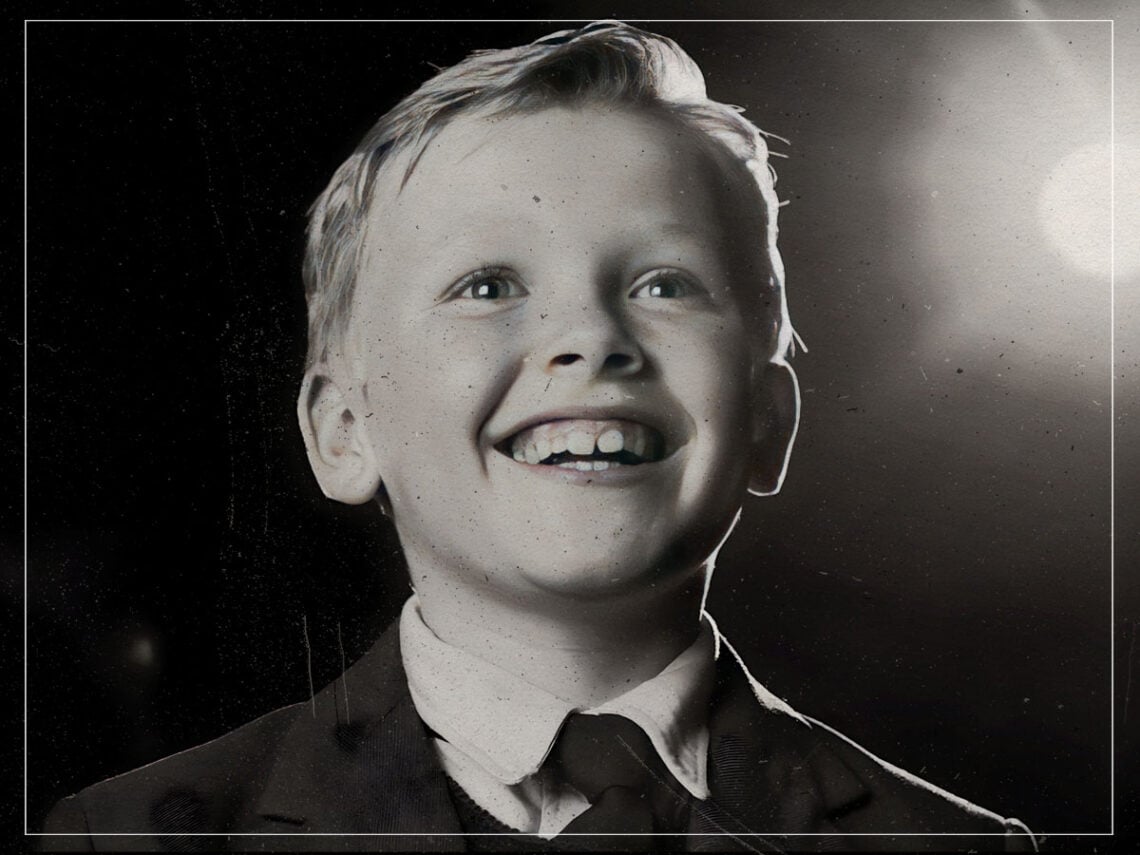
‘Belfast’ explained: Why is Buddy taken hostage?

The 2021 movie Belfast is one of the most personal stories ever put on film. It represents writer-director Kenneth Branagh’s own personal reflections on his youth in the city of the title, which was wracked by violent sectarian divisions at the time.
As Branagh said himself not long after its release, “Making this film is a chance for me to go home in a sort of more honest way.” In nine-year-old protagonist Buddy, we have the characterisation of Branagh himself as a child, opening up to us a window into the world of a young innocent caught up in the Troubles of Northern Ireland.
While the movie’s singular narrative is intimately and immersive portrayed through the partial lens of Buddy’s experiences, its scope is epic, generalising from this particular story the experience of all those who confront a religious or political divide against their will. Branagh has a point to make. He just lets the film do the talking.
The story hangs on a seemingly innocuous moment in which Buddy is caught trying to steal from a sweet shop with his cousin Moira. This incident sets in motion an almost deadly chain of events, as Moira ropes him into marching with a gang of anti-Catholic Ulster loyalists. When Buddy joins up with the gang and sees that they’re armed and shouting violently, he tries to run away, crying, “I’m going home!” But Moira drags him back into the fray.
He ends up looting some detergent from a Catholic supermarket the loyalists smash up. His justification, “It’s biological,” doesn’t wash with his mother, and she takes him back to the supermarket to apologise. Coincidentally, the loyalists’ criminal leader, Billy Canton, catches them, putting the washing powder back in the shop.
So why does Canton kidnap Buddy?
Canton is enraged by their apparent sympathy for the Catholic shop owner, telling Buddy’s mother, “That’s not the statement we’re trying to make.” He’s already angry with the family for refusing to join his cause, and has previously threatened Buddy and his father.
In the North of Ireland between the late 1960s and early 1970s, at the height of the Troubles, political leaders on both sides left no room for those who wanted to avoid the sectarian division of Belfast. As Canton later tells Buddy’s father, “People like me run this town now.” Since Buddy’s family were protestants, the loyalists expected them to stand alongside them on the protestant side of the dividing line. Their refusal to do so meant it was only a matter of time before they were targeted.
Buddy’s bad behaviour and his mother’s insistence on making up for it publicly were the inciting incidents needed to trigger this situation. As a result, the two of them become ideal candidates for being taken hostage by Canton and his men.
These armed loyalists try to use the young boy and his mother as human shields to pass beyond lines of British Army soldiers and police officers waiting to disarm and arrest them. In the event, Buddy’s father and brother save the day with quick-thinking during an armed standoff.
This near-death experience proves to be the final straw for the family, who reluctantly leave Belfast for England — just as Branagh did in real life.
Without the Troubles forcing Branagh’s family out of Ireland, we wouldn’t have had this powerful and moving depiction of this important moment in Irish history. But equally, a little Northern Irish boy who knew nothing else wouldn’t have lost his childhood home.
