


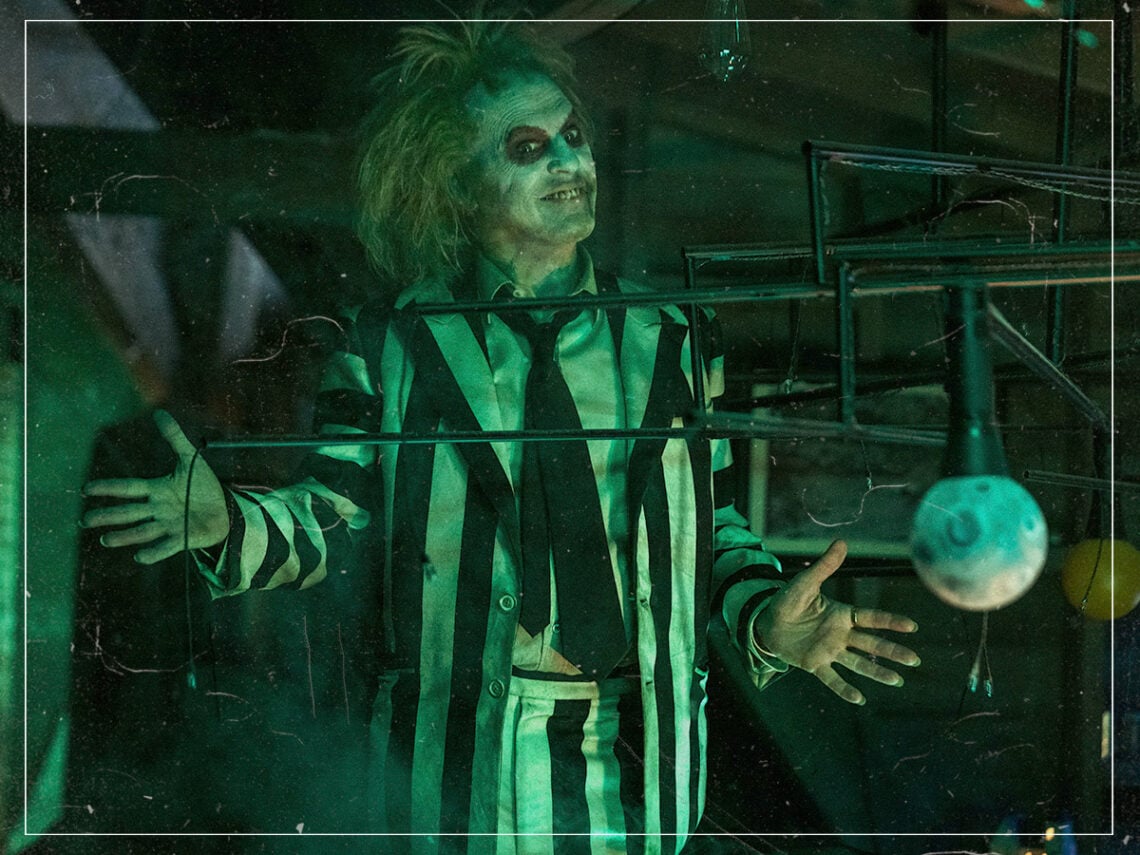
‘Beetlejuice Beetlejuice’ ending explained: What happens to Lydia?

Some 36 years after the ghost with the most first raised hell, Tim Burton has conjured up a sequel that will haunt conversations for years to come. Beetlejuice Beetlejuice brings back original mischief-makers Michael Keaton, Winona Ryder, and Catherine O’Hara, alongside modern-day scream queen Jenna Ortega, in a film that is strange and unusual in all the right ways.
The sequel picks up decades after the original, with Ryder’s Lydia Deetz now the host of her own ghost-hunting television show and mother to Ortega’s Astrid. However, the memory of the Juice still plagues Lydia, and she often has to actively try to suppress visions and memories of him lest her mind go off the rails once and for all.
Of course, peace was never destined for a place like Winter River, and soon, Astrid accidentally summons Beetlejuice when she calls her mother’s bluff on his existence. Lo and behold, he arrives, dragging the pair into the Netherworld for a moment of fleeting fun before their return sees Lydia vow never to let him haunt her or her family ever again.
But things were never going to be that easy, especially when a masquerading teenage love interest and one of the most powerful Netherworld demons are involved, forcing Lydia and Astrid to outwit not just a conniving lovestruck spectre but also a malevolent force bent on breaking free into the world of the living by pulling off the one thing he always wanted—Lydia’s hand in marriage.
The Deetz family’s victory comes near the film’s end, celebrated with a heartfelt montage of Lydia witnessing all the wonderful milestones in her daughter’s life—growing up, getting married, and giving birth. Lydia finally feels a moment of pure bliss, revelling in the freedom of having defeated the man you dare not summon. But this happiness is short-lived, as the serene dream slowly turns into a nightmarish sequence, and suddenly Lydia jolts awake, only to find herself lying next to Beetlejuice, bringing the entire narrative full circle and hinting at a possible third instalment.
What does Lydia’s dream mean?
Beetlejuice Beetlejuice beckons a false sense of security with a (mostly) happy ending as Lydia observes the various moments of happiness that will brighten and bless Astrid’s happy and successful life. However, the final premonition involves Astrid unexpectedly giving birth to a horrifying Beetlejuice baby, who pops out and immediately says the disturbing words: “Mama!”
The disgusting green offspring appeared earlier in the movie, reminding Lydia that although he may not be present, Beetlejuice and his various nightmarish hallucinations will forever be attached to her subconscious and continue to haunt her dreams for a long time. But that’s not all—Burton is more than adept at hinting at potential sequels with weirdly amusing gothic dream sequences, but he’s also a master at feeding in layers of multiple meanings and cross-fictional references.
The movie undeniably centres around Lydia as its muse, her skittishness and ability to see things others can’t, setting her apart as an anchor to the other side. But it also makes her the ultimate qualifier for becoming the Netherworld’s next gatekeeper—a role she never asked for but may be destined to fulfil, especially with dark forces vying for control over her unique gifts.

There also seems to have been a significant amount of time since the movie’s overarching narrative ended, suggesting Beetlejuice gave Lydia a series of peaceful years before deciding to infiltrate her psyche once more. The sequence is entirely nonsensical, and there’s nothing to point towards anything that happens—Astrid giving birth to a Beetlejuice bairn, to be exact—as a manifestation of the real world.
It’s entirely dream logic, which is incidentally where Burton’s mind thrives. Still, it also serves to blur the boundaries between reality and the surreal, leaving the audience to wonder if Beetlejuice has ever truly been banished or if he’s always been lurking in the shadows, waiting for just the right moment to return and wreak havoc once again.
But what if it’s more than that? As someone who has become fatigued by the repetitiveness of franchises, it’s more than possible that Burton threw out the entire playbook and decided to create a film with a convoluted narrative and an even less fathomable ending. Instead of setting up a conventional path for a third instalment, Beetlejuice Beetlejuice defies expectations by embracing a more complex and surreal storyline. Burton thus manages to challenge traditional cinematic conventions while subtly hinting at potential future developments, demonstrating his unique ability to innovate within the constraints of a franchise that refuses to drain viewers.
In short, the ending of the movie might be seen as a reflection of Burton’s current filmmaking approach, where a potential third film could emerge without even directly addressing the setup from the final sequence. This would be one of Burton’s most audacious choices in his illustrious career: crafting a trilogy that, while perhaps lacking in direct narrative continuity, resonates with greater cultural relevance and innovation than ever before.
