


Where is Beethoven’s skull? Music’s oldest macabre mystery

Although ‘Where’s Your Head At’, Basement Jax’s popular electronic dance single, is about as far from classical music as you can get, the song is curiously relevant to the late composer Ludwig van Beethoven. Besides the seminal sonatas and symphonies that danced from his fingers, Beethoven’s head is undoubtedly the next most fascinating part of his body.
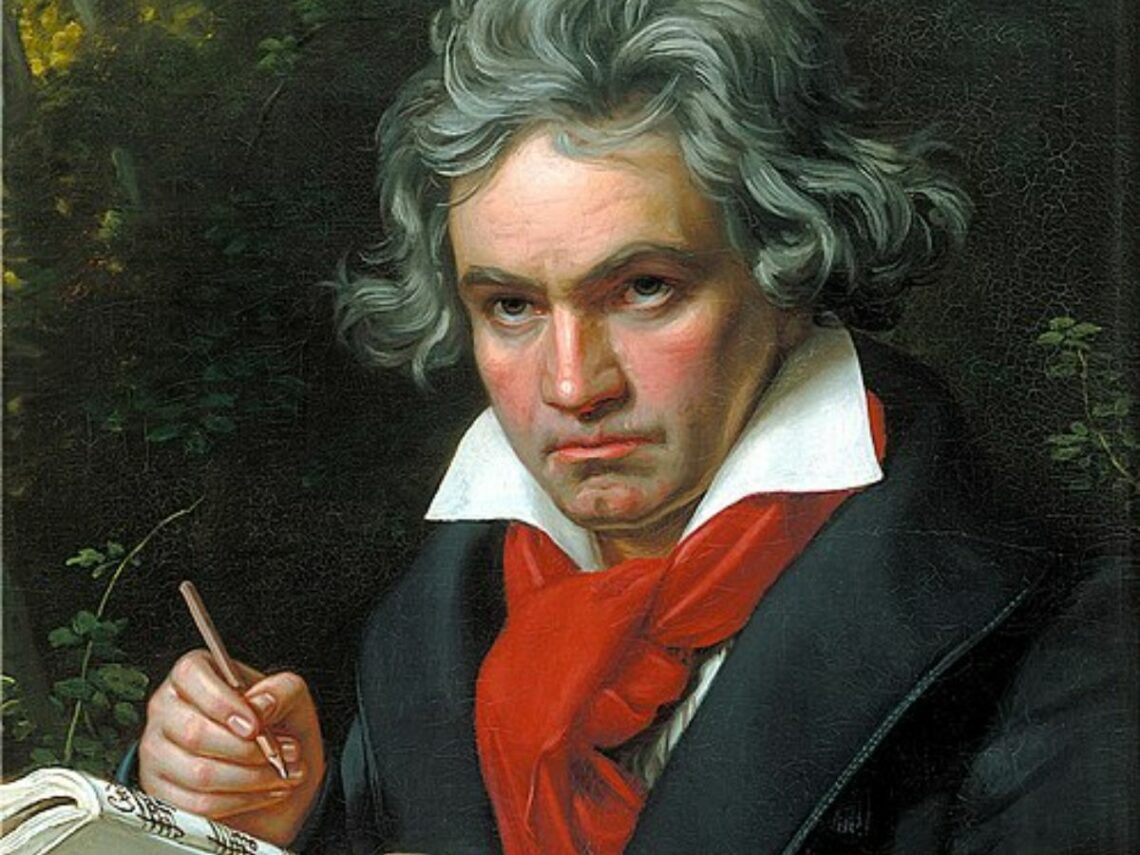
As a German gentleman who lived between the 18th and 19th centuries, Beethoven is painted in our memories garbed with the period’s high fashion. Perched above elaborate neck scarfs, towering collars and broad lapels, the composer’s head featured a wild shock of hair not dissimilar to Albert Einstein’s and a furrowed brow on which to hang the weighty musings of compositional genius.
Beethoven began to lose his hearing in his 20s and was completely deaf by his 40th birthday. Though his ears, nestled beneath those thick, wavy locks, were redundant in his late career, Beethoven miraculously persevered in his musical career. Not long after becoming totally deaf, he wrote his most famous symphony, ‘Symphony No. 9’, otherwise known as ‘The Ninth’.
He who is legendary in life is also legendary in death. In Beethoven’s case, the mystery of his mortal remains only added to his remarkable legacy. When the composer died in Vienna in 1827, following several years of ill health, he was initially buried in a common grave. However, due to his fame, the Viennese authorities moved the remains to a more prominent and supposedly secure location at the Währing Cemetery in Vienna and later to the Zentralfriedhof in Vienna in 1888.
In the years following Beethoven’s death, the European medical community became increasingly interested in understanding his health issues, including his deafness. Various cuttings and fragments of remains were reportedly taken from the composer’s corpse over a series of exhumations. During the first exhumation in 1863, researchers took samples of Beethoven’s hair and several pieces of his skull.
Throughout the late 19th century, fragments of Beethoven’s skull dispersed across Europe, ending up in the possession of various individuals and institutions. Some of the fragments ended up in the hands of American businessman and collector Paul Kaufmann, who donated them to a Vienna university in 2023 for continued study and DNA verification.
Across two centuries, the various samples dispersed around the world, many lost to the sands of time. In 1990, Kaufmann found a small box with “Beethoven” scratched on it in a family safety deposit unit held by a French bank. To his understanding, his great-great-uncle Franz Romeo Seligmann, a Viennese doctor, received the fragments in 1863 after the first exhumation.
Upon handing the ten skull fragments back to Vienna, Kaufmann said he was “very privileged to be able to return the Beethoven skull fragments, which I inherited, to where they belong”. Some of the remains had previously revealed an unusual concentration of lead in Beethoven’s body, which could have been behind some of his health issues. It is unclear what Vienna’s Medical University plans to do with the remains as we approach the 200th anniversary of Beethoven’s death.
As the story of Mary Shelley’s gory souvenir suggests, we had fewer ethical reservations regarding mortal remains in the 19th century. From a modern perspective, many fans of Beethoven’s music have called for the return of the samples to the composer’s final resting place. Markus Mueller, the Rector of Vienna’s Medical University, addressed the ethical question in a statement in 2023: “It’s about finding the right balance between understandable public interest and respect for a deceased person.” However, Austrian coroner Christian Reiter stated that research would continue since it was “Beethoven’s wish.”
