


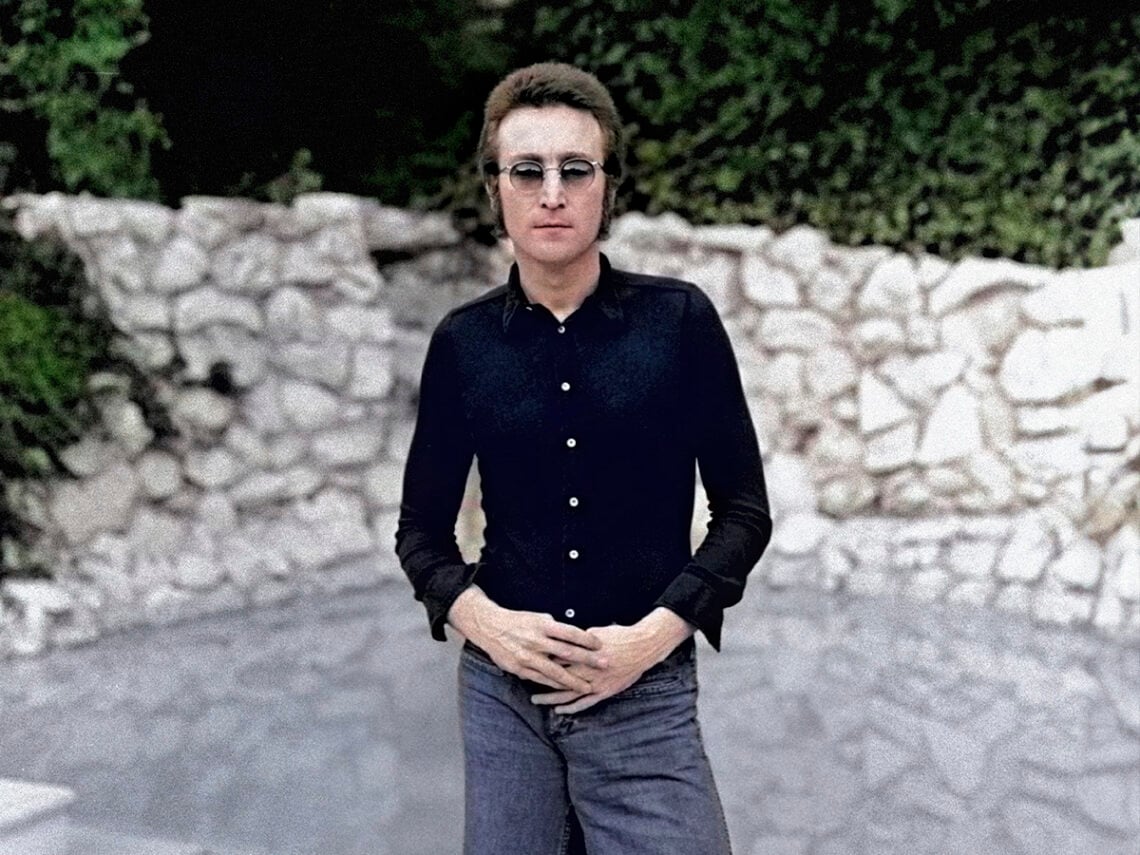
The Beatles song John Lennon was certain he “should have written”

When The Beatles finally said enough was enough in April 1970, the media had their fun stirring the pot to sensationalise the ostensible tension between the four. The quarters of the group were happy to fight one another in the studio or behind closed doors, but they avoided it on the pages of the tabloids.
Despite any illusion cast by the press, when the band hit the studio to piece together the final two albums, Abbey Road and Let It Be, there were noteworthy power struggles within the band. As can be seen in Peter Jackson’s documentary The Beatles: Get Back, George Harrison wrestled Paul McCartney for a few inches of album space, while John Lennon became increasingly withdrawn in the romantic orbit of Yoko Ono. It was a set-up that would see all four members begin to pull away from one another and head into the sunset, but in four different directions.
Things had begun to go awry a few years prior. Following the untimely death of The Beatles’ beloved manager, Brian Epstein, in August 1967, McCartney became the band’s defacto leader on sufferance. His brazen and professional demeanour meant he was simply the man for the job, and although his bandmates could understand this, it became one of the final nails in the Beatles’ coffin.
In the early ‘70s, the four Beatles set off on their respective solo exploits. While a little acrimony between the other members and McCartney was palpable early on, Lennon and Harrison remained close and even worked on Lennon’s Imagine together in 1971.
Any lingering resentment wore off very quickly, and save for the inevitable chart rivalry, the group remained on good terms in the post-Beatles years. In a 1972 interview with Hit Parader, Lennon discussed McCartney’s songwriting talents with fond nostalgia and picked out a few of his favourite McCartney-penned Beatles songs.

“That’s his best song,” Lennon said, picking out ‘Hey Jude’ as a personal favourite. “It started off as a song about my son Julian because Paul was going to see him. Then he turned it into ‘Hey Jude’. I always thought it was about me and Yoko, but he said it was about him and his.”
During his famous 1980 Playboy interview, Lennon expanded on this theory. “He said it was written about Julian,” John opined. “He knew I was splitting with Cyn and leaving Julian then. He was driving to see Julian, to say hello. He had been like an uncle. And he came up with ‘Hey Jude.’ But I always heard it as a song to me.”
“Now I’m sounding like one of those fans reading things into it… Think about it: Yoko had just come into the picture. He is saying. ‘Hey, Jude’—’Hey, John.’ Subconsciously, he was saying, ‘Go ahead, leave me.’ On a conscious level, he didn’t want me to go ahead. The angel in him was saying, ‘Bless you.’ The devil in him didn’t like it at all because he didn’t want to lose his partner.”
Another track on Lennon’s list of McCartney favourites was the Revolver classic, ‘Here There and Everywhere’. “This was a great one of his,” he said. “That’s Paul’s song completely, I believe. And one of my favourite songs of the Beatles.” McCartney himself later remarked that it “was the only song that John ever complimented me on.” It is also one of the songs McCartney ranks among his personal favourites. Elsewhere on Lennon’s list was the 1963 formative single, ‘All My Loving’, which Lennon described as “a damn good piece of work”.
The final track Lennon singled out was ‘Oh! Darling’, which appeared on The Beatles’ 1969 album Abbey Road. After praising the song, Lennon suggested that it was perhaps better suited to his style. “I should have written that song; it sounds like a song I’d written,” Lennon said. In its roundabout way, it was probably the best praise McCartney could hope to get from his songwriting partner.
An underrated and complex track, ‘Oh! Darling’ seems like a basic pastiche of a 1950s ballad on its surface. But with every new listen comes new layers to unpack from the song, from its haunting augmented chord to McCartney’s titanic lead vocal performance to some classic John Lennon guitar stabs. It’s almost impossible not to get swept up in the excitement of the track, especially when the song explodes into its final chorus and nails its tricky landing.
Lennon was a songwriter who often seemed dead-set on authenticity. A powerhouse performer and determined artist, Lennon’s words, and willingness to attribute the song to his resume, shows how much he loved the track.

Never Miss A Beat
The Far Out Beatles Newsletter
All the latest stories about The Beatles from the independent voice of culture.
Straight to your inbox.