


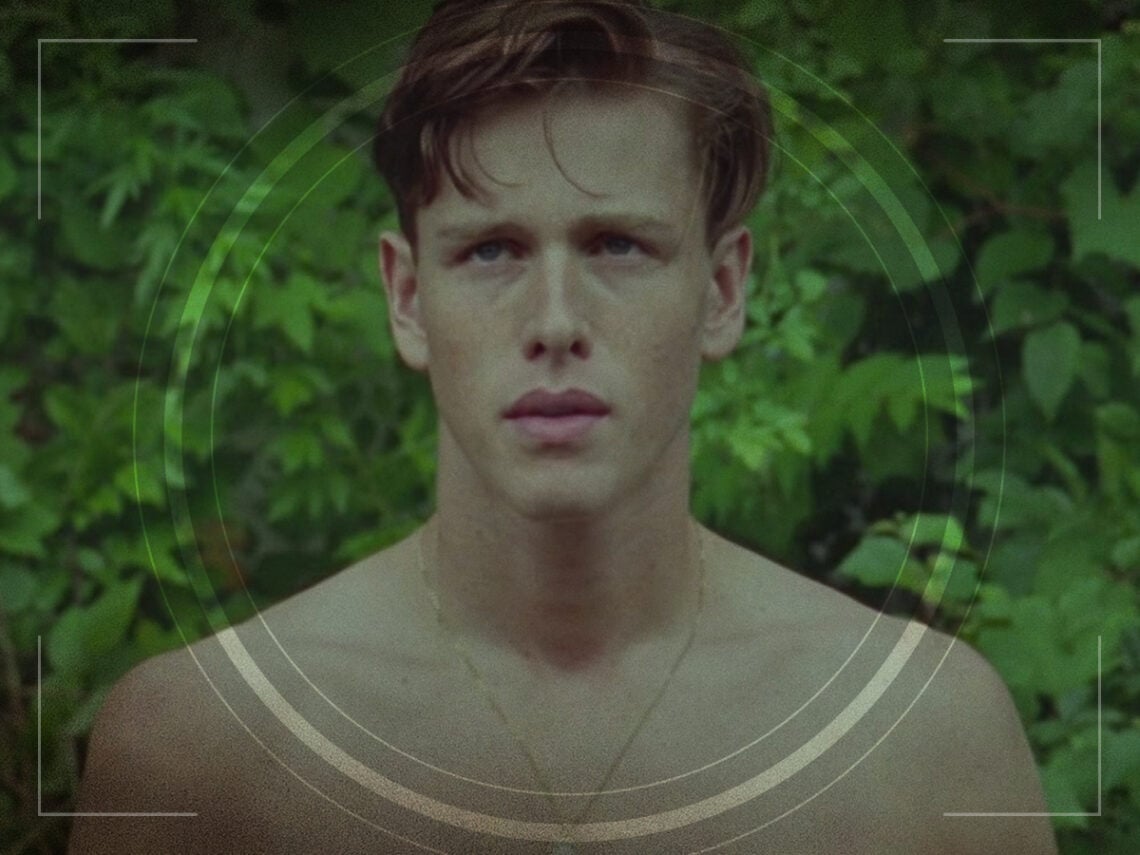
‘Beach Rats’: the exact moment Harris Dickinson became an icon

Ever since the ‘Father Figure’ scene in Babygirl, an intense infatuation with Harris Dickinson took over the internet, with some audiences suddenly becoming familiar with his work, while others were glad to see him explore new erotic territory onscreen. People obsessed over everything from his Kes tattoo to certain line deliveries that Halina Reijn surely wrote with the knowledge he would become a generational heartthrob. But while the height of the Babygirl fever has faded, the outpouring of love for Dickinson hasn’t, with his expanding towards new horizons after the premiere of his directorial debut at the Cannes Film Festival.
However, while some are just waking up to his genius, there are many who have been aware of his talents for years, with a bold and intrinsically thoughtful approach to performance that has marked him as one to watch since the beginning. Whether it be the opening scene to Triangle of Sadness, in which he expertly captures the unspoken tension of gender norms in romantic relationships, to his cocky bravado in Matthias and Maxime, Dickinson has never been one to shy away from a challenge, something that was perhaps best captured in his searing feature debut, Beach Rats.
Beach Rats holds a fascinating position within the cinematic lexicon, given that it was sorely underrated and treated rather harshly upon release. However, no one disputed that Dickinson was a once-in-a–generational talent, playing a young man called Frankie who struggles to come to terms with his sexual identity.
The film by Eliza Hittman has a meandering quality to it, capturing an endless and stifling summer as Frankie lives a private life in this other world through his computer, trying to find a way out of himself and connect with others who will help him better understand who he is. He reaches for another life that feels impossible to bring into his reality, trying to match pieces of his true self into the puzzle of his everyday life and realising that it doesn’t work. He battles toxic masculine expectations and attitudes of his small-minded friends, who further trap him in his misconceptions about queerness.
The final scene on the beach confronts us with the awful truth that he cannot live between both identities, with a haunted feeling to this moment through the stripped-back visual style and single-source lighting. It leaves you searching for the image on screen, with Frankie being partially hidden by shadows or having his body shown in fragments, much like how he feels about his true self.
To star in such a bold yet incredibly subtle film as your feature debut is something only reflective of a true great, with Dickinson marking himself as an icon from the beginning through his unnerving and emotionally heavy performance. To do so requires an enormous amount of compassion and self-confidence, a quality almost lost in modern cinema, and with Dickinson, it staged a miraculous return when we needed it most.
The actor, now also director, is bringing male compassion back to our screens, and Beach Rats marks the early traces of iconicity in an unabashedly vulnerable and bold artist.
