


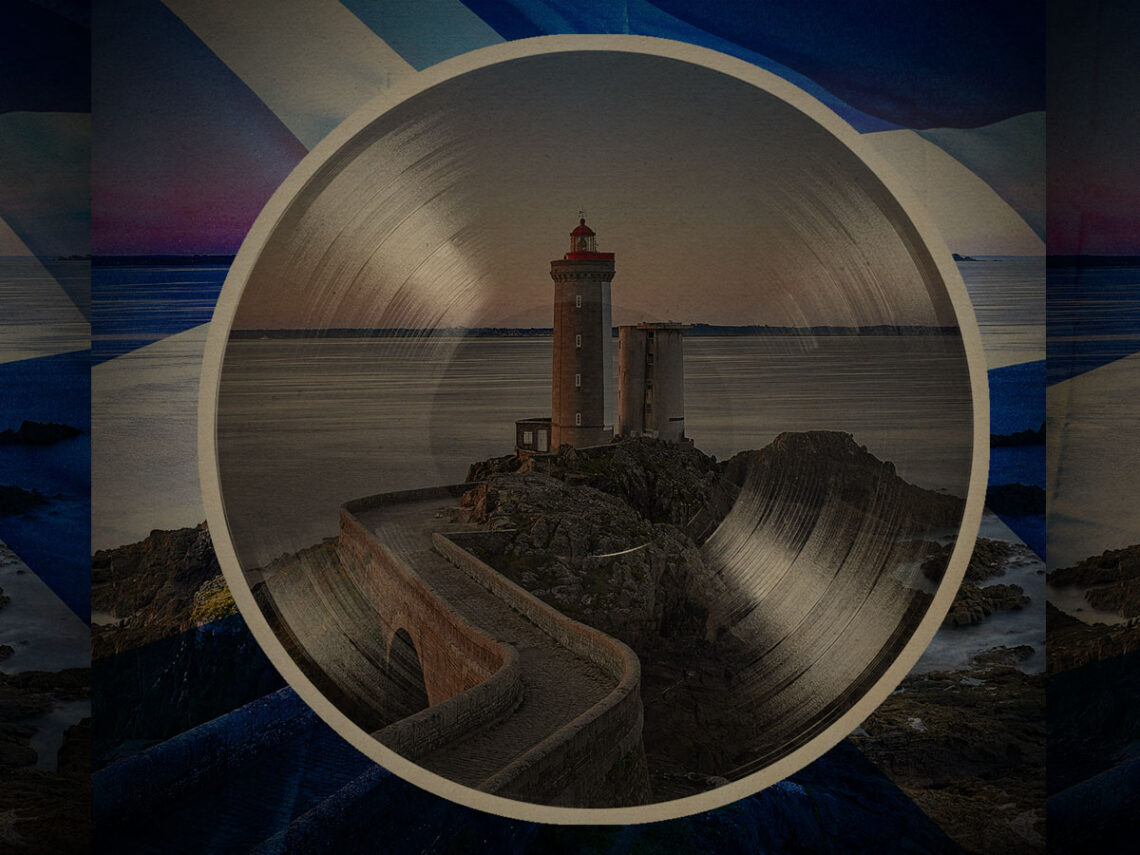
The beach in Brittany, France, where Scotland’s unofficial national anthem was born

Scotland is rolling hills, rugged landscapes, lochs, glens, munros, and maybe a bit of rain thrown in for good measure. One thing it is seemingly not is captured by a continental persuasion.
Yet in 1977, a singer by the name of Dougie Maclean was sitting on a beach in France and simply yearning for that very place he called home. He was merely a young man, only just making and sculpting out his own way in the world, but the result of what he created from that one pang of longing went on to change the fabric of Scotland forever.
Maclean had been travelling and landed in Brittany, France, when he developed that unignorable ache to head home. As such, in the space of ten minutes while sitting on a beach in Brittany, he wrote a simple song revolving around the sentiment of “Let me tell you that I love you/ And that I think about you all the time”.
The result obviously transpired into his legendary track ‘Caledonia’, a modern folk ballad that went on to signify so much more than homesickness, was taken into the hearts of the country, and became Scotland’s unofficial national anthem. It truly proved that patriotism meant far more than just standing on native ground; you had to first move away from it to realise what it was worth.
Of course, in the space of just ten minutes, Maclean could never have realised the legacy of what he had created. Instead, he used it as a last-ditched attempt to persuade his fellow travellers to cut their trip short – and thankfully, it worked. “I was in my early 20s and had been busking around with some Irish guys,” he later recalled.
“I was genuinely homesick. I’d always lived in Perthshire. I played it to the guys when I got back to the youth hostel where we were staying, and that was the final straw – we all went home the next day.”
Dougie Maclean
But more than just being a call to action to head to the airport, when Maclean committed ‘Caledonia’ to tape the following year, it was the moment he realised that the song had a far greater lifeblood to connect to people than just his own inner thoughts. He added, “It took about ten minutes, but sometimes that’s how songs happen. I’m still amazed at how much it has become part of common culture. There’s not a pub singer, busker, or pipe band that doesn’t play it.”
That much is most definitely true. In everything from tourism boards to Tennent’s, the song is an advertiser’s dream in terms of pulling at the heartstrings and making it look as if Scotland is the most romantic nation in the world, even if you don’t come from it. Yet walk into any pub from Stornoway to Selkirk and start strumming those guitar chords? The whole room will be in the palm of your hand.
‘Flower of Scotland’ has its place on the world stage – from football terraces to rugby grounds, it always leads to a swell of pride. But stick ‘Caledonia’ on, and it’s a whole different matter. From Paolo Nutini to CMAT, any version of the song strikes straight through the heart of what nostalgia and longing are meant to be.
Given that the Scots took ‘Caledonia’ into the fold just as quickly as any other country-wide beacon, it’s hard to believe that the song is only just approaching its 50th anniversary. But that’s the power of homesickness – and, indeed, a beach in Brittany. Distance makes the heart grow fonder, but in Maclean’s case, it led him to write a national anthem.
