


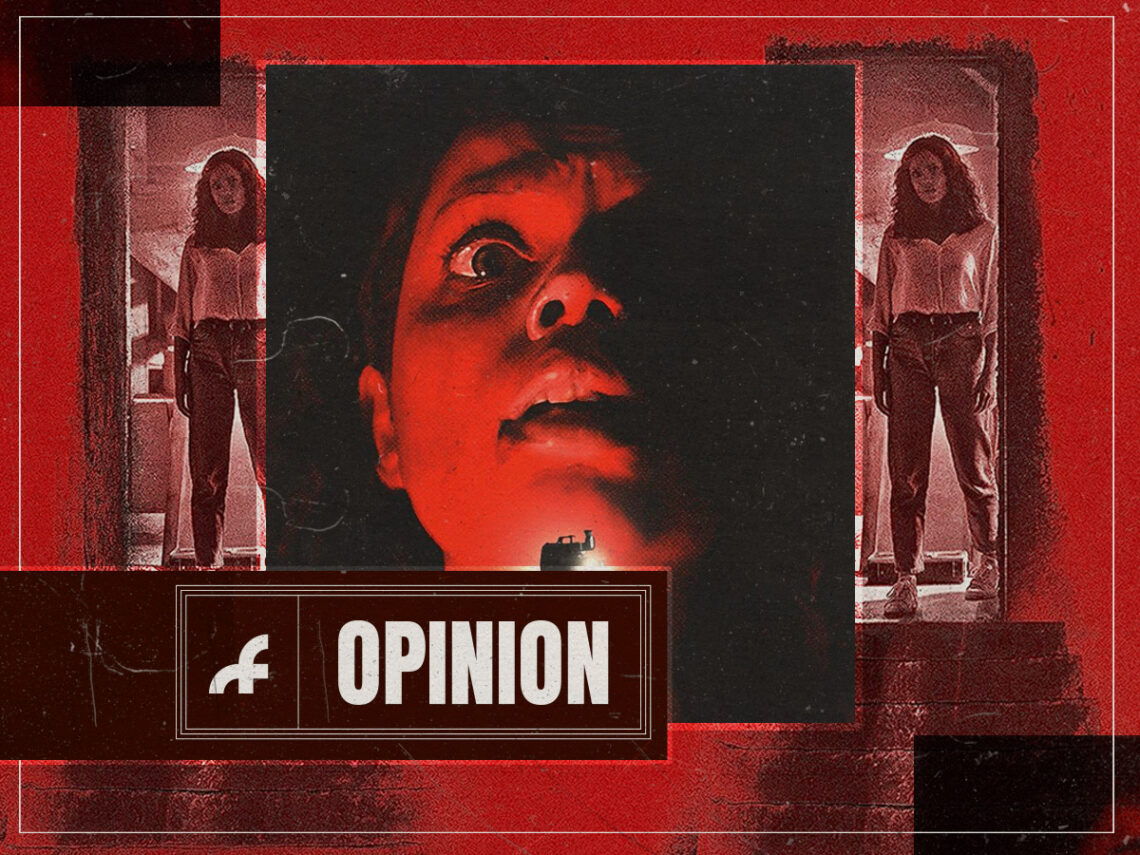
‘Barbarian’: A movie that epitomises contemporary misogyny

Towards the end of the horror film Barbarian, there’s a moment when our antagonist, a villainous primate entangled in an incestuous past, attempts to shield our protagonist, Tess, from the predatory AJ. However, Tess, demonstrating resilience, resorts to shooting the perceived predator to break free from the sinister confines of Brightmoor. In a poignant act, Tess saves herself by ending the life of the one person who had no say in her own existence, a harsh but necessary outcome in her harrowing quest for a deserving child to mother.
Even though many of the film’s characters come into contact with the “Mother”, the female experience differs significantly from their male counterparts. In hindsight, it’s perhaps easy to remove any preconceptions about the Mother, realising that her very existence is a result of years upon years of sexual abuse. However, in the thick of it, she appears as a dehumanised monster, out to get anyone who steps in her path.
However, this isn’t the film’s first foray into themes of sexual violence and misogynistic expectations. When Tess first arrives at her Airbnb, she’s stunned and somewhat nervous at the realisation that someone else already has a booking. She encounters the first red herring of the piece, Bill Skarsgård’s Keith, who spends most of his screen time trying to convince Tess and us, the audience, that he’s not some notorious killer.
From the outset, therefore, Barbarian plays with female-specific experiences. This is clear even before reading up on Zach Cregger’s influences, who cited the non-fiction book The Gift of Fear as a major inspiration for the film’s premise and its explorations of women’s intuition. He specifically referred to a passage encouraging women to rely on their instincts and heed the subtle warning signs in their interactions with men.
In this creative endeavour, he aimed to incorporate as many red flags as possible, choosing a scenario where a woman arrives late at night at a pre-booked apartment only to discover it’s double-booked. Even as Keith asserts his claim of being a good guy, and we come to the realisation that he was truthful throughout, it doesn’t detract from the inherently disconcerting nature of the entire encounter. After all, women are never safe, even when they’re reassured that they are over and over.
This leads us to our motherly tyrant. After an extensive and challenging ordeal, Tess miraculously succeeds in escaping, leaving AJ behind. Despite every instinct urging her to flee, she locates some policemen and persuades them to investigate the house, hoping they will discover the Mother and save AJ’s life. However, as a woman who physically appears to have endured the harsh realities of Broadmoor’s stereotypical drug-fuelled escapades, they dismissively rebuff her, once again leaving her to fend for herself.
Facing disbelief from the police serves as an additional illustration of the enduring sexist tropes in society. Tess hastily goes to rescue AJ, a man essentially in seclusion, following accusations of sexually abusing a woman he worked with. Regardless, they manage to break free and find refuge with one of the few remaining residents in the neighbourhood. By this point, it becomes evident that the Mother wasn’t the only occupant of the house’s basement; she was confined there with her abusive father.
To save himself, AJ resorts to pushing Tess off the top of the building. However, Tess is saved below by the Mother, who then proceeds to kill AJ to protect Tess. Having faced various challenges, including the dangers posed by strangers, being held hostage, police disbelief, and encountering men with self-centred motives, Tess is compelled to take the life of the only person willing to risk her own for Tess. This complex moment of salvation unfolds, revealing that, in the end, it’s better for a woman to face death than endure another moment under her father’s curse.
There’s also more to be said about AJ, who’s been dismissed from a television series due to allegations of abusing his co-star—an admission he later confesses to during a drunken conversation with his friend. Faced with financial pressures, AJ journeys to Detroit to evaluate the house before selling it. Upon discovering the hidden tunnel, he casually attempts to measure it, indicating his nonchalant response to the strange find. This starkly contrasts with Tess, who appeared intensely frightened upon encountering it, reflecting their divergent experiences as a man and a woman faced with a potentially life-threatening situation.
All of these instances show how the different forms of misogyny are manifested in every corner of Barbarian as Cregger navigates the ripple effects of trauma and abuse. Tess ultimately survives, but not before she endures a perilous pursuit of respect and safety at the hands of various people, some of whom are authorities in society. The game of horror that the film sets up becomes long dispelled after the Mother’s backstory is revealed, leaving you feeling ambivalent, even a little sad, about how she has been treated all along. Barbarian isn’t just another A24 horror movie. It’s an allegory for societal misogyny in all its forms.
For help, advice or more information regarding sexual harassment, assault and rape in the UK, visit the Rape Crisis charity website. In the US, visit RAINN.
