


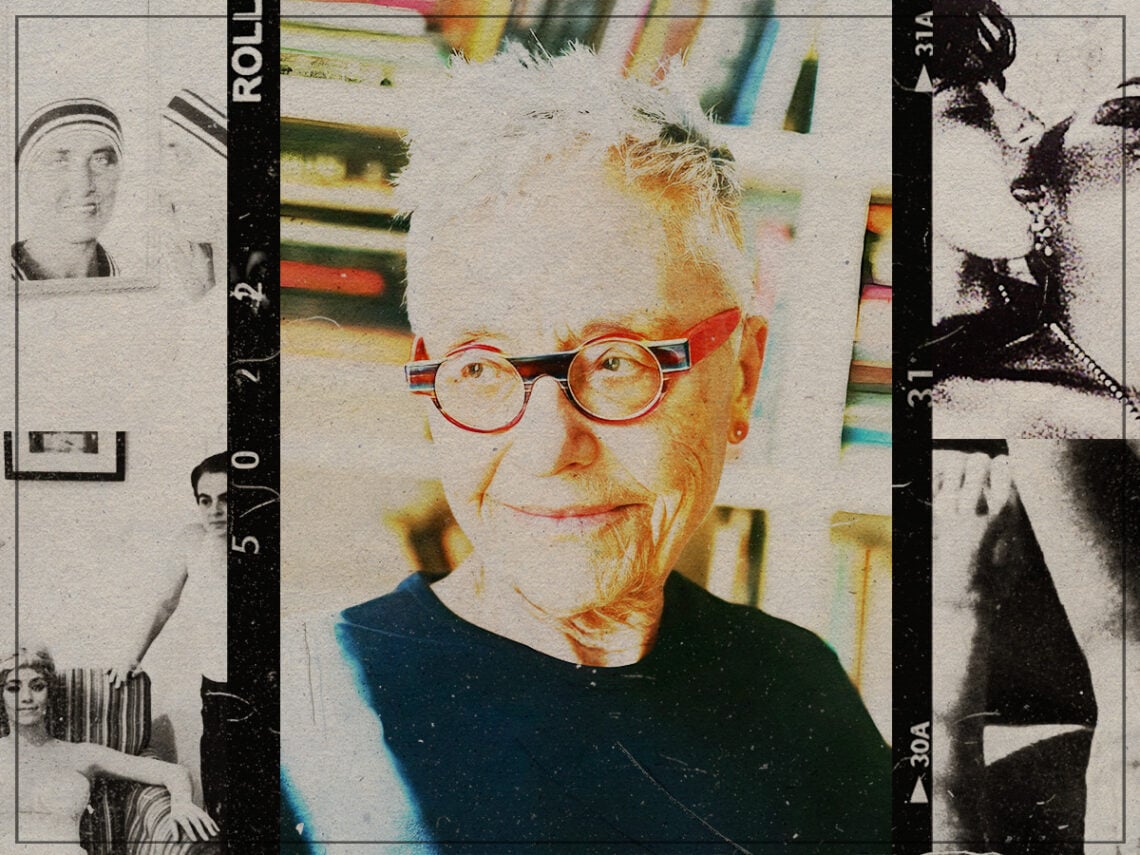
Barbara Hammer: A pioneer of queer American surrealism

It’s no secret that the film industry is dominated by men – predominantly those who are white and straight – this has been the case since cinema first began. Yet, this lack of intersectionality prevents diverse stories from being told, meaning that most mainstream cinema fails to depict the lives of marginalised groups – despite making up such a large percentage of the population. The experiences of people who identify outside of convention are often weaponised or exploited on screen, only perpetuating further real-life oppression, hostility and inequality.
Thus, underrepresented groups must be given ample screen time as an act of visibility and reassurance, telling viewers who identify outside of the margins that their experiences and lives are valid and worthy of respect. Hollywood cinema prioritises spectacle and financial profit, and the sad reality is that you are more likely to see stories about aliens, mythical creatures and animals than you are positive representations of marginalised groups.
However, the world of avant-garde filmmaking allows space for those whose voices are often silenced. One of the most important filmmakers to emerge from the 1970s, armed with experimental impulses and a desire to expose what has been kept hidden, was Barbara Hammer, a queer, feminist artist.
Hammer was born in 1939 and spent the early 1960s married to a man, unaware of the word ‘lesbian’. Yet, she soon discovered that she was attracted to women, not men, and embarked on a journey towards embracing her true identity. She once explained, “When I made love with a woman for the first time, my entire worldview shifted. In addition to the sensual pleasures, my social network completely changed; I was swept up with the energies and dreams of a feminist revolution.”
Yet Hammer couldn’t find any cinematic representations of lesbianism; the celluloid world was overwhelmingly heterosexual. Thus, she picked up a camera and started making films that explored gender and sexuality, desperate to capture the experiences of women like herself, who had never previously been given the space to exist on screen.
Hammer’s earliest works, created in the late 1960s while still married, show her experimental, surrealist impulses, which would define her future films. For example, Hammer described her 1968 film Contribution to Light as “all about my excitement and thrill at seeing reflected and refracted light. I shot the edges of pieces of found broken glass that streamed light rays broken into myriad colors.”
The filmmaker was always open to revealing her personal life to explore wider themes. In Death of A Marriage, Hammer described the creation process as “finding images and filmic methods” to capture her “interior emotional being,” adding, “I had built by hand with my husband a home in the woods, made my own horse corral, and had an art studio. Yet the alternative lifestyle didn’t erase the feeling of entrapment, proscribed role, and constrictions.”
One of Hammer’s most important pieces came in 1974, Dyketactics, which is considered one of the first works of lesbian cinema. Despite being just four minutes long, the movie made a seminal impact on the development of queer cinema. Dyketactics is an experimental collage of images that portray lesbians from both an eroticised and romantic point of view, far removed from the male gaze. Instead, Hammer’s lens gives agency to queer women, depicting lesbian sex for the first time on screen.
Through the following decades, Hammer continued to create work that explored femininity, lesbianism and politics, finding particular acclaim with Nitrate Kisses in 1992. The film unapologetically depicted marginalised sexuality with clips of an interracial gay male couple and elderly lesbians – the kinds of relationships we are rarely shown. Nitrate Kisses was Hammer’s first feature, released during the AIDS crisis, and its powerful message and inclusion of historical LGBT artefacts made it one of the most essential films of the period.
For Hammer, filmmaking was a method of activism, bringing visibility in the face of adversity, paving the way for future female and queer filmmakers to present themselves on screen. By drawing the viewer’s attention to specific bodies and identities, Hammer’s work often emphasised the importance of remembrance – paying tribute to the marginalised groups who were never given the opportunity to live freely – using the past to think about the present and, subsequently, the future.
Hammer’s work unites unique experimental cinematic techniques, notably inspired by the work of surrealist icon Maya Deren, with a passion for gender and sexual politics, resulting in a body of work that is truly groundbreaking.
Hammer died from cancer in 2019, yet she channelled her experience of illness and impending death into her work, such as 2009’s A Horse is Not a Metaphor. From the beginning of her career to the very end, Hammer never compromised her artistic visions, seeing the potential of filmmaking as a mode of activism and politics in a way that very few people have mastered.
