


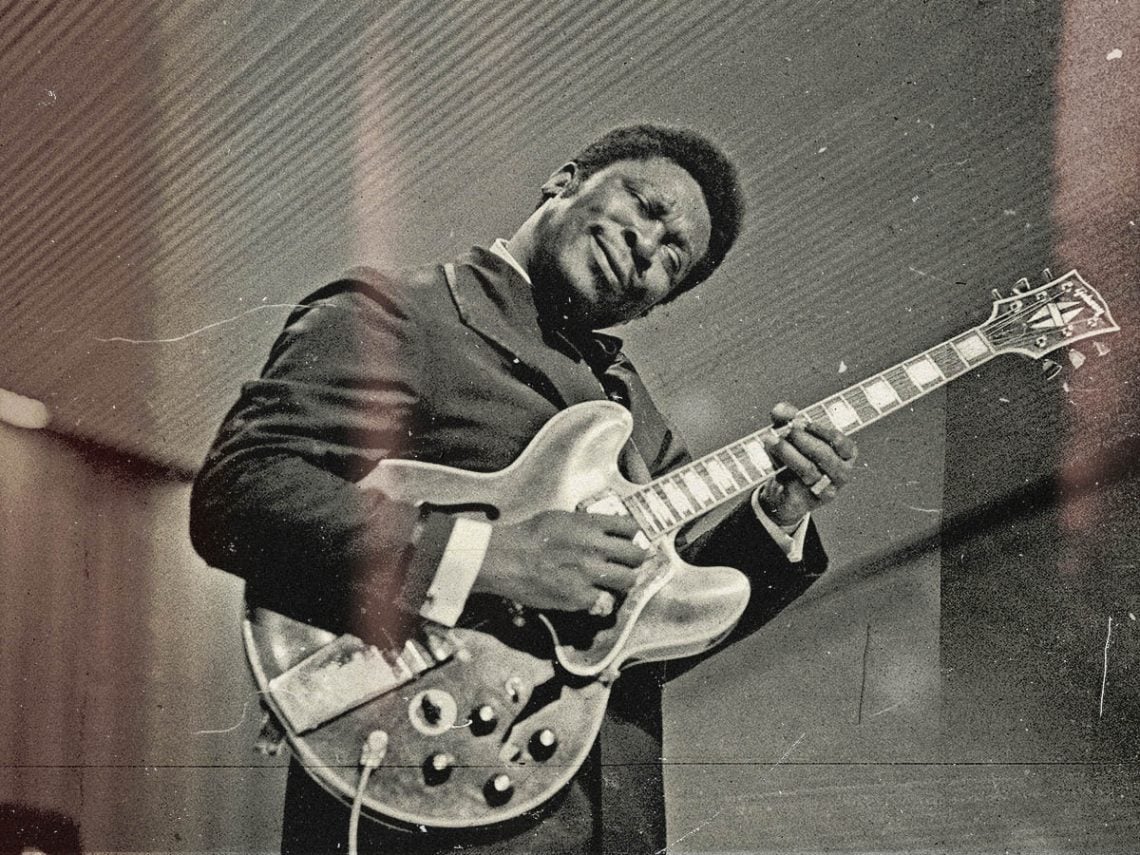
B.B. King named the two guitarists that “made me want to play”

The late B.B. King was a master of the guitar. Learning the way from the bluesmen that came before him, King would have such a profound effect on his genre and the modern approach to the six-string that he would be dubbed ‘The King of Blues’, a title which resoundingly conveys his status.
With ‘Lucille’, his trusty Gibson-ES, King would conjure some of the most stirring moments the blues genre has ever known, ranging from ‘Three O’Clock Blues’ to his rendition of ‘The Thrill Is Gone’. Discussing his work, King once explained his distinctive style: “When I sing, I play in my mind; the minute I stop singing orally, I start to sing by playing Lucille”. Instrumental in bringing the blues from the Deep South to the masses, King’s place in the history books is unquestionable.
Given that B.B. King inspired a generation of consequential players, including Jimi Hendrix, Eric Clapton and original Fleetwood Mac leader Peter Green, he was often faced with the question of who influenced him. While a patchwork of storied heroes from the early days of the guitar helped him establish his style, in one interview, B.B. King named the two that “really made me want to play”.
These were the French master of jazz, Django Reinhardt, and blues pioneer T-Bone Walker. Speaking during the interview, King said: “A friend of mine, he and I were in service at the same time, but he was shipped overseas, and he heard of this place called The Hot Club of France, went there, and he heard this guitarist called Django Reinhardt. It was said that he was a French Gypsy.”
He continued: “But anyway, my friend knew I liked guitar, so he sent me some records of this guy. I fell in love with him, a jazz guitarist. Then, finally, I heard of a guy called T-Bone Walker. They were the people who really made me want to play.”
Following this, King reflected on the influence of his cousin, another celebrated Delta blues guitarist and vocalist, Bukka White. Although he said he loved White’s playing, King maintained that he never wanted to play like him, apart from using the slide, a point he didn’t elucidate further. However, he did say that White was influential in showing him other things outside of playing. These included that blues musicians should always dress like they were “going to the bank to try to borrow some money,” a nod to the widespread racism that blues musicians and African Americans faced.
Watch B.B. King talk about his influences below.
