


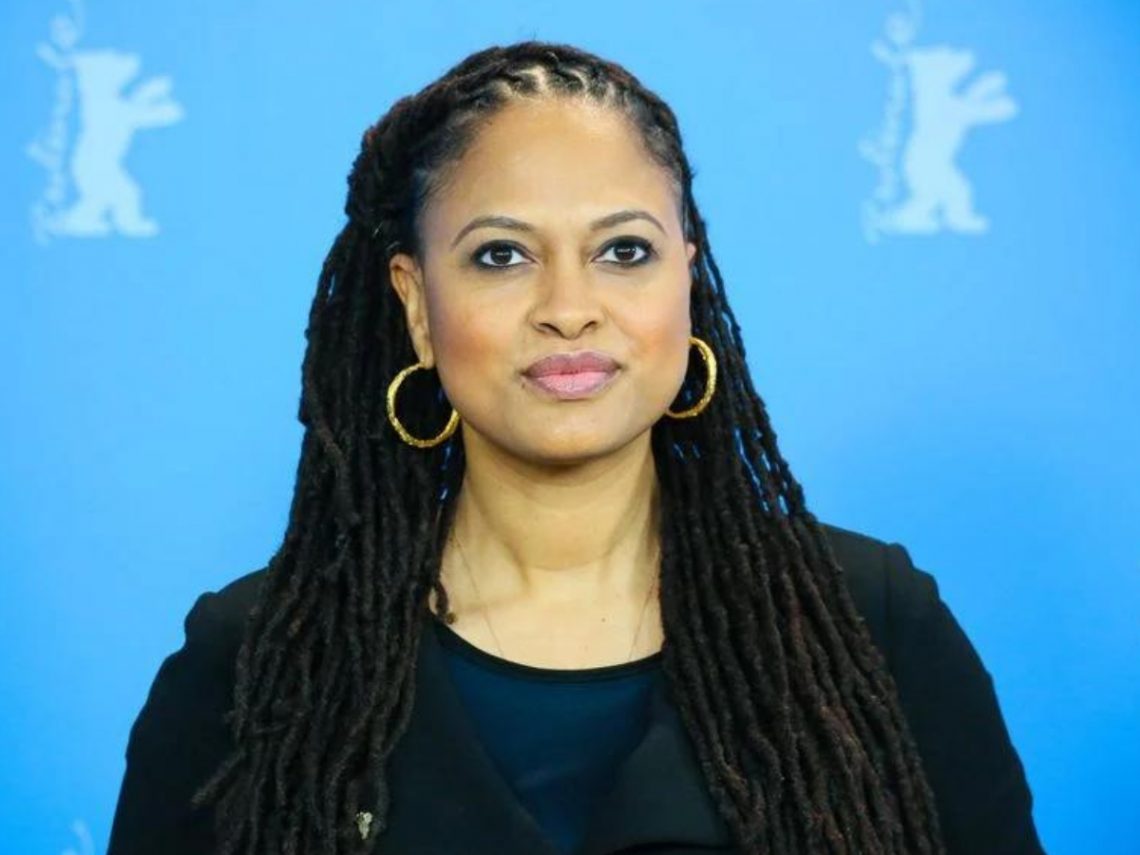
Ava DuVernay discusses the importance of industry representation

Despite Ava DuVernay‘s successful career as a filmmaker, she didn’t pick up a camera until she was 32. Instead, the director began her career as a journalist, interning at CBS News. However, whilst covering the OJ Simpson trial, she grew disillusioned with the job, becoming a junior publicist instead. After founding a PR firm, The DuVernay Agency, in 1999, the filmmaker found success in an industry she’d soon come to champion through directing.
In 2006, DuVernay started working on her first short film with a budget of just $6,000. Saturday Night Life, which depicts a trip to the grocery store by a struggling single mother and her three kids, was inspired by her own mother’s life, highlighting DuVernay’s interest in spotlighting underrepresented groups, such as Black single parents, early in her career. DuVernay has always prioritised her interest in representing marginalised people throughout her filmography, using her position as a filmmaker as a tool to inspire and reshape harmful narratives.
She later told The Smithsonian that she is interested in “fighting for justice” and “fighting for good”. Furthermore, the director added: “All Black art is political. I think our very presence is political. Anyone that is able to establish a voice and a consistent presence and put their voice forth is doing something radical and political with their very presence.”
DuVernay’s work has tackled heavy topics, such as the Central Park jogger case, where five Black and Latino teenagers were wrongly incarcerated for raping a white woman (When They See Us), and the Semla to Montgomery protest marches (Selma). Furthermore, her documentary 13th explores the link between the legal end to slavery and the rates of mass incarceration. DuVernay is interested in exposing the social structures that affect Black communities, particularly families, something she has regularly explored throughout her career.
During an interview with the Guardian, DuVernay stated: “I’ve always fiercely held on to my blackness, felt very connected to Black people and Black culture, I think because I went to high school with no Black people.” By the time she was in college, she was the editor of a Black student newspaper. She continued: “It’s the 1990s, the golden era of hip-hop, it’s Public Enemy, Black is beautiful. It manifests itself in different ways for different people, but I identified with the dominant culture.”
She also highlighted the importance of representation in the industry. DuVernay claimed: “There was no precedent for [Black female filmmakers]. There were a few Black women who made films, but I wasn’t seeing the integration of personality that we see now with women like Lena Waithe, Issa Rae, Shonda [Rhimes]. They didn’t know how to handle us and we didn’t know how to handle them. It’s only been recently that I’ve had to grapple with industry expectation because, five or six years ago, there was none.”
The director also emphasised how studios rarely offer blockbuster genre flicks to female filmmakers of colour. “I don’t get offered a lot, and what I do get offered is usually historical or something to do with women and Black people. Like, I’m not getting John Wick 3, even though I’d love to make it. I have a good friend who directed second unit on Star Wars and is kicking ass. I have a friend who’s on Westworld right now. Are there enough of us? No. Certainly not for a lack of women being interested in or capable.”
Representation is essential in cinema; as DuVernay once stated: “I’ve been in a lot of spaces where I’m the only woman, the only Black person, the only person of colour”. Despite the progress made over the last few decades, there’s still a long way to go until more people of colour and female filmmakers are given the opportunity to make movies. According to DuVernay: “Change has to happen, it has to happen with the people who dictate who belongs.”
