


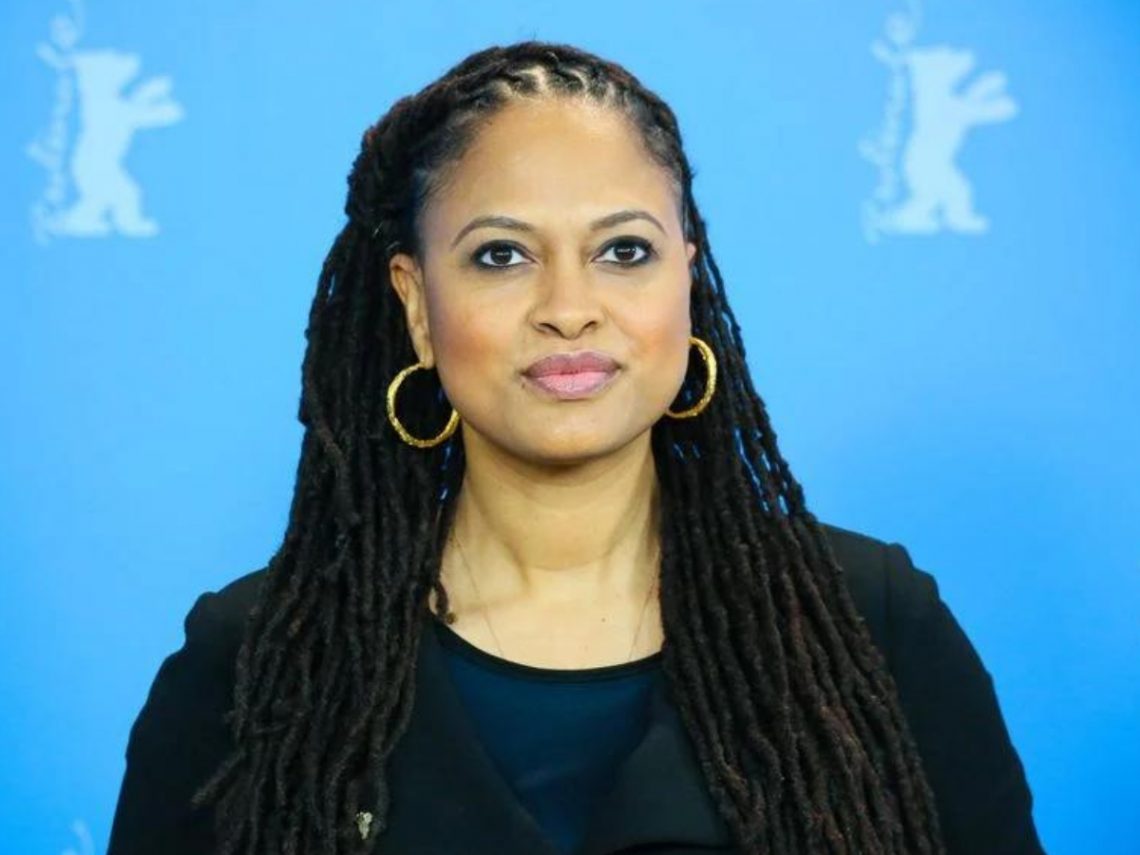
Ava DuVernay explains why she hates the word “diversity”

American filmmaker Ava DuVernay, known for Selma and A Wrinkle in Time, utilises the cinematic medium for two reasons. The first is to explore the intricacies of the Black American family, particularly Black women’s sense of agency and subjectivity within the family and their existence in a racist, patriarchal society. The second is to examine how injustices have impacted Black families and communities throughout history. These frameworks define her narratives, characterisations and visual presentation, revealing insightful interpretations of a complex subject.
Selma presents the civil rights movement of the 1960s, primarily the Selma to Montgomery march in which protestors marched the 54-mile highway. When the British Film Institute’s Miriam Blake asked DuVernay about her strategies when distinguishing “radical art” and “making art for white liberal audiences”, the filmmaker responded: “I make art for myself. I’m not making a piece thinking, will it appeal to a white liberal audience, or will it appeal to the Black community, or will it appeal to him or her?”
Detailing further, DuVernay added: “I make art to satisfy myself, my own likes, my own tastes. My own opinions, ideas and aesthetic sensibilities are important to a piece, and I have to trust as an artist that it will find an audience, that there will be people whose hearts and minds work the same way that mine do, and there will be some connection.”
The film actively centres and explores the essential female activists that played a role in the events of the Civil Rights movement, such as Coretta Scott King and Annie Lee Cooper. DuVernay’s works focus on Black womanhood and girlhood, such as A Wrinkle in Time starring Storm Reid. The director also employs a specific visual style which perfectly complements her narrative framework.
In the interview with BFI, DuVernay acknowledged her target audience, as generated by her chosen themes and communitive approach. “Look, I said I make films for myself, so I make films for black people, and I make films for women, and I make films for people from California, and I make things for people who are all the things that I am,” the director shared. “So certainly in my identity, I am an African-American, so yes, certainly I am speaking very directly to the African-American people. Is my intention to make films for them? No, it’s to make art for myself.”
DuVernay has also criticised how Hollywood portrays inclusivity and diversity. Speaking to the New York Times, DuVernay said: “We’re hearing a lot about diversity. I hate that word so, so much.” Diversity is a hot topic and buzzword in the film industry, with the most prominent studios receiving criticism for failing to maintain it in new projects. There have since been attempts to counteract this issue with an increase in racially diverse casts, crew members and different cultures being represented on film. Deadline shared how UCLA’s Hollywood Diversity Report documents exhibited a good change this year, as the reports claim “the percentage of leading roles played by people of colour in last year’s top 200 films has nearly quadrupled since 2011; that their share of writing credits has more than quadrupled; and that their percentage of directing jobs has nearly tripled.”
However, DuVernay perceives the word, now appearing in several film news headlines, as something vacant and performative that eliminates the emotional value of the issue. “I feel it’s a medicinal word that has no emotional resonance, and this is a really emotional issue,” she shared. “It’s emotional for artists who are women and people of colour to have less value placed on our worldview.” Here, the director is underlining the lack of value that the overuse of the word “diversity” has, becoming an attentive and superficial approach rather than a genuine display of underrated stories told by people who have been neglected. “There’s a belonging problem in Hollywood,” DuVernay explained. “Who dictates who belongs? The very body who dictates that looks all one way.”
“Change has to happen; it has to happen with the people who dictate who belongs,” DuVernay concludes. “It’s disconcerting to hear people say that shouldn’t change. That’s the very reason it should.”
The filmmaker has also expressed her views in the tweet below.
