


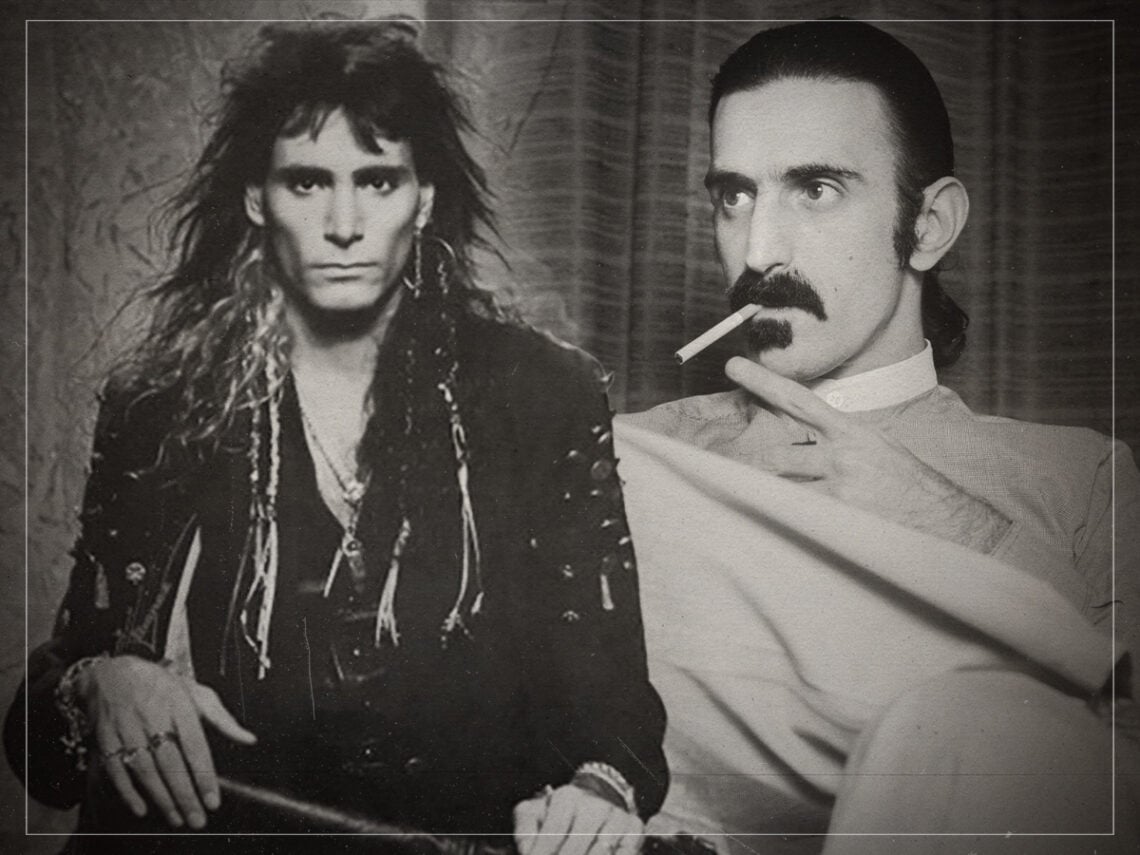
The audition joke Frank Zappa played on Steve Vai: “I hear Linda Ronstadt is looking for a player”

For most musicians, any type of audition is one of the most stressful situations imaginable. Even though one might spend hours upon hours honing their craft, there are always nerves that could get the better of someone when they are jamming with their favourite artists for the first time.
Although Steve Vai was physically capable of playing with Frank Zappa, one of the weirdest men in rock threw a couple of curveballs at him before he let him in the group.
For aspiring musicians, landing an audition with Frank Zappa was both an opportunity and a warning sign. While performing alongside one of the most adventurous composers in rock promised unparalleled creative freedom, it also meant entering a world where conventional musicianship was rarely enough on its own.
Then again, expecting anything traditional out of Zappa would have been foolish on Vai’s part. Though he may not have subscribed to the drug-addled mindset of the hippies in the 1960s, the man behind The Mothers of Invention thrived on making the most anti-commercialised music of his time, whether that was working in the world of jazz on Hot Rats or turning to the world of conceptual rock on Joe’s Garage.
After finishing up the multipart rock opera, Zappa took to the road again with a whole new cast of characters, with Vai being one of the many hopefuls looking to play with him. Although Vai showed up enthused to play, Zappa would put him through his paces before he had even jammed on any songs.

When going through a handful of instrumental parts, Zappa cornered Vai about the more obscure instrumental passages he would be working on. Recalling the experience, Vai would remember the guitarist telling him to play sections in every unconventional way imaginable, saying, “He’d play something, and he’d say, ‘Play that’, and I play. Then he says, ‘Now, play it in ⅞’. So I play it in ⅞. He says, ‘Now play it in reggae ⅞”.
While Vai listened to every instruction Zappa would give him, he hit a stumbling block when his instructor asked him to do something physically impossible on a standard guitar. After several more suggestions about changing the time signature, Vai remembered, “He said, ‘Okay, add this note’. And it was impossible. It was physically impossible, not just for me but for anybody. I said, ‘I can’t do that,’ and he said, ‘Well, I hear Linda Ronstadt is looking for a guitar player”.
Completely dejected by the experience, Vai was packing up to go home at the end of the session, thinking that he had blown his chance to work with Zappa, only to be told he had gotten the gig in the band. Making his debut on rhythm guitar on the live album Shut Up and Play Yer Guitar, both Zappa and Vai delivered a clinic on how to bend the parameters of where the electric guitar could go, blending elements of fusion, rock, and musical innovation into one eclectic musical experience.
While Vai may have proved himself a worthy guitar player in Zappa’s eyes, his experience wasn’t necessarily uncommon. When recounting their time with Zappa, artists like George Duke and Chad Wackerman had similar difficulties with the frontman, from being asked to play unconventional structures to being asked to audition an hour after getting a call from him.
Despite the challenging audition, Vai’s experience with Zappa would begin his journey to become one of the strangest virtuoso guitarists in the world, making some of the most mind-bending instrumental work after leaving the band. Playing with someone like Zappa might be a strenuous process when starting, but Vai has kept that sense of musical adventure with him ever since.
Looking back, it’s easy to see why Zappa’s audition process became the stuff of legend. He wasn’t simply looking for great musicians; he was searching for collaborators capable of surviving in his uniquely demanding creative environment. For Steve Vai, passing that test opened the door to one of the most important chapters of his career and provided lessons that would influence his playing for decades to come.
