


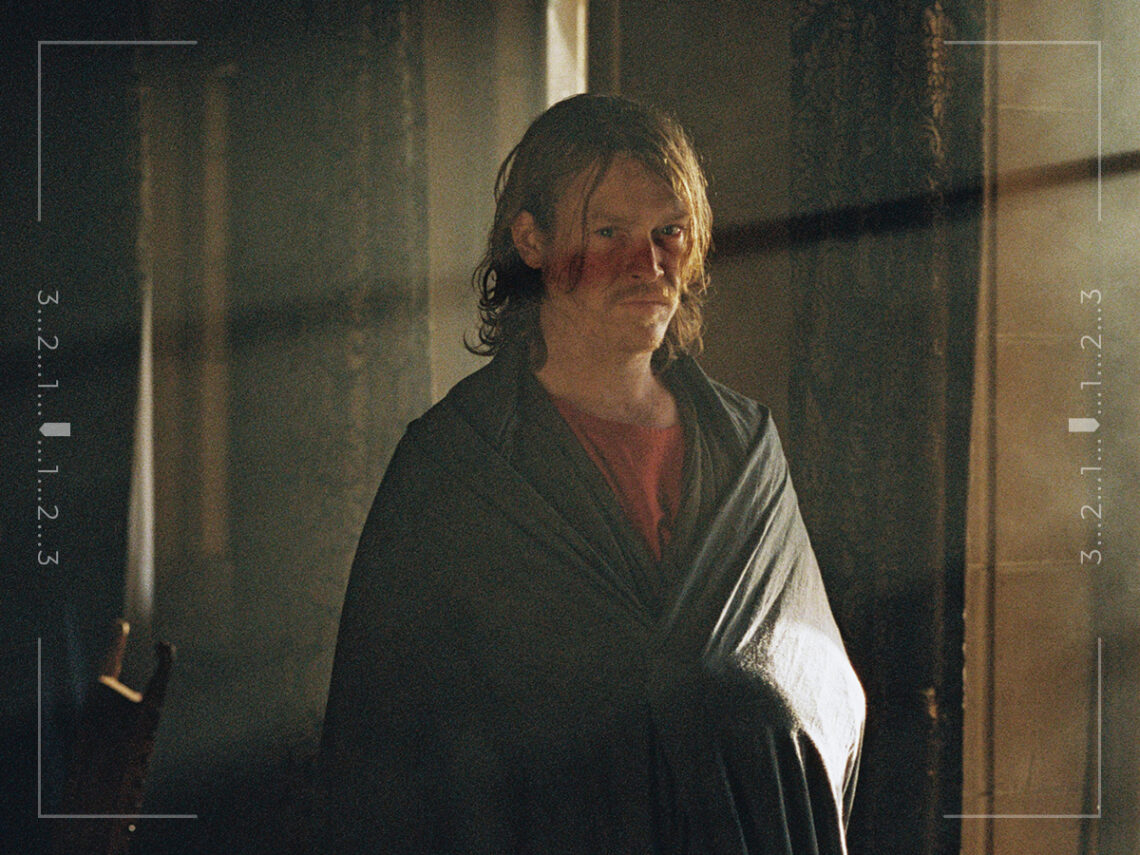
‘Harvest’ movie review: The makings of greatness let down by restraint

The vibe in your village is getting weird. Your master is a coward who might not keep hold of the land. There are intruders that make it worse, and you just keep getting high and/or depressed: welcome to Athina Rachel Tsangari’s cinematic world of Harvest.
The trailer for Harvest hooks you in. It looks like a Wicker Man-style flick where rural villagers essentially lose their minds in their own echo chamber of traditions and turn out the outsiders. It certainly delivers on the claustrophobia of that as this tight-knit community starts off feeling like a united home that the audience falls into, regaling in their rites and their master’s obvious care for them, but slowly, as that togetherness begins to turn and mistrust creeps in, the viewer is very much placed on the outs as well.
All of that is masterfully played by Caleb Landry Jones, who truly is the heart of this movie and its star. The fact that Jones isn’t Scottish is baffling to me, given the perfection of his accent and ability to hold so much emotion in his simple intonations. He gave some of the most beautiful moments simply through his spoken delivery of poetry, cut on top of spanning landscape shots that each look like a painting.
But that also seems to be Harvest’s issue. It can’t seem to decide if it wants to be a slow, beautiful movie or a chaotic one. I’m not suggesting a film can’t be both—take Midsommar, for example, but Harvest doesn’t necessarily balance the two so much as places them side by side in a somewhat unsatisfying way. If you want something visually stunning, you’ll find it here as the crackling film and rich colours of nature do that effortlessly. But if you want something more poetic, you’ll only get glimmers. If you want something wilder and more frantic, you’ll get moments that end all too soon.
It feels like a strange admission to say that I simply wanted more disturbing content. Jones’ biting into a tree bark? Great. The rituals of bashing heads against stones? I loved that. The faster moments where it genuinely does feel like a fever dream, where it gets gruesome or hallucinogenic? They’re the crowning jewels. But in the long sections among a long 133-minute film, it doesn’t quite get wild enough, or perhaps, it simply could get wilder.
All the makings for greatness are there. There are no weak links here as all the performances are great, especially those by Jones, Arinzé Kene as the outsider painter and even Thalissa Teixeira, who says basically nothing but looms over the film like a haunting, captivating presence as Mistress Beldam. It has the benefit of a stunning surrounding shot beautifully, and even the tagline of “Over seven hallucinatory days, a village with no name, in an undefined time and place, disappears” feels so enticing and promising. But after watching, it doesn’t feel entirely accurate.
It’s hallucinatory in a few sequences over the days. The timeframe feels pretty obviously the Middle Ages, and really makes no difference. And mostly, the village doesn’t really disappear—it would be far more mythical if it did, rather than the clearer logic that surrounds its fate.
Cut that logic out, and it would be golden. Abandon the grounding, and it would soar. Go deeper into the carnage that a rural, tiny village could descend into under pressure, and Harvest could have been a new classic. But it doesn’t, so it’s not.
