


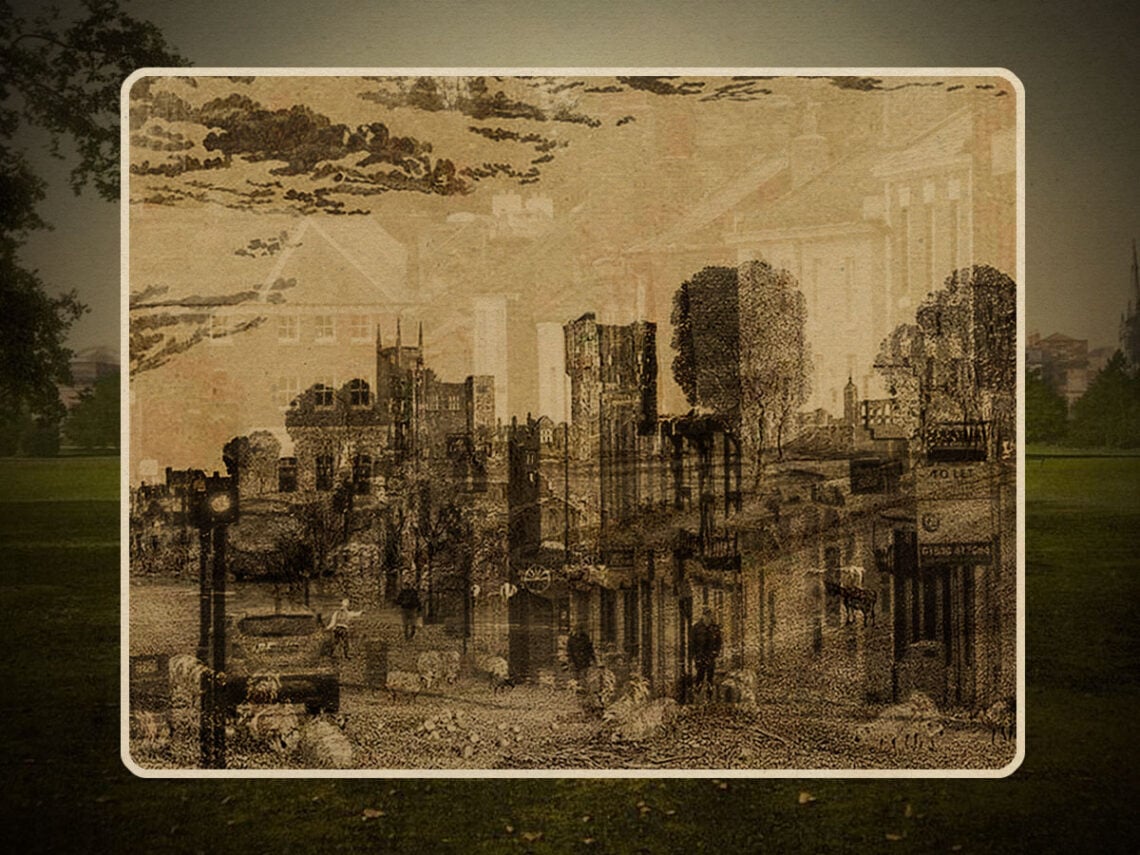
Ashby de la Zouch: The Leicestershire town behind a ludicrous name

With a long and storied history, the United Kingdom has some interesting town and place names that are better known, far from the places themselves.
There are the rude ones, such as Dorset’s Shitterton, Lincolnshire’s Fanny Hands and Orkney’s Twatt, and then you have the bizarre, including the incredibly long Welsh name of Llanfairpwllgwyngyllgogerychwyrndrobwllllantysiliogogogoch, while over the border in England, there’s Wetwang, Queen Camel and Whale. However, there’s one small town in Leicestershire with a name that conjures up all sorts of thoughts, and that is the small market town of Ashby de la Zouch.
If you’d not seen Ashby de la Zouch on a map, you’d be forgiven for thinking it some Italian striker, more used to curling one over the top of bins on a Saturday afternoon, than a quaint town in the middle of England. The name, like a lot of those in Britain, actually gives us clues to how the town developed through the years. Ashby comes from Old English and Norse languages, meaning ‘ash tree’ and ‘settlement’, meaning that the town was originally formed near some ash trees.
Then the second half of the name, de la Zouch, is a later addition, coming after 1066’s Norman conquest. Under King Henry III, there was a Norman knight named Alan la Zouch, who took control of the town. This unusual name, mixing both English, French and Scandinavian, makes it one of the country’s most unique names. The first mention of Ashby came in the Domesday Book of 1086, a historic survey of the country that has been an invaluable resource for historians and formed the backbone of our understanding of English history.
Under the La Zouch family, the town really kick-started its growth, with the castle being built in the 1100s, before 1219’s market and annual fair. That fair still operates today, some 800 years later, and is celebrated every September. The castle was a seat of power, at one time owned by William Hastings, before being dismantled after the English Civil War, so as not to render any future use as a fortress in any rebellions moot. The state of the castle now, which is just picturesque ruins, all boils down to that decision.
As a town, Ashby de la Zouch has lived many lives; renowned as being one of the country’s best horse markets in the 18th century, it grew into being a spa town during the following century. It also played a key part in the midland’s industrial heritage, having both the Ashby Canal and a rail service, which can still be seen in the listed Midland station building.
It’s a beautiful town surrounding by the National Forest, allowing residents access to stunning woodland walks and winding trails, which makes it a great place to live, and then commute to the region’s big cities of Leicester, Nottingham and Derby.
It also has a tight community, one that celebrates its past with festivals, and that, like many others in the country, is facing the tough task of balancing preservation and conservation of its history with expanding and building new homes.
For some people, it’s just a small place in Leicestershire that you’d pass in a car, but this market town has a richer history than some of the world’s biggest nations that can be traced back hundreds of years, thanks in part to its name. That name tells not just the story of Ashby, but of the growth and changing politics of England and Great Britain as a whole, so next time you’re walking through a town, ask yourself why it has its name, because it might just tell you a lot more than you’re expecting.
