


When disco worlds collide: Inside Asha Puthli’s collaboration with Say She She

Emerging from the sweat-dripped walls of underground nightclubs in cities like New York, disco was the dance revolution of the 1970s and, despite being belittled as nothing more than a passing fad at the time, it has lost precisely none of its appeal in the many decades since Studio 54 opened its doors for the first time.
For many, the appeal of disco has never waned since its 1970s heyday, even if the sound of the scene has since splintered off into countless different niches and subgenres.
In the light of modernity, though, more and more young people are turning back the clock to the disco age, finding the same sense of solace and togetherness on those euphoric dancefloors that the original disco obsessives did all those years ago. Say what you want about this nightmarish internet age that we all find ourselves living in, but it does serve a few purposes.
Namely, it has broken down the generational barriers between the old-school and new-school of disco excellence, and nothing represents that pulchritudinous collision better than ‘Pawa!’, the recent collaboration between Brooklyn trio Say She She and disco-jazz icon Asha Puthli.
Swapping her Bombay surroundings for the bright lights of the Big Apple back in 1969, Puthli was once a mainstay of Andy Warhol’s Factory. There, she honed her musical ambitions and began releasing a plethora of jazz-tinged masterpieces during the mid-1970s, many of which ended up forming an essential influence on the blossoming realm of disco.
Inevitably, then, Puthli has become a figure of worship for disco devotees like Piya Malik, Sabrina Cunningham, and Nya Gazelle Brown, otherwise known as Say She She, who have been flying the disco flag since their first emergence back in 2021. More recently, this common ground between two generational artists collided in the form of the Naya Beat-released single ‘Pawa!’, a joint venture that espouses the timeless appeal of that core sound and disco sisterhood.
Explaining how the collaboration came to be, Puthli told Far Out, “Last summer, a fortuitous short break between our individual tours allowed us to meet in London.”
Already an ardent fan of the Brooklyn trio, she continued, “I absolutely love the celestial sound and harmony in the voices of Say She She and over lunch, in that cozy warmth of music sisterhood, I mentioned I’d love to be a fourth wheel and give it a run.”
Combining the jazz-funk sounds that Puthli has been perfecting since her 1970s beginnings with the universal disco infection of Say She She’s tireless output, the single was always going to be an ambitious undertaking, but the final product flows beautifully, as capable of filling a dancefloor as soundtracking a high street strut. Aside from anything else, it is a perfect example of the power that a good collaboration can contain.
Puthli is particularly well-versed in the art of collaboration, too. During the early 1970s, she recorded alongside avant-jazz hero Ornette Coleman and, in much more recent times, worked with Gorillaz on their eclectic new offering ‘The Moon Cave’.
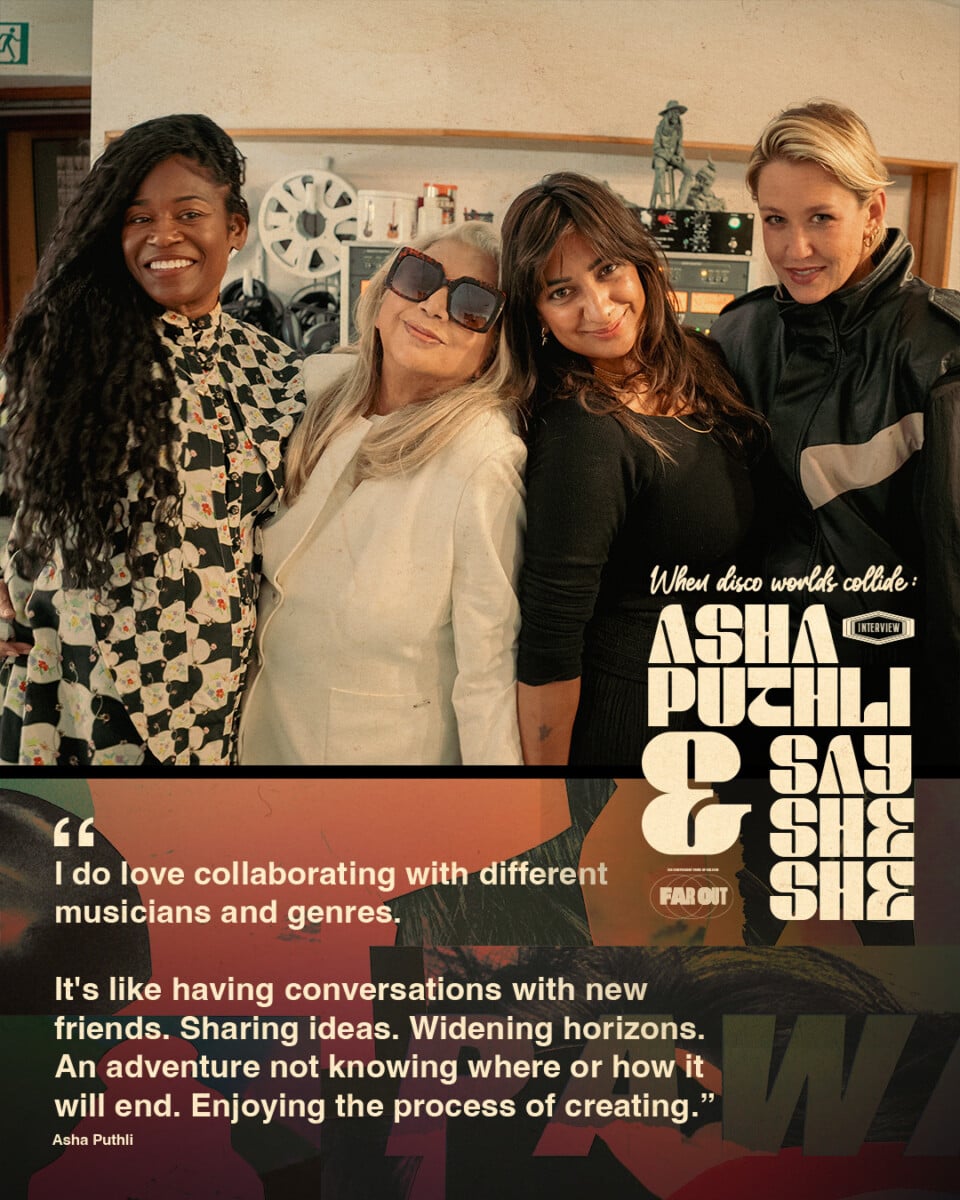
“I do love collaborating with different musicians and genres,” she shared. “It’s like having conversations with new friends. Sharing ideas. Widening horizons. An adventure not knowing where or how it will end. Enjoying the process of creating.”
In terms of ‘Pawa!’, those widened horizons took this multi-generational disco force to Mike Oldfield’s studio, for a session that was far more upbeat than Tubular Bells. “Producer Sergio Rios and the band [Orgone] laid down chords, I sang a melody, wrote the first verse, Say She She wrote and sang the second verse,” Puthli explained, calling the process: “A smooth, easy, quick session.”
“It was an on-the-spot composition,” she continued. “Basically, I expressed my feelings about the camaraderie in the room… Say She She put down the lyrics to the second verse, it was a very natural flow.” That natural flow certainly comes across in the final track, too, with its flowing funk beat perfectly encapsulating the enduring appeal of both artists.
Not only does ‘Pawa!’ exemplify the floor-filling, mirrorball mastery of both Asha Puthli and Say She She, but it also showcases the generation-spanning appeal that disco has always boasted. It might have initially been dismissed as a fad – just as rock and roll was back in the 1950s – but its dancefloor revolution has never really waned over the past half a century.
With records as exciting as ‘Pawa!’ – and its accompanying EP of remixes, due out in April – still introducing themselves to the airwaves, it doesn’t look as though that appeal is going to die off anytime soon, either.
