


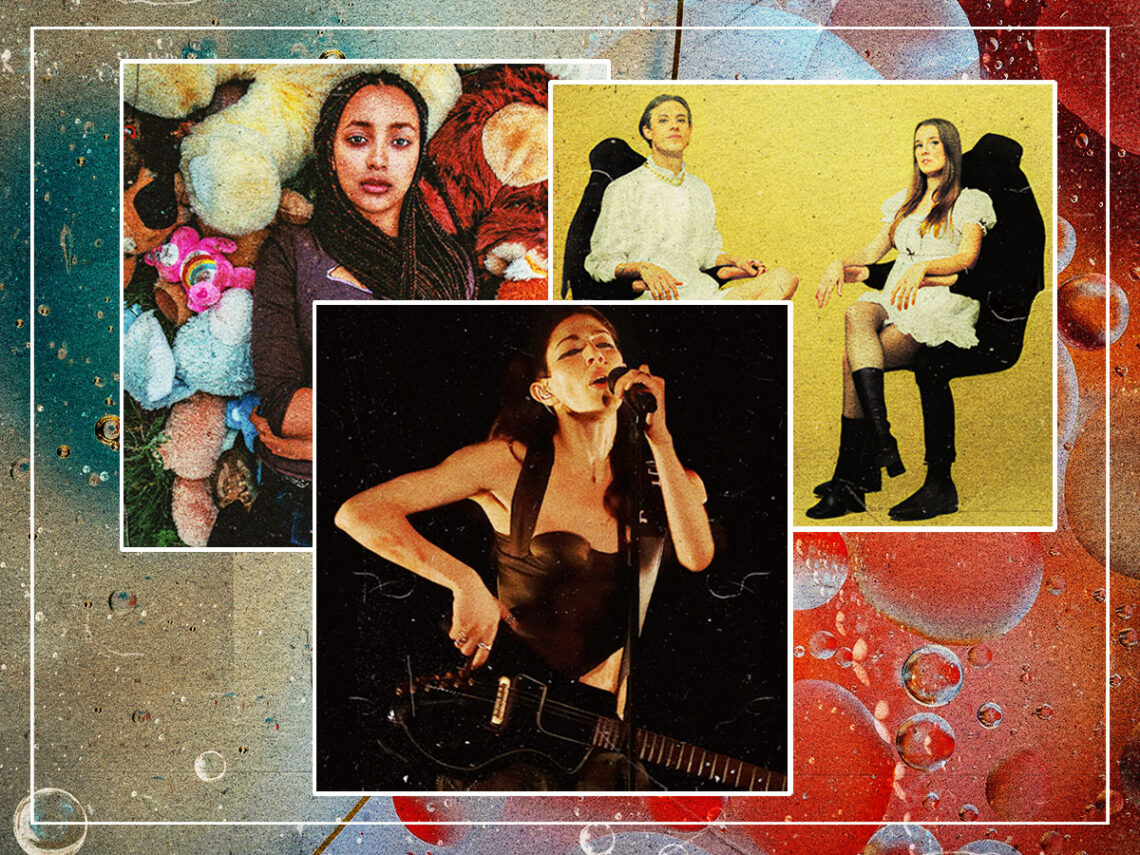
The artists redefining pop for a modern audience

By its very definition, pop isn’t very cool. Derived from “popular”, the genre has been used to describe songs with simplistic structures, wide commercial appeal, and catchy, repetitive hooks. Usually upbeat and always straightforward, its accessibility has made it decidedly uncool to music snobs. Underground subcultures are always seeking out the weirdest, lengthiest, most unconventional and unknown compositions, whether it’s through the sprawling abrasive nature of post-punk or minimal techno.
It wasn’t always this way – the word pop was actually coined around the youth’s love of rock and roll of the 1950s. The Beatles’ sound dominated the airwaves in the UK in the decade that followed, and The Beach Boys rivalled their popularity in the sunny state of California. Rock and roll, it goes without saying, was the most popular form of music. Since then, the genre has declined in quality and respect, becoming increasingly monotonous and stale. Now, The Beatles are lauded by indie rock fans who wouldn’t dare turn to the modern charts to find new music.
Pop music has become a derogatory term, reducing music to chart appeal and singalong value, but there are a number of modern artists looking to turn the genre’s reputation around. Amidst the never-ending music industry machine churning out songs that could have just as easily been written by AI, a new generation of pop artists is innovating, expanding and reinventing the genre for a new generation.
One sub-genre leading the crusade to make pop cool again is hyperpop. Spearheaded by A.G. Cook’s PC Music, Sophie’s experimental production, and a devoted online community, hyperpop pushes the boundaries of pop music as far as they can feasibly stretch. Amplifying every element of the genre – making it all the more upbeat, repetitive, and commercial – the genre looks to create synthetic soundscapes which infuse pop with dance and electronic influences.
Though much of the genre veers too far into experimental electronic spheres to be commercially viable, a number of artists expertly toe the line between innovation and popular appeal. At the centre of this is Charli XCX. Beginning her career with dancey Myspace demos, she found commercial success with mainstream pop hits like ‘I Love It’ before experimenting with hyperpop.
Collaborating with more hardcore hyperpop artists but never falling too far into the niche nature of the genre, Charli has become a modern pop icon for her glittering, accessible, and experimental take on the genre. At once a household name and a cult figure, Charli’s sound combines the traditional elements of pop with the boundary-pushing nature of experimental electronic production. Consequently, her music appeals both to PC Music devotees and blockbuster soundtracks. Her surrounding aesthetic only elevates her ‘cool’ persona, and she has been pivotal in endearing modern pop to more resistant music fans. The Venn diagram of Pavement fans and Charli XCX fans has far more crossover than you might expect.
In the same vein, Rina Sawayama has cultivated a new pop sound which appeals to wide audiences and cult music fans alike. Her self-titled record, SAWAYAMA, was, at its essence, a pop album, but it also incorporated and experimented with elements of rock, nu-metal and R&B. ‘XS’ is pop for the modern audience – lyrically at odds with pop sensibilities, Sawayama speaks out against excessive consumption and capitalism. Still, the song is undeniably singalong-worthy, combining bubblegum pop moments with rock guitar riffs and violins.
‘STFU’ is just as cool, bringing nu metal into her pop sound, while ‘Comme des Garçons (Like the Boys)’ is a dance-pop track that’s impossible not to groove to. Throughout the record, Sawayama retains the influence of 2000s pop, incorporating elements of different genres to keep it fresh and cool. This mixing of styles has garnered her huge commercial success as well as a beloved following amidst underground music scenes and internet circles.
Caroline Polachek has attracted a similar cult and commercial following, which first gathered around her new wave-inspired indie pop track, ‘So Hot You’re Hurting My Feelings’. After the song “went viral” on the social media platform TikTok last year, Polachek followed up her success with the release of her exceptional second studio album, Desire, I Want To Turn Into You. Incorporating Spanish guitars, bagpipes, art pop, and her characteristic synth-infused indie, the record is a milestone in modern pop music.
PinkPantheress, meanwhile, has further proven how incorporating unexpected elements into pop can increase its cult appeal. Her most recent track, written for Greta Gerwig’s Barbie movie, combined the pink, sparkling Barbie essence with a drum machine and an Irish jig moment. The artist appeals to a different audience entirely by combining alternative pop with drum and bass and 2-step. Despite finding initial success on TikTok, PinkPantheress has escaped the one-hit-wonder curse experienced by many who gained overnight success from the app. Instead, she has leaned into her Y2K style and electronic influences, finding a cult audience and topping the charts.
Last but most certainly not least, Australian indie outfit Confidence Man are forging an exciting new electro-pop sound accompanied by energetic performances. Led by Janet Planet, their music contains all the upbeat optimism of pop but retains an element of cool through its dance influences. ‘Holiday’ is a summer soundtrack with an endlessly danceable beat, while ‘Boyfriend (Repeat)’ contains all the repetitive catchiness of pop but with an extra element of personality. Rather than veering into genres like rock or drum and bass, Confidence Man make straight-up, polished dance-pop that is just too good to bury or diminish.
Amidst an increasingly generic radio-friendly sound, a new generation of artists is paving the way for a new kind of pop, one which is just as cool as it is commercially viable. Channelling the commerciality and fun of the genre but with added elements of socially conscious and vulnerable lyricism and genre experimentation, the likes of Charli XCX and Caroline Polachek are mending pop’s broken reputation. Pop doesn’t have to be a guilty pleasure, especially not with so many artists forging a pop sound for the modern audience.
