At what cost? | Artists are coming clean about the financial struggles of touring

There’s nothing more alluring than the idea of being in a band that gets to tour around the world. Even performing around the country or your local area is a thrilling prospect for some. But, when live music finds itself in the state of collapse it’s in at the moment, is it really as enjoyable as you may have once thought?
Seeing other corners of the globe and playing to audiences you didn’t realise you had is something that’s bound to be fulfilling for an artist of any size, and that much will always be true in regard to what makes touring so special.
However, it’s become an increasingly prominent conversation within the music industry, particularly among independent artists or those signed to small labels, that playing shows is simply not cost-effective, and in the most severe cases, an unviable means of exposure for an act. Artists are becoming increasingly frustrated with the unfairness of the live music ecosystem, and as a result, are becoming more transparent about their earnings.
This can, of course, vary depending on a number of factors, especially when it comes to the notoriety of the act and the number of members in their touring party, but even so, the acts who you think might be doing well for themselves as a result of them gigging endlessly are still struggling to make ends meet.
To further dig into the situation that is rapidly evolving into an artist’s worst nightmare, we spoke to a couple of rising stars of the UK indie scene to get their brutally honest take on how gigging has become a financial burden for them, and how they’re managing to make things work in what is proving to be a torrid period for emerging artists.
It’s fair to say that over the last 18 months, Bristol duo Getdown Services have generated an almost unprecedented amount of traction that has seen them embark on sold-out tours across the UK and Europe, and even replicate this feat by visiting the US for the first time in their brief career to date.
Aside from their sole studio album, Crisps, and a handful of EPs released via independent label Breakfast Records, the primary reason for their ascent is their relentless approach to touring, which is bolstered by the fact that their live show is a riotously fun display of the duo’s irreverent brand of humour.
However, despite appearing to onlookers like a band firmly on top, they’re not immune to the financial pressures that plague other acts lower down the pecking order. Co-frontman and guitarist Josh Law asserts that while being a duo makes them “a cheap band to run”, with gig fees not needing to be stretched as far as they are with other bands, there are still some factors that make it seem as though their privileged position is still precarious.
“Our biggest expense with touring is accommodation,” Law confirms. “We have a touring party of either three or four people, and accommodation is normally three hotel rooms. We pay our tour manager a day rate, and if we have someone with us doing merch, we’re paying them a day rate too, which is higher if they have to help prepare and organise a new merch order.”
On top of this, they’re still paying their manager and booking agent a cut of their gig fees, which leaves them with only a reduced amount of the overall fee left to cover both their touring costs and income; something they’ve only been lucky enough to incorporate into their finances in recent months.
Depending on where they’re playing, gig fees can fluctuate significantly, and despite being able to sell out shows at Electric Ballroom in London, they’re also still choosing to perform in more intimate venues, which don’t have the capacity to pay even a fraction of the amount that they’d receive for playing to 1500 people. On top of that, as much as they enjoy playing overseas, these gigs can end up costing the band even more than in the UK, despite the live music economy in other countries being significantly stronger.
“Gigs abroad cost more because the drives are normally longer, there’s ferry costs, and there are also often extra taxes and tolls,” Law adds. “On top of this, there are always other unexpected expenses like van repair and replacing gear.” Given that this is the case, how do bands that spend so much time on the road manage to make any meaningful income from?
“Merch, streaming royalties and more recently sync placements do a lot of heavy lifting with us to fund tours because often gig by gig there isn’t much profit from the fees,” Law states. “Next year, festivals will add money for this purpose too; so far our festival fees haven’t been high enough to cover much of the overall running costs of touring but our fees are going up next year, and these sort of increased fees will primarily go towards playing gigs in places that can’t afford to pay us more.”
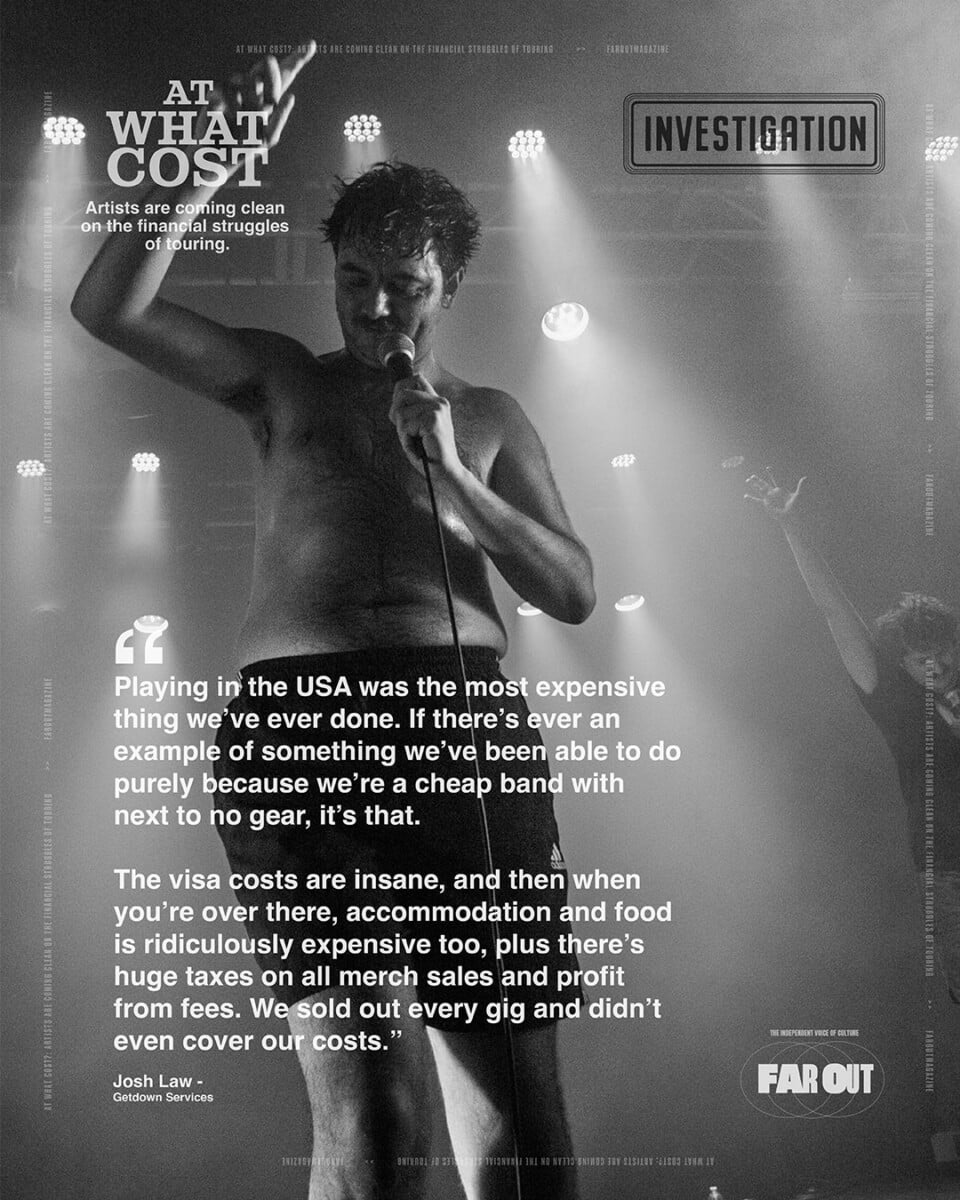
Despite their situation being far from perfect, Law argues that their low costs compared to other acts are still their biggest advantage when it comes to seeing any financial gain. “Playing in the USA was the most expensive thing we’ve ever done,” he shares. “If there’s ever an example of something we’ve been able to do purely because we’re a cheap band with next to no gear, it’s that. The visa costs are insane, and then when you’re over there, accommodation and food is ridiculously expensive too, plus there’s huge taxes on all merch sales and profit from fees. We sold out every gig and didn’t even cover our costs.”
Fortunately for Getdown Services, there have been a number of alleviating factors that have helped them get by despite the difficulties placed on touring acts, but the same can’t necessarily be said for other rising acts in the UK. Rachid Fakhre, who performs under the name Skydaddy, has received a significant amount of attention in recent years and has had the privilege of being able to play some impressive shows, but this comes at a greater financial cost for him and the people he works with.
“The simple answer is that we do what the budget allows,” he states, explaining how touring decisions all swing on the size of the group that he is taking with him on tour. “Saying that, it would be difficult to find a budget to cover an eight-person band.”
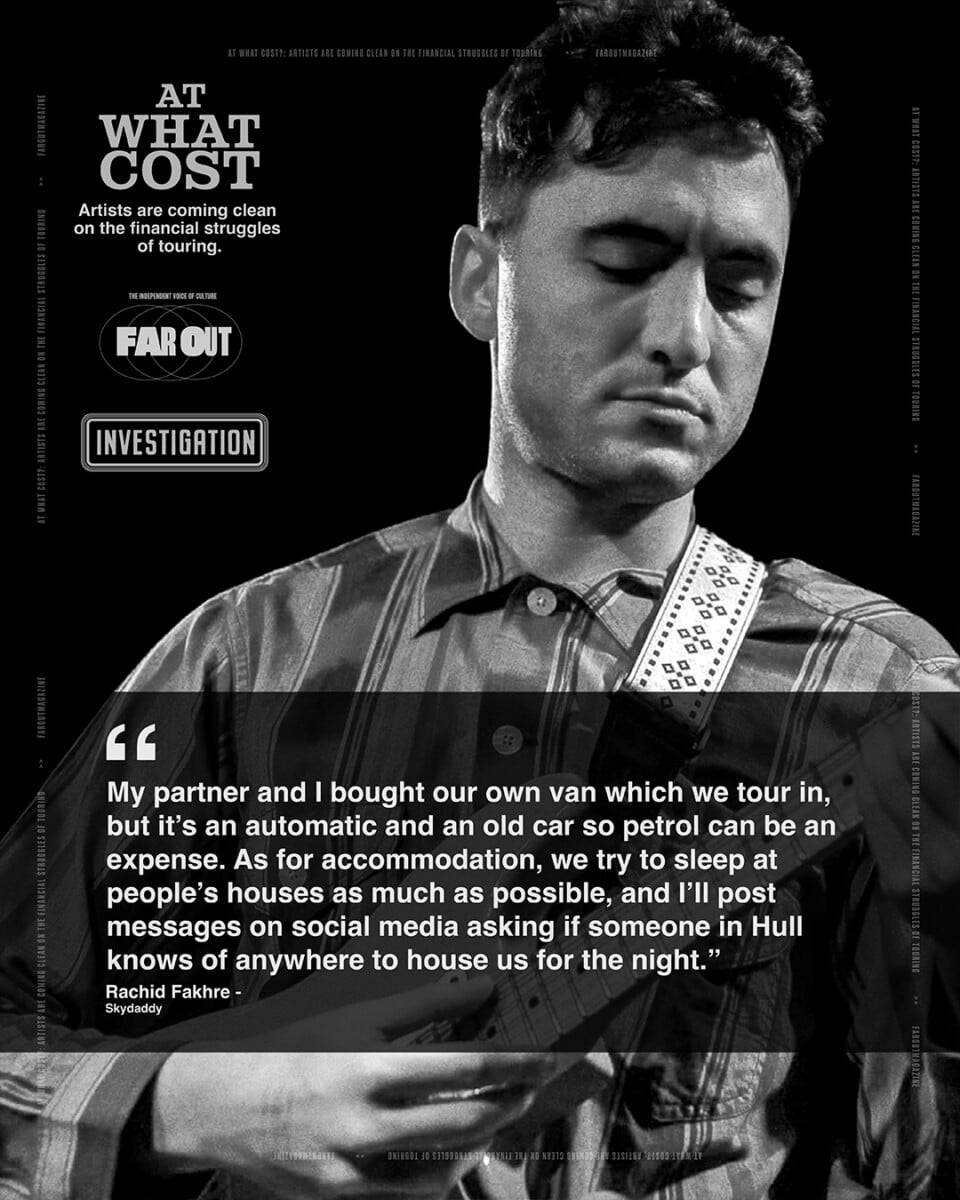
Fakhre’s touring band is an eight-person ensemble at its largest, but there have been occasions where he’s been forced to trim this down in order to significantly cut costs. While performing with all of the required musicians to bring his compositions to life would be ideal, he knows that it’s hard to convince people to remain on board when being paid a pittance between them.
“In the interest of being totally honest, there’s a period when you’re playing with new musicians, they’re not too fussed about how much you’re getting paid,” he argues. “Although, after a while of playing with someone, you do start to question putting lots of time into things and not getting much out, so if I’m playing with a full band, I need to pay them something and be transparent about what they’re getting, but it also depends on the vibe of the show.”
For example, in April of 2025, Skydaddy supported Cameron Winter for his Hackney Church show in London; something that seemed like a golden opportunity for Fakhre to showcase his work to its full capacity. Despite the fact that this would have been a hometown performance that incurred no additional costs, it didn’t feel like the right occasion for him to bring all eight members of the band together, given the intimate nature of the headline performance.
Similarly to Getdown Services, Fakhre notes that the cost of travel and accommodation is something that he’s noted as an obstacle, and he’s had to make thrifty decisions in order to stay on top of this and not have to sacrifice parts of the fee for shows around the country. “My partner and I bought our own van, which we tour in, but it’s an automatic and an old car, so petrol can be an expense,” Fakhre explains. “As for accommodation, we try to sleep at people’s houses as much as possible, and I’ll post messages on social media asking if someone in Hull knows of anywhere to house us for the night.”
“Another way we cut costs on the last tour was bypassing promoters and self-promoting all of the shows,” he adds. “We saved money, but I gained a lot of grey hairs. When you’re worrying about other things, tracking ticket sales can be taxing and will take a toll on the live show itself, and then sometimes, when you can’t afford to pay for a merch seller every night, you often forget to mention it. If you go a night without selling, that can be a disaster.”
Fakhre notes a few other important differences between playing in the UK compared to performing in Europe, most of which only go to highlight just how underfunded the domestic grassroots scene is. “France treats you incredibly well,” he notes, “and it’s a given that you’ll get a hot meal. There’s always a lot more staff on hand to help you, and the fee is often a lot better.” It’s clear that the problem lies with the lack of government support afforded to independent venues and promoters in the UK, but this also highlights just how easily avoided this level of corner-cutting could be.
While these acts were under obligation not to share exact costs with us, there have been other established artists who have been more candid in recent months about the financial breakdown of how much a gig costs them.
For example, Cardiff indie act Los Campesinos! have long been vocal about the struggles of being a fully independent act, and while their dedicated cult following has seen them rise to unprecedented highs as a group in recent years, with their last album, 2024’s All Hell, becoming their first album to chart in almost 20 years of the band’s existence, they’re not afraid to discuss the impact that touring and playing standalone shows have had on them from a financial perspective.
The band’s frontman, Gareth Paisey, shared a detailed and impassioned blog post in March 2025, breaking down the cost of their first gig in the Republic of Ireland since 2008, and while the band were perfectly content with self-funding this opportunity, it came at an astronomical cost. The Dublin show saw the group running at a combined loss of almost £2000 between them, and while they claim that they were willing to take the hit in this instance, the same can’t be said for other artists wanting to make the same commitment.
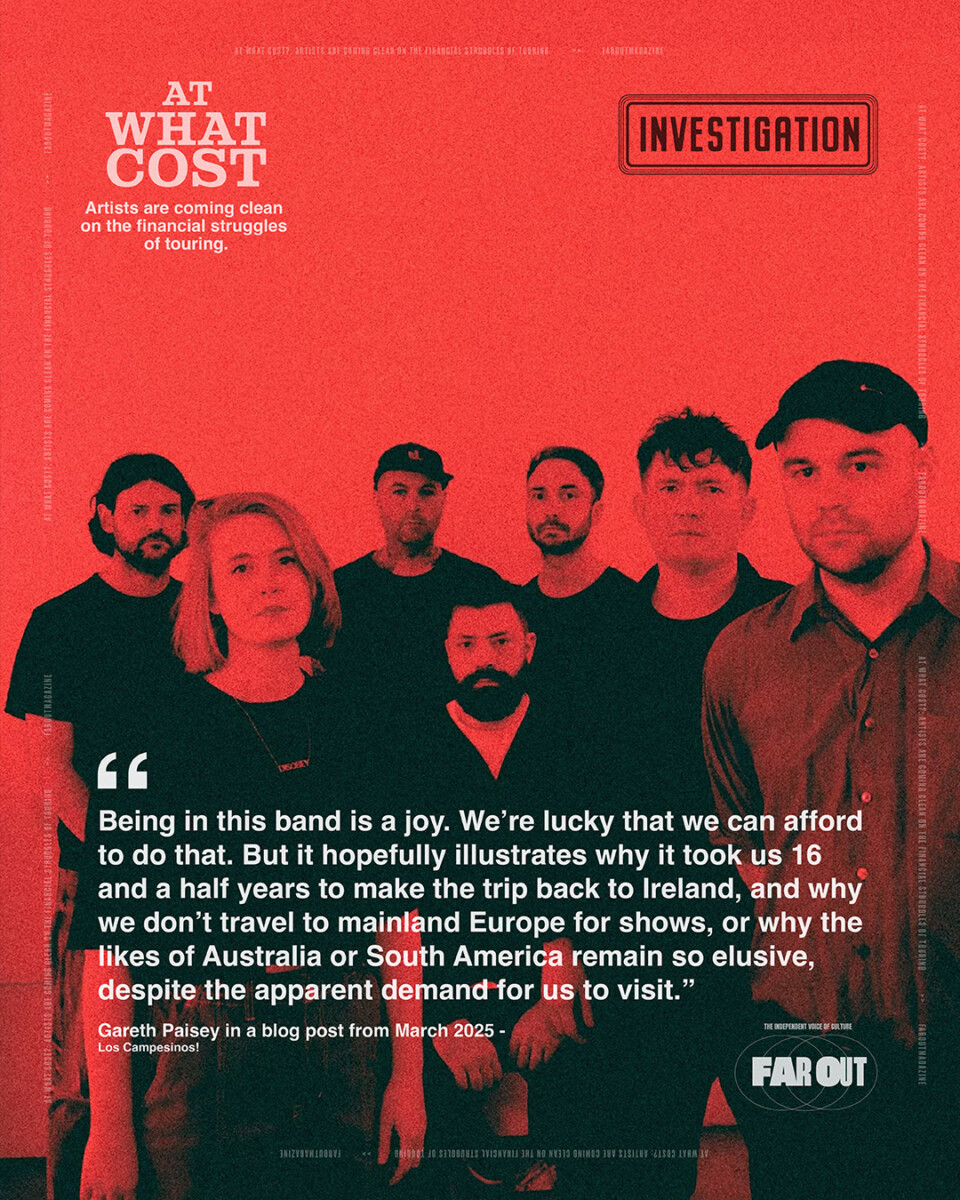
“Do we care?” Paisey writes in his detailed post. “Not really, no. I care that this is the reality for our band and bands like ours, but it doesn’t diminish the experience of a fun weekend for us. Being in this band is a joy. We’re lucky that we can afford to do that. But it hopefully illustrates why it took us 16 and a half years to make the trip back to Ireland, and why we don’t travel to mainland Europe for shows, or why the likes of Australia or South America remain so elusive, despite the apparent demand for us to visit.”
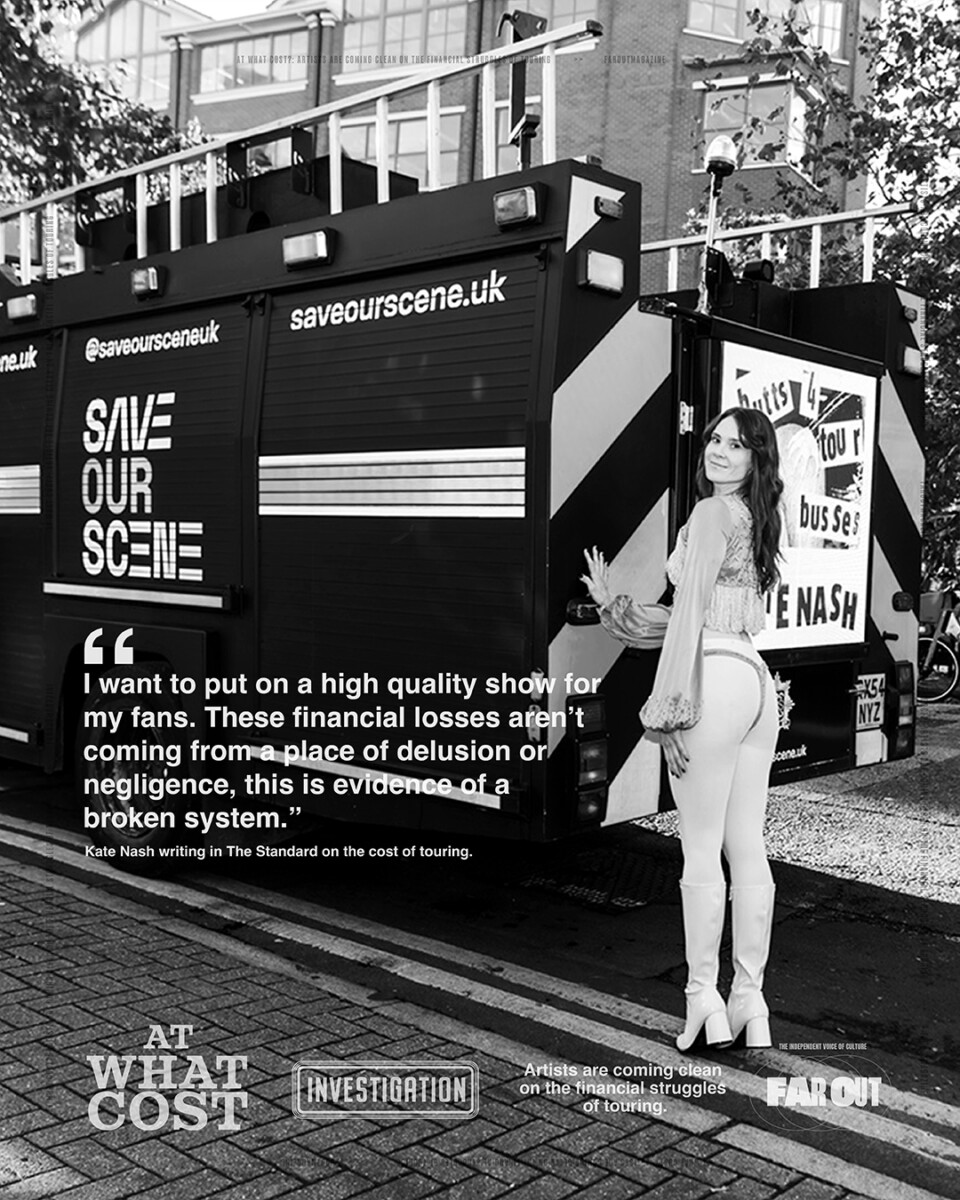
Similarly, Kate Nash, who reached number two in the UK charts in 2007 with ‘Foundations’, has also become a champion of campaigning for greater equity and transparency in gig fees, with her speaking out in the press about the financial realities of touring in recent times. Despite her previous commercial success, she now finds it tough to be able to make ends meet when it comes to performing live, even in the UK, where she is most well-established.
In November 2024, Nash notably claimed that she had resorted to using subscription platform OnlyFans and that she was “selling pictures of my arse online to subsidise touring losses.” When an artist with multiple hit records and awards to her name, as well as a consistently high number of streaming figures, has to resort to this to ensure a stable level of income, it becomes clear that the system isn’t just broken for those at the bottom of the ladder, but those further up as well.
“Admittedly, my show costs are considered reasonably high because there are a few things I won’t compromise on,” she added in a self-penned article published in The Standard in February 2025. “One is safety, I won’t cut costs when it comes to travelling safely. Two is ethics, I don’t want to underpay my band and crew. I hear about both of these things happening frequently. Three is I want to put on a high quality show for my fans. These financial losses aren’t coming from a place of delusion or negligence, this is evidence of a broken system.”
It’s not pretty, but something can surely be done about it if organisations like Music Venue Trust start looking beyond keeping venues alive. This, of course, is not an easy task in itself, but the next objective after keeping live venues alive is to ensure that those performing at them are being treated fairly.
There’s also the growing issue of ticket prices being hiked up by promoters, especially those operating on a larger scale such as LiveNation. The underlying argument against this is that if you’re able to charge a higher amount, then why is nothing being done to send some of that money further down the chain in order to support the grassroots, where all of the future generations of stadium fillers are likely to emerge from?
The live music industry is in a sorry state, but we must remain optimistic that something can be done. The solutions are out there, but it’s a case of being able to make them work for everyone in order to secure a future where live music isn’t a commodity that only the privileged can consume comfortably, and instead one where people from all backgrounds can express themselves without feeling as though they have to sacrifice financial stability.