


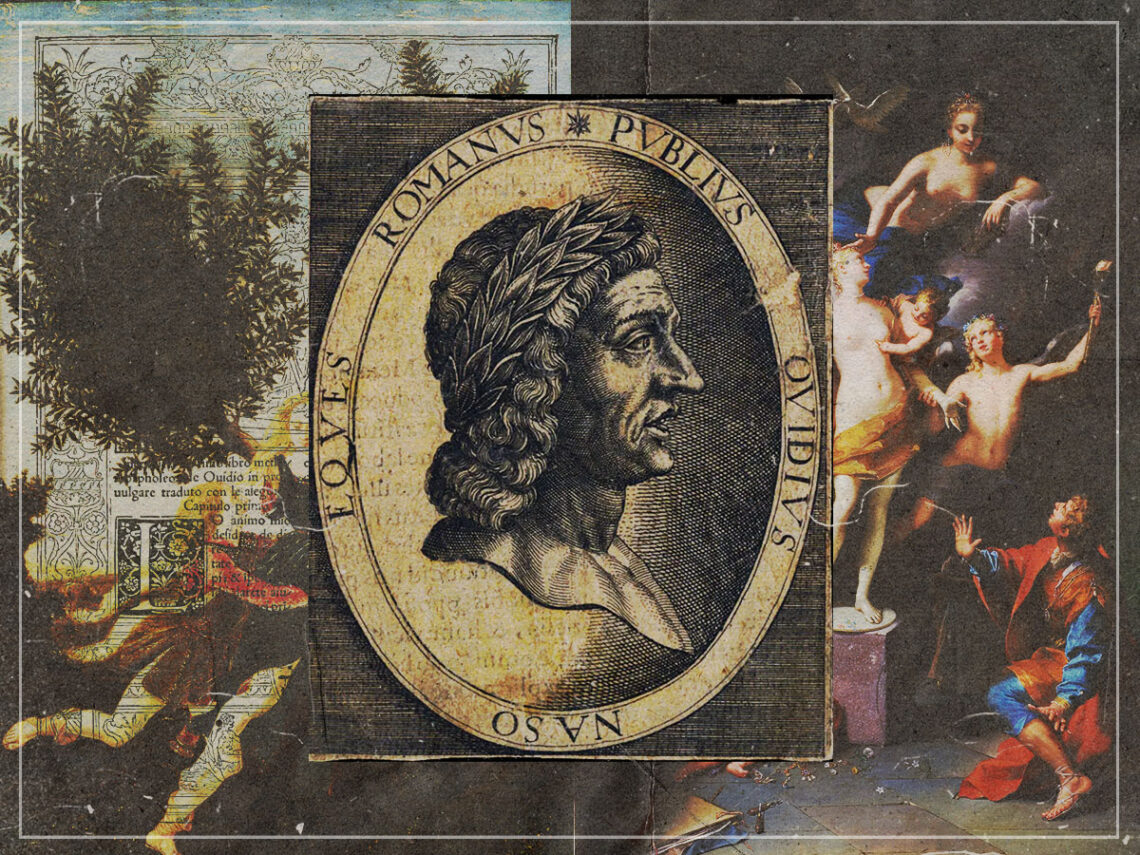
The artist who fell in love with his own work

In Ovid’s Metamorphoses, a collection of narrative poems written in Latin, he used traditional myths to appeal to subconscious truths. In the story he told of a sculptor called Pygmalion, he explored moral attitudes toward women – pitting prostitutes against Pygmalion’s impossibly beautiful sculptures. As he eventually fell in love with his own masterpiece, Ovid laid out a world where perfect “women” were only realised in the minds of men able to mould them, which not only has contemporary echoes but influences a series of art projects that depicted the myth.
In book ten of Metamorphoses, Pygmalion came across the Propoetides of Cyprus. The Propoetides were a group of women from Amathus, and despite residing near a temple of Aphrodite, they rejected her divinity – turning to prostitution. Pygmalion cursed them, “detesting the faults beyond measure which nature has given to women,” swearing himself to celibacy to avoid similar women.
The prostitutes were condemned by Pygmalion and Aphrodite, and as they begin to lose touch with their own shame, blood freezes in their cheeks. In the poem, their lack of modesty is echoed in their inability to blush, and Aphrodite’s rage soon turns them to stone.
Elsewhere, Pygmalion was grappling with his own frozen woman. Sculpting became an outlet as he tried to avoid sex, but his innate desires soon informed what he carved. He chiselled a woman out of ivory, one who was suitably modest and shockingly beautiful. He falls for her, enraptured by the idea of a woman untainted, even by him. He dresses his sculpture, builds it a bed, and leaves it gifts as if it were real. Overtaken by his own love for it, he believed it was able to kiss him.
But in the midst of his delusion, he recognised on some level she wasn’t real. He was too afraid to ask Venus, the goddess of love, to bring her to life. Instead, he prays to her, begging her to send him a wife as beautiful as his statue. In a moment of pity, Venus decides to bring his creation to life – acknowledging his respect for her by not asking outright. When he returns home, his sculptor, named Galatea, has come to life.
She typified the truly perfect woman, the antithesis of the prostitutes whose cheeks weren’t stained red by shame. When they have their first kiss, Galatea blushes. She was perfect.
The drama and warped romance of Pygmalion and Galatea have provided ample inspiration for artists from Jean-Léon Gérôme to Francisco Goya. Continually, Pygmalion’s love affair with his own work is evident in the beauty they pour into Galatea’s white form. Sometimes, she’s halfway between woman and work of art; others, she is totally frozen. Though many artists have tried to mimic Pygmalion’s obsession, unless they, too, fell in love with their paintings, they’d always fall short.
