


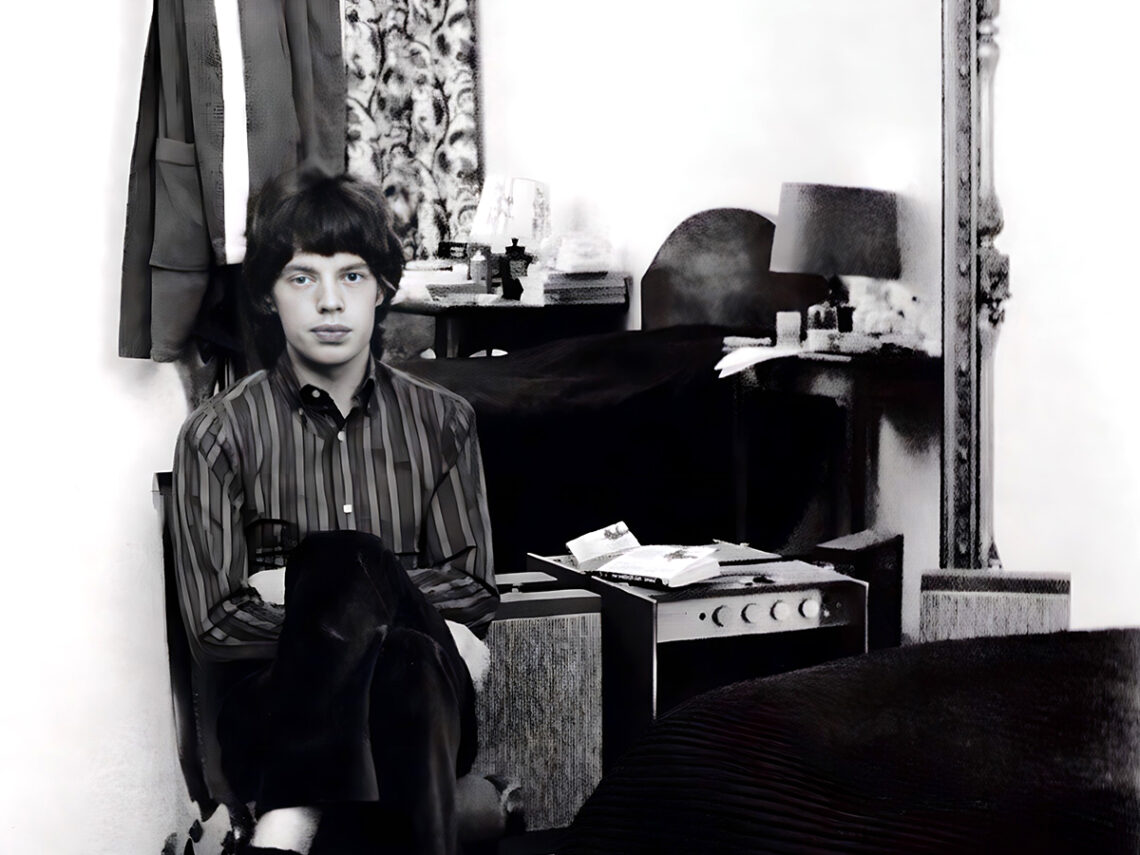
“A beautiful writer”: the musician who taught Mick Jagger how to write a song

For many modern artists, Mick Jagger serves as the template for live performance.
Where many of his rivals of the era were concerned with songwriting innovation, Jagger was a bona fide performer and probably the very best one at that. He took little bits from all the greats who came before him, namely James Brown, Little Richard and Elvis Presley, and put them into a more modern outfit, fit for the exciting new future of rock and roll, and immortalised himself in the process.
Ultimately, it was lucky Jagger had such a knack for it, for his writing took a long while to catch up to speed. The Rolling Stones shot to fame in the 1960s by doing what a large portion of new acts were also doing: performing covers. It was charming and entertaining, but lacked any of the transcendental depth that The Beatles were creating.
Slowly but surely, with the trust of his partner, Keith Richards, Jagger slowly grew into the role of songwriter and helped transform the trajectory of The Stones in the process. But to get there, he had to slightly step out of the shadow of his beloved greats and focus on the delicacy of other musicians, ones who lack the sort of on-stage charisma he copied and instead harboured a much more profound sense of creativity.
Jagger explained that for him that change all started with Buddy Holly, stating “To English people he was an enormous inspiration.” He continued to outline the difference between Holly and his previous idols: “Therein lies the difference because he was a songwriter, which Elvis wasn’t.”
Adding, “And he wrote very simple songs, sort of lesson one in songwriting. Great songs, which had simple changes, nice melodies and changes of tempo and all that. You could learn from Buddy Holly how to write songs, the way he put them together. He was a beautiful writer.”
Holly was, in fact, the cornerstone for the famed British Invasion era, for it wasn’t just Jagger who remarked on his genius. His songwriting partner, Richards, was also quietly taking note of the American, more specifically, his debut 1957 record, The Chirping Crickets, and similarly using it as a crash course in songwriting.
But his decision to do so didn’t come from a recommendation from Jagger. No, instead it came from the band the media were insistent on calling The Stones’ rivals, The Beatles. Richards explained, “I remember talking to Lennon and McCartney about Buddy. The fact that he was writing his own songs was a great impetus for us.”
Holly’s ability to combine writing and performance, making it a more seamless means of expression, was clearly integral to an entire generation of rock and roll bands who would help push the genre further into innovation.
Come the 1960s, the blues rock model was growing somewhat tired, and the catalogue of songs to cover was saturated. Holly guided this new generation into a place of creativity, where old covers would be left behind for an exciting brand of original music.
