


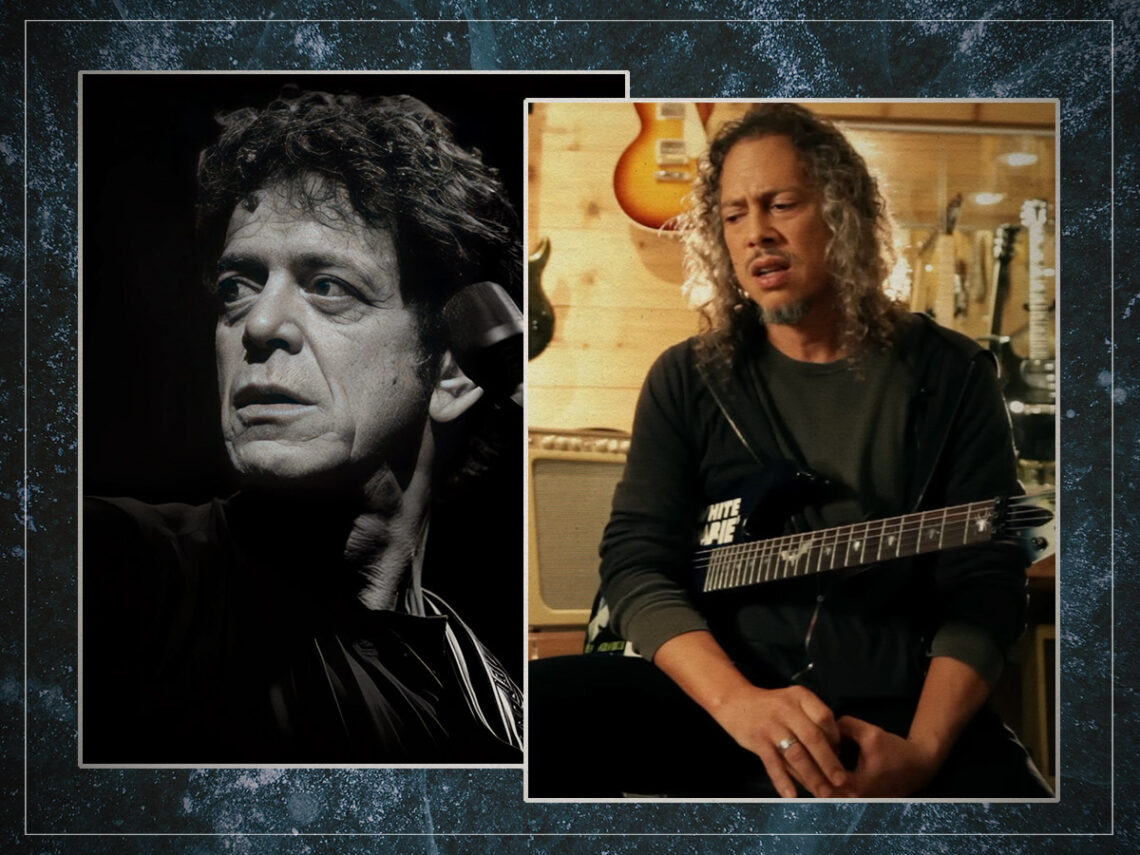
When Lou Reed forbid Kirk Hammett from playing guitar solos: “No belly dancing music”

History is full of works of art that were jeered, derided, and completely misunderstood in their own time, only to reveal themselves to future generations as forward-thinking acts of genius. This pattern is so familiar, in fact, that we’ve arguably begun to overcorrect our perceptions as a culture, looking at any widely panned book, film, or album with an eye toward some potential future celebration of its heretofore hidden merits.
If we’re living in a world where The Phantom Menace is now considered one of the better Star Wars films, then why not be the cool contrarian touting the greatness of Metallica’s much maligned St Anger or Lou Reed’s infuriating Metal Machine Music? For that matter, why not take out two birds with one stone and relitigate the polarising record those two artists made together?
When Reed and Metallica released Lulu in 2011, interest was high from both fan bases, but scepticism was probably higher. Yes, this unlikely combination had worked out surprisingly well when they’d joined forces to play ‘Sweet Jane’ at the Rock and Roll Hall of Fame’s 25th Anniversary concert in 2009, but as more information leaked about the nature of their studio collaboration, it sounded less like an intriguing hard-riffage take on classic street-cool Lou, and more like a bloated theatrical concept album: two discs of spoken-word Reed vocals inspired by the plays of the 19th century German playwright Frank Wedekind. Maybe not.
This was never going to be the kind of record that united and galvanised two already snake-bitten fan bases, and sure enough, when Lulu arrived, it got the predictable, polarising response, with lackluster sales and vitriolic takedowns by some of the more vocal critics from the worlds of metal and art rock, alike.
Fortunately, there were cool contrarians defending the record, too, led by Reed and the guys in Metallica themselves, who never made any apologies for it and instead repeatedly talked about what a great time they had making it. Reed went as far as to call it “the best thing I ever did”—a bold statement for an album that also proved to be the last he released before his death in 2013. The added weight that Reed’s death retroactively brought to the project has likely contributed to why Metallica have continued to vehemently defend it.
“We like being challenged,” guitarist Kirk Hammett told The Verge in 2013, “We like going down new creative avenues in the name of Metallica… I think that Lulu is some of the best stuff we’ve done… Working with Lou Reed was such a cool, unique, and special thing for us. Maybe it’s not for everyone. Maybe it’s a challenge for our fans, but for us—Lars, James, Rob, and myself—we loved doing it and it was such a great experience. We look back at it very positively.”
That’s not to say that Metallica were automatically in lockstep with Lou Reed when they started working together. Part of the fun of the “challenge” was feeling out how their respective styles and instincts could rhyme and intersect. Unsurprisingly, there were plenty of bumps along the road, as the sometimes notoriously cantankerous artist provided his feedback bluntly and clearly in the interest of efficiency.
“I remember I started doing some wah-wah stuff and [Reed] just went up to the mic and said, ‘No’,” Hammett recently recalled to Rolling Stone. “I was like, What? And he goes, ‘No guitar solos’. I’m like, OK. And then I remember at one point I went to a Phrygian dominant, you know, it’s kind of an Eastern sounding scale. And he went up to the mic and said, ‘No belly dancing music’.”
These are not the kind of notes most people could get away with giving to a guitarist on the level of Kirk Hammett, but from Lou, it just became an amusing anecdote, an authentic part of the experience.
