


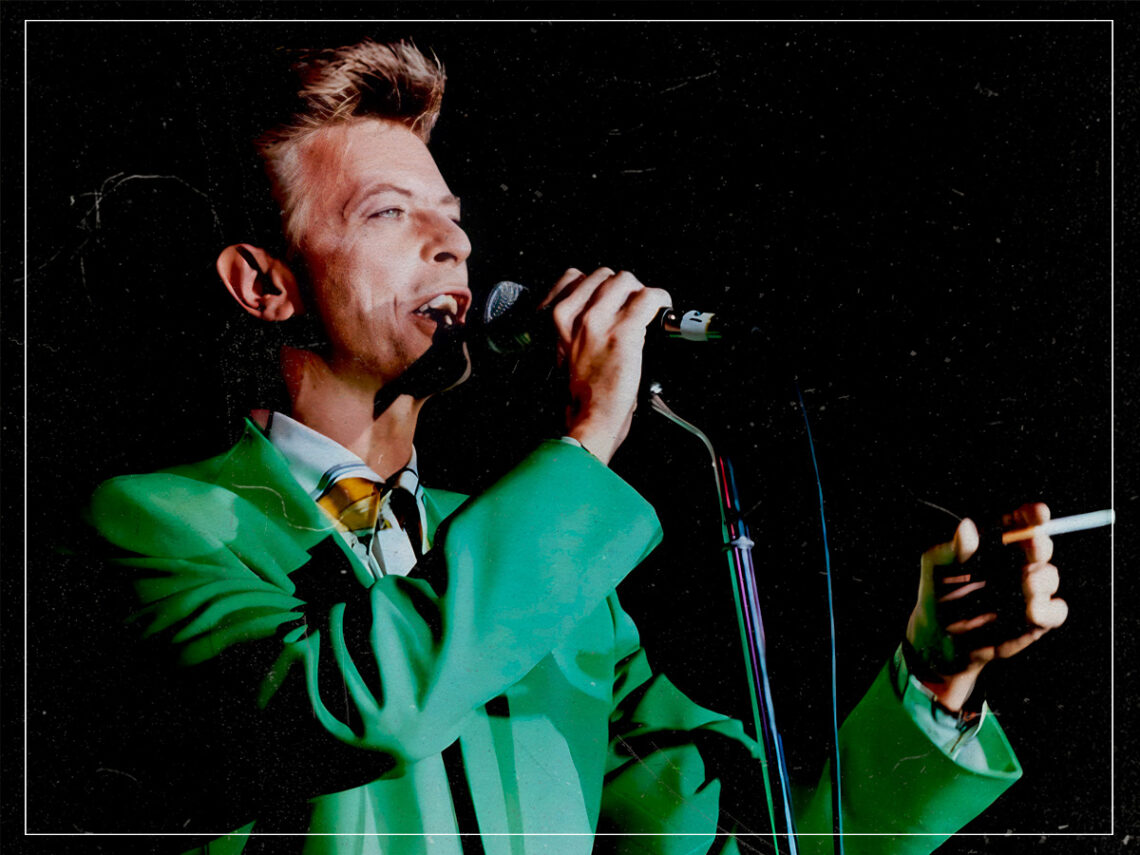
“Wouldn’t be playing music”: The artist who inspired David Bowie to become a musician

David Bowie knew from the age of seven that music would be his guiding force. To him, it wasn’t just a part of culture—it was a source of excitement, offering the promise that life could be far more extraordinary if he chose the road less travelled. This path would ultimately lead him to become a beacon for an entire generation. However, before reaching that iconic status, Bowie found his unique voice through his deep admiration for another rock legend.
Children are usually inquisitive, especially around six or seven years old, and usually plaster themselves to their parents while creating a shield from the outside world. Around the same time, they typically develop more complex emotions, like realising you can sometimes feel a myriad of emotions simultaneously. At this age, Bowie was described at school as a “single-minded” child who veered on the edge of brawler behaviour.
The reasons for becoming so defiant are varied, of course, but in Bowie’s case, it seemed as though a journey in solitary self-discovery was established from the moment he was born. Before his generation, the parents of rebellious children would blame such a development on the era’s rock ‘n’ roll influence, and if it weren’t for Bowie becoming so enamoured with such figures from such a young age, it would be tempting to say his delineation was separate.
However, the young, seven-year-old pariah sent off for a photograph of one of his favourite figures, Little Richard, and patiently waited for it to arrive for weeks. Feeling excitement, joy, optimism, and uncertainty about how much a single rocker could yield from a single performance, Bowie’s multitude of emotional, childlike development was centralised in one prospect: one day following in the same footsteps.
While a surge of future musicians were fixated on other ‘light bulb moments’ like catching The Beatles on The Ed Sullivan Show, Bowie joined a handful of others who felt Little Richard was the ultimate muse. So when the photograph he had waited what seemed like years for a young and impressionable mind finally arrived, torn by the brutal hands of the postal delivery service, he was distraught. “I was absolutely broken-hearted,” Bowie later reflected.
Determined not to allow the frailty of such an important image to become a career self-fulfilling prophecy, he went out and bought himself a saxophone with the intention of one day becoming Little Richard’s right-hand man. As hindsight decrees, Bowie didn’t end up living out his young dreams, but he became something bigger and much more important, and it’s all because he once discovered the man who held the key to true rock ‘n’ roll. “Without him I think myself and half of my contemporaries wouldn’t be playing music,” he admitted.
Bowie discussed his love for Little Richard several times throughout his life and career, stating that he was the sole reason he became a musician. When the ‘Starman’ appeared on Michael Parkinson’s talk show in the 2000s, he shared an anecdote about his wife Iman having recently bought him one of Little Richard’s stage jackets for their anniversary. He also reflected on seeing him perform at Brixton Odeon in 1963, a coveted show featuring The Rolling Stones on the bill as the opening act.
Although the many stars that appeared that evening dazzled the young mind of a true individualist — from Sam Cooke and Bo Diddley to Duane Eddy and the Stones — it was Little Richard who started it all. A true embodiment of fearless creativity, it was Little Richard who befriended a seven-year-old David Jones, inspiring him to see music as an endless frontier of possibility.
