


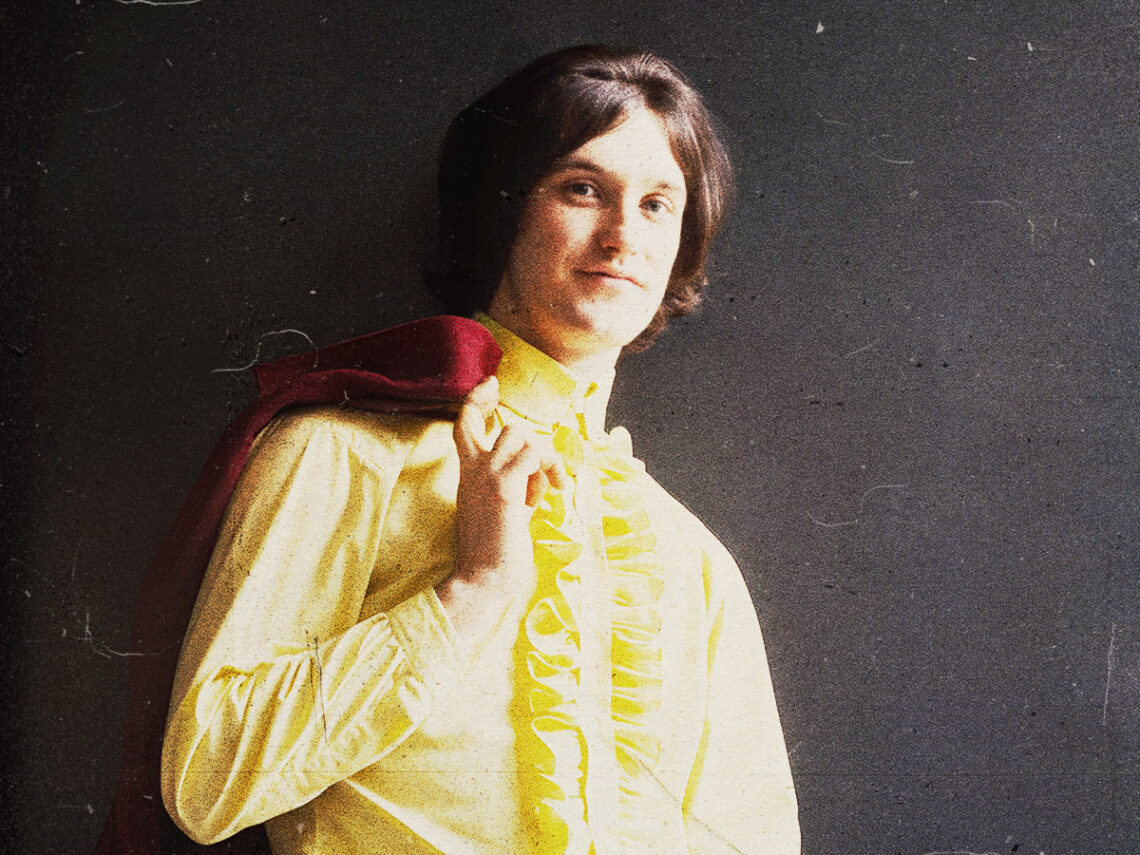
“The true artist”: the inspiation Dave Davies called the best in The Rolling Stones

Revolutionary rock bands were ten-a-penny back in 1960s London. The city managed to foster a particularly vibrant and productive cultural landscape in the post-war era, spawning a plethora of pop stars, musical experimentalists, and defiant rock stars. Mod rockers The Kinks were at the forefront of that rock revolution, typifying the youth of the era with anthems like ‘You Really Got Me’, and contributing to the vast melting pot of rock and roll that defined the sounds of the swinging sixties.
One year prior to The Kinks’ official formation, another gang of rock misfits banded together under a common love of blues and R&B. The Rolling Stones began life as a simple blues cover band, but as the decade developed and groups like The Kinks burst onto the scene, they recognised a need to develop and diversify their sound. After being spurred on by manager Andrew Loog Oldham, Mick Jagger and Keith Richards began to write their own original material, skyrocketing the band to the dizzying heights of rock stardom by the mid-1960s.
Although The Kinks were often embroiled in vicious rivalries with their peers–Ray Davies, in particular, had a somewhat tumultuous history with The Beatles–there was certainly a mutual respect between The Kinks and The Stones. After all, nobody could deny the artistic genius of Ray Davies, any more than they could Brian Jones, the original leader of The Rolling Stones.
Jones was the catalyst for the band’s formation back in 1962, but the emergence of Jagger and Richards as songwriters largely pushed him to the sidelines. Still, the multi-instrumentalist was essential for some of the band’s most innovative and important works, including introducing the sitar to now-iconic tracks like ‘Paint It Black’. Despite these essential contributions, Jones’ position in the band was increasingly at risk at the 1960s progressed, largely owing to his dependency on drugs.
By 1967, the writing was on the wall for Jones. A doomed trip to Morocco widened the divide between him and the rest of the band and caused his girlfriend, Anita Pallenberg, to shack up with Keith Richards. It wasn’t until 1969, two years after this drug-fueled rampage through North Africa, that Jones was officially dismissed from the band that he started, and he was found dead in his swimming pool only the following month.
There is a great tragedy in the story of Brian Jones; he was one of Britain’s brightest musical sparks, but he was unable to maintain the archetypal rockstar lifestyle. In the wake of his death, fans quickly reexamined his impact on The Stones, making something of a cult hero out of the multi-instrumentalist. However, The Kinks had always recognised the genius of Jones’ work.
During a recent interview with Classic Rock, Kinks guitarist Dave Davies heaped praise on the work of Brian Jones. “I’m not putting down anyone else in The Stones,” he shared. “But Brian was the true artist in that band. Sometimes he was into the whole rock ’n’ roll thing, but other times he just wouldn’t play the game.”
Recalling the enigmatic nature of the guitarist, Davies continued, “Someone might ask him something, and he’d just drift off or choose to look at a tree or a cloud. A lot of their early creativity was down to him.” Adding, “There’d be this great build-up to a Stones show, with people expecting lots of volume and noise. Then Brian would come on and play the guitar with a feather.”
Davies was able to witness Jones’ mastery in person multiple times, most notably when The Kinks and The Stones shared a bill for NME’s Poll Winners concert in 1965. These early moments when the two now-colossal rock giants crossed paths have clearly had a lasting impact on Davies, but it was the profound artistic genius of Brian Jones which still stands out for The Kinks guitarist, and rightly so.
