


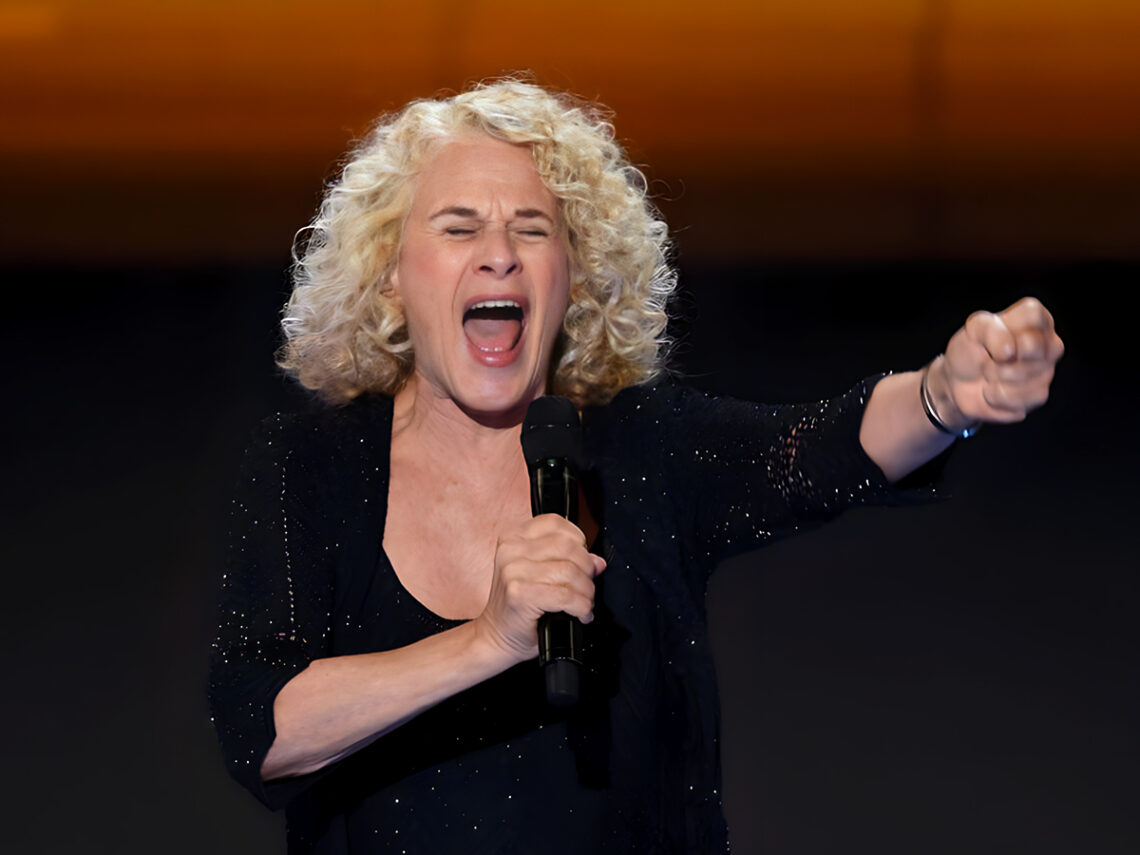
“Let it not be forgotten”: the musician Carole King stood on the shoulders of

No matter how much we try to remind her of her influence, Carole King is resolute in her humility and simply refuses to embrace any of the praise she fully deserves.
Maybe it was influenced by the 1960s, which King spent in the shadows of the spotlight, dominated by the musicians to whom she passed her songs – The Crystals, Aretha Franklin and James Taylor were all willing beneficiaries of King’s greatness, as she and her songwriting partner Gerry Goffin cooked up another track of musical genius, only to hand it over.
Come the 1970s, when King had already seen how successful her music was in the hands of other musicians and off the back of a painstaking break-up from her romantic and creative partner Goffin, King decided it was time to give her own artistry a proper crack.
While her breach from said shadows was hesitant, it didn’t take long for fans to bask in the glory of King’s newfound solo career and instantly prove herself to be an icon. Her sophomore album in 1971, Tapestry, showcased King as more than just a writer, but an artist who can take the emotion of the words she lays down and deliver them with nuance.
‘It’s Too Late’ became the anthem we all loved her for, as the song had no pre-existing relationship with an artist she had gifted the song to otherwise. The soul oozed from her voice as the melody floated from the piano, and all the while we wondered, what took her so long to do this herself?
But then came ‘(You Make Me Feel Like) A Natural Woman’ at the very end of the record. King managed to make it her own, despite handing it to the powerhouse, Aretha Franklin. But King’s take proved that there was no need for these to compete, and rather, the song could be used as an example of how two icons can share creative real estate with seamless ease.
King always revered Franklin, despite being the architect of one of her most beloved songs and was determined to remind us all that she was the true icon of the pair. So much so that when King was being showered with praise in the later parts of her career, and her impact on contemporary music was being laid out to her, she always rerouted it back to Franklin.
She said, “I am told, you know, I keep hearing it, so I guess I’m going to have to try to own it, that today’s female singers and songwriters stand on my shoulders. Let it not be forgotten that they also stand on the shoulders of the first woman to be inducted into the Rock & Roll Hall of Fame. May she rest in power, Miss Aretha Franklin!”
In many ways, King and Franklin were musical soulmates. Brought together through the industry, where they would share songs that felt so inherently suited to their writing and performative styles, and subsequently forged a mutual respect that not many in the industry could fully understand.
