


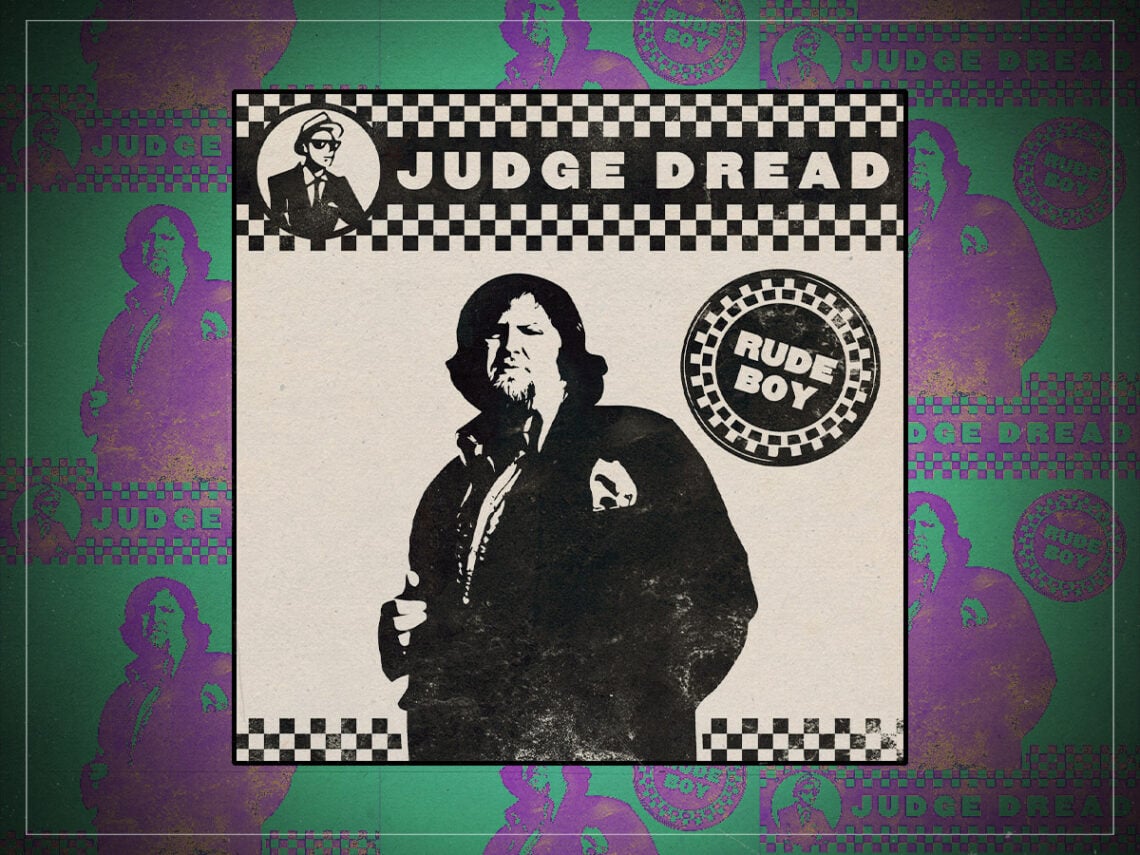
Judge Dread: The artist who had all 11 of his UK hit singles banned by the BBC

To say the music of Alexander Minto Hughes was “of its time” might be a tad too diplomatic.
During his most successful stretch as a recording artist in the 1970s, the Englishman known as Judge Dread was politically incorrect even by that decade’s standards, performing reggae music in a faux Jamaican accent while serving up jokey lyrics and sexual innuendo like a re-animated low-brow Vaudevillian.
And yet, despite the fact that the BBC refused to play any of his music on the radio, Judge Dread became a genuine star, notching 11 hit singles on the UK pop charts, more than any reggae artist of the 1970s, Bob Marley included.
It wasn’t just his fellow Brits who seemed to appreciate Judge Dread’s sense of humour, either. With the respected reggae label Trojan putting out his early records, Dread managed to gain an unlikely following among Jamaican and African listeners, as well, some of whom would later be surprised to learn that he was a British, white-skinned, 250-pound ex-wrestler from Snodland in Kent.
“My songs are down-to-earth, the sort of humour you see on seaside postcards,” Dread told the Evening Sentinel in Stoke-on-Trent in 1975. It’s hard to argue against his point when listening to the lyrics to the very first Judge Dread hit, 1972’s ‘Big Six’: “Little Miss Muffet, sat on her tuffet / Her knickers all tattered and torn / It wasn’t a spider who sat down beside her / Was Little Boy Blue with the horn.”
‘Big Six’ was actually written as a follow-up to the hit reggae song ‘Big Five’ by the great Jamaican ska artist Prince Buster, a man Alex Hughes had met while working as a London nightclub bouncer. The stage name ‘Judge Dread’, as well, was taken from a Prince Buster track, as was pretty much all of Hughes’ act, save for the cheeky English double-entendres. Was he making a mockery of real reggae music? A parody? Not quite.
From most accounts, Hughes was a genuine fan of the music, and while he was essentially a comedic songwriter, the joke rarely fell back onto its inspiration. The physical relations of “birds” and “blokes” usually sufficed as the primary topic of interest.
“When I go down the seaside, I’m feeling rather rude,” went the start of 1976’s ‘Dread Rock’. You can guess where it’s headed. “The girls in their bikinis / Are showing all their boobs / And when they see my stick of rock / They all shout out with glee / If all you give it all away / Please save a lick for me.”
Those humourless suits at the BBC never really changed their minds about Judge Dread, for better or worse. The network ultimately banned all 11 of his chart hits, and even blocked his attempts to release comparatively clean records under the alter ego of ‘Jason Sinclair’.
“They reckon I could appear in the Guinness Book of Records as the most banned singer in the world,” Dread said in 1975, and sure enough, he eventually did. “I never swear or speak of violence. It’s upsetting really, because The Goodies [TV series] have got away with pretty broad material. I consider myself no ruder than Frankie Howard.”
With no airplay, no internet, and mostly small-time record labels releasing his later material, the sustained success of Judge Dread is a minor miracle and/or a statement on how hard the British public will work to find some melodic dick jokes.
Alex Hughes continued performing as Judge Dread into the 1990s and died of a heart attack on stage after a concert in 1998 at the age of 52. The popular comic book character Judge Dredd, believe it or not, is part of his legacy. Pat Mills, one of the editors of the 2000 AD comics series, named the dystopian cop after Hughes’ reggae persona back in the mid-1970s.
