


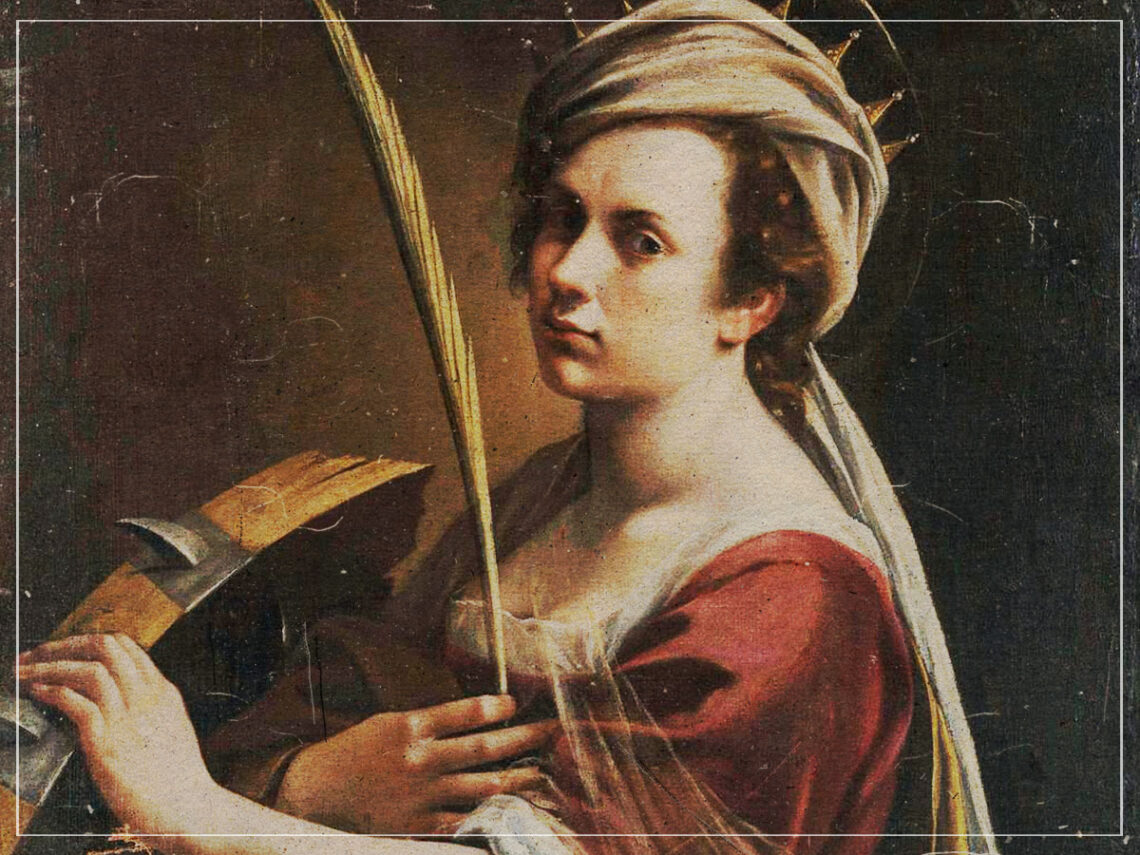
Artemisia Gentileschi: Why trauma is more enticing than talent

“You feel sorry for me because a woman’s name raises doubts until her work is seen,” wrote Artemisia Gentileschi to her last major patron, Don Antonio Ruffo. She was the first woman to become a member of Florence’s Accademia di Arte del Disegno, eclipsed her own father’s artistic merit, and was widely considered one of the most accomplished painters to come out of the Baroque period. Ruffo was annoyed at her defending the worth of her own art as they whittled down prices.
“If I were a man,” she wrote, “I can’t imagine it would have turned out this way.” The overriding narrative on Gentileschi is that misogyny and sexual trauma shaped her art, lacing her output with a distinctly female sense of tragedy. One of the most accomplished 17th-century artists by the time she was a teenager, her works are listed as Early life, Rape by Agostino Tassi, Florentine period (1612–1620). Her work is categorised as pre and post-tragedy, undermining her intrinsic talent in favour of treating it as a fortune by-product of rape.
Her father, Orazio, had imagined she would become a nun, but her gift for studying light and form meant by the time she was 15, she was already getting to grips with Caravaggio’s compositional methods. The Gentileschi house functioned as a studio for both father and daughter, which saw a steady stream of models and patrons come through its doors. It remains unknown if Gentileschi used live models in her most explosive painting, Susanna and the Elders (1610), and some argue she used her own form reflected in a mirror to guide her.
Her take on the biblical story of Susanna has often been called “prophetic”. Based on an Old Testament story of a woman falsely accused of adultery after two men blackmail her for sex, Gentileschi’s take on it was highly emotive, the focus being on Susanna’s horror and resignation to her fate while her attackers loom in the background. The view that her choice to paint it somehow foreshadowed her own assault is inaccurate and lazy, given Giuseppe Cesari painted his version of it in 1601, and Tintoretto completed his even earlier, in 1555.
Still, it remains a fact that Gentileschi was raped by Agostino Tassi in 1611. In the ensuing trial, which only came about because Tassi refused to marry her afterwards, Gentileschi was tortured with thumbscrews to see if she was telling the truth. After this period, she continued painting, having moved to Florence a month after the trial. The six years spent there saw her become a hugely successful painter, with her father claiming she had “produced works which demonstrate a level of understanding that perhaps even the principal masters of the profession have not attained”.
Through a modern lens, Gentileschi’s contributions to art history are so singular they are almost staggering. Her father was the one who befriended Caravaggio, but she was the family member who best mastered the chiaroscuro technique he pioneered. Trauma did not contribute to her mastering the contrast between light and shadow, nor does it enrich her works to attribute them to a greater sense of tragedy as art historians often have.
