


Is the Oscars still ignoring female directors?

At the recent Oscars nomination announcement ceremony, just one woman was up for ‘Best Director’, and that was previous Academy Award-winner Chloé Zhao for her latest film, Hamnet.
The tearjerking movie has been lauded by many and labelled as Oscar bait by others, and upon its release, there was no doubt that Hamnet wouldn’t pick up nominations in all the major categories. With its emotional exploration of grief that sees William Shakespeare, played by Paul Mescal, write Hamlet, it’s the kind of material that, when executed by a previous Oscar winner, is of course going to vie for the top awards of the season.
Yet, if this film came out even a decade ago, it seems less likely that Zhao would’ve bagged an Oscar nomination, and not for lack of talent. That’s because even now, almost 100 years on from the first Academy Awards ceremony, only three women, in the form of Kathryn Bigelow, Jane Campion, and Zhao, have taken home the ‘Best Director’ prize. Bigelow’s win for The Hurt Locker was a turning point for the representation of female filmmakers, even if it was a woefully masculine-driven war film, finally marking the start of the Academy’s faith in women behind the camera.
Before Bigelow won the prize, three women had been nominated in the category before her: Lina Wertmüller, Campion, and Sofia Coppola, and since her win in 2010, seven women have been nominated, with two winning, which many of us have considered progress, but is it really? I mean, that’s still a tiny number of women compared to the large swathes of men who get nominated year on year, and to this day, no Black female filmmaker has been considered for a ‘Best Director’ prize, to the point where Zhao, who hails from China, is appalingly the only woman of colour to ever be recognised in the category thus far.
It took until 2020 before two female directors were even able to compete opposite each other in the category, with Zhao and Emerald Fennell battling it out alongside Thomas Vinterberg, David Fincher, and Lee Isaac Chung. With so few women winding up in the bracket, many of the more misogynistically-minded movie-watchers out there seem to think this is a skill issue, but of course, this is a theory that has long been debunked.
There are so many incredible filmmakers out there who happen to be women, with everyone from Agnes Varda and Lynne Ramsay to Andrea Arnold, Dorothy Arzner, Céline Sciamma, Claire Denis to Julie Dash, Luna Carmoon, Mati Diop, Savanah Leaf, and Chantal Akerman, but time and time again their work is snubbed. The problem is, if you want to make a movie as a woman, you’re going to face plenty of opposition from male executives, and they don’t want women to tell the kinds of stories that could threaten or weaken their positions of power.
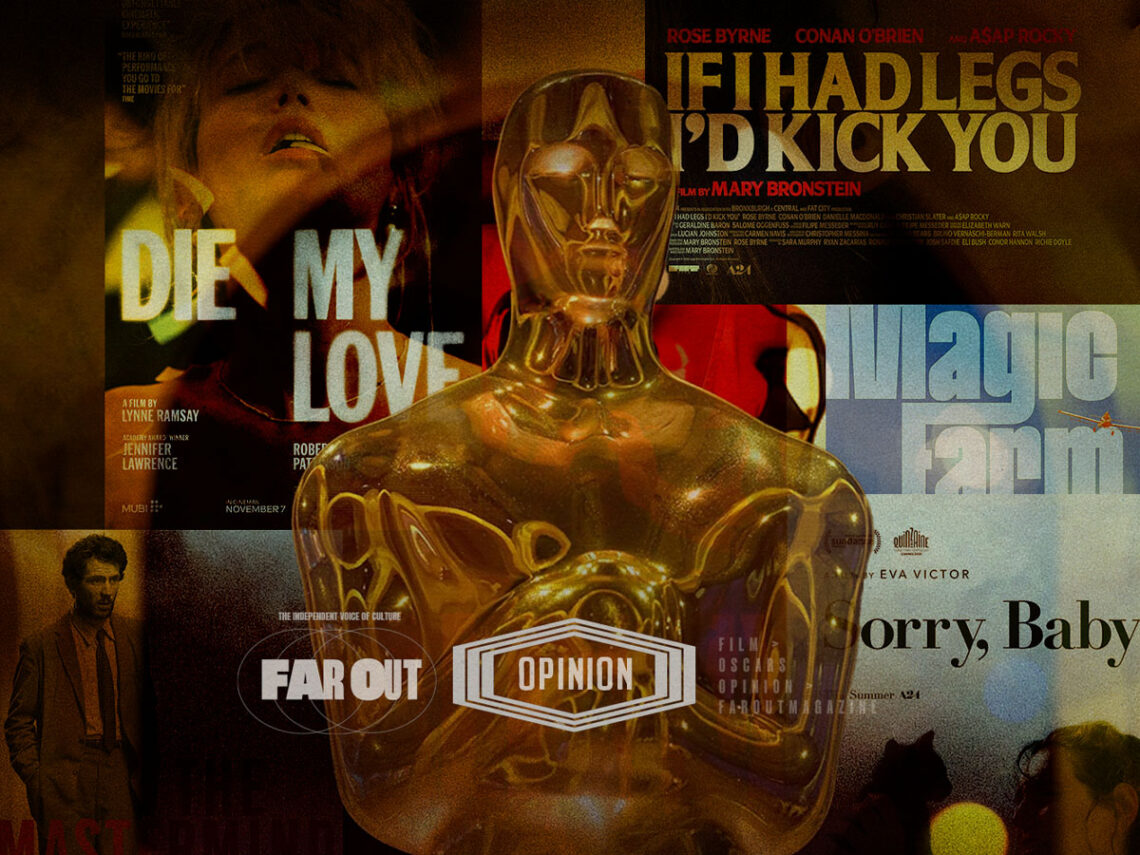
So, the best bet for a woman who wants to make a film is to do so independently or on a smaller scale, but then, good luck getting enough recognition to be considered for any major awards. Why are people so scared of female-driven stories? 2025 delivered various fantastic female-directed movies, like Sorry, Baby by Eva Victor, Die My Love by Lynne Ramsay, If I Had Legs I’d Kick You by Mary Bronstein, The Mastermind by Kelly Reichardt, Alpha by Julia Ducournau, and Magic Farm by Amalia Ulman, but hardly any major awards show buzz has arrived for them.
A recent study conducted by USC Annenberg’s Inclusion Initiative found that 8.1% of the top 100 movies of 2025 were directed by women, which is the lowest this figure has reached since 2018. Clearly, as much as we’d like to hope that the increased attention brought to the #MeToo movement and gender disparity in Hollywood has given rise to active changes, it seems like there’s still a decisive lack of progress. The real proof here is just how little movement there has been in the ‘Best Director’ category, which is still largely dominated by men.
Actors need to be aware of their choices and make a conscious effort to work with female directors more often, like Nicole Kidman, who makes it her duty to collaborate with other women, which includes 19 female filmmakers over the past eight years alone. But, on the other hand, there’s Emma Stone, who hasn’t worked with a single female director in her career, but it’s not too late for people to take a bolder stance against the lack of gender diversity in the film industry, because what we need is for female voices to stand just as loud as their male counterparts and to be able to compete against them at awards ceremonies; it’s the bare minimum they can do.
