


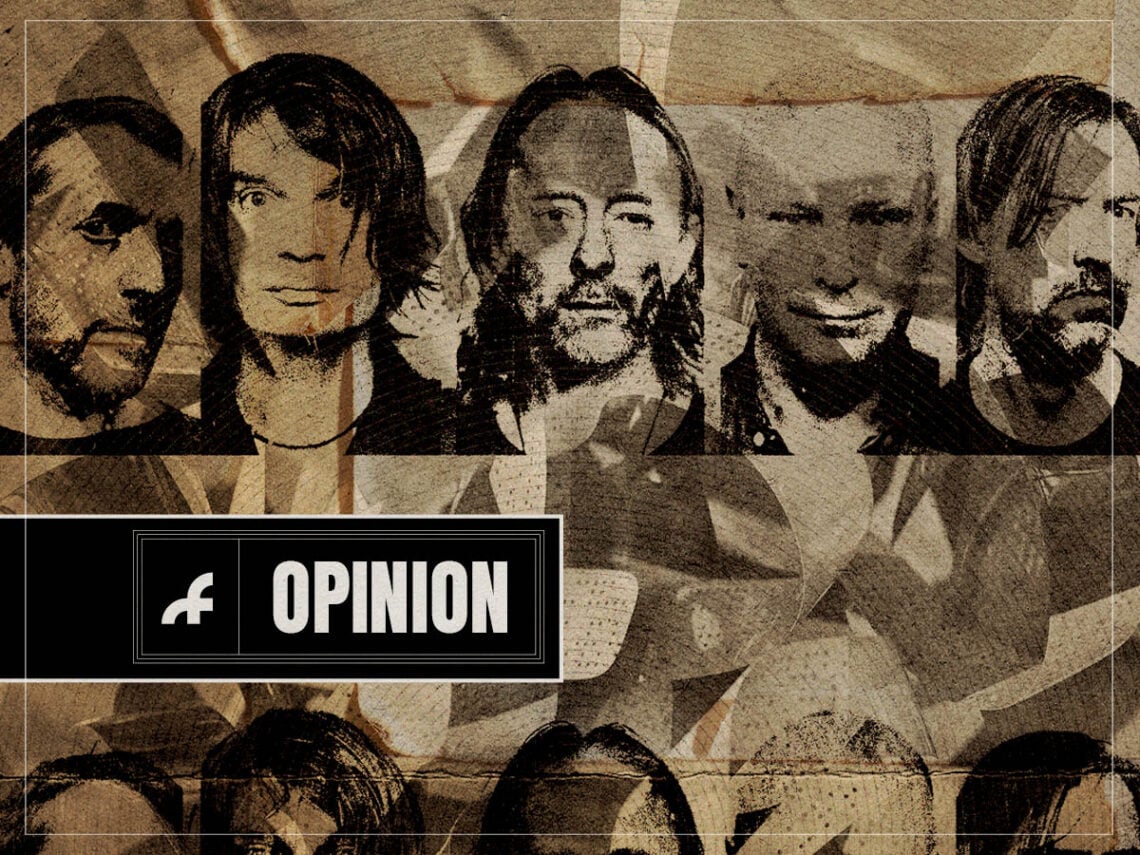
Are Radiohead overrated?

No artist is safe from being overhyped just a little bit. Unless they are some random bar band playing at a pub across the street every Wednesday night for fun, any group that has ever signed on the dotted line with a major corporation will have a few naysayers claiming they have a bit more praise than they should. Although Radiohead has remained on the fringes of rock music, should they really be considered ‘overrated’?
Because of their reputation in the public eye, Radiohead are still heralded as the human cyborgs who wrote the future of music. Despite not releasing a new album in nearly a decade, they are still ranked among the greatest voices of the modern age and have been toying with their sound in side projects like The Smile.
Although Thom Yorke has done everything he can to minimise his image in the public eye, there are still pieces of their catalogue that could be talked up, like the musical Second Coming, as opposed to just another really great rock record. But calling them overrated also might discount what they have been doing over the years in the background.
They might deserve the same type of adulation that’s normally reserved for The Beatles and Led Zeppelins of the world, but when looking at the way they have handled their career, part of their appeal is having the most unique career trajectory in modern music history. So, as we dive into pieces of their history, let’s see what makes Radiohead so irresistible to some and insufferable to others.
So, what parts of Radiohead get too much praise?
Whenever talking about Radiohead to a casual fan, most bring up their landmark grunge anthem ‘Creep’. While that song has virtually nothing to do with what they would sound like going forward, it does paint a clear picture as to why their credentials have been called into question so many times.
‘Creep’ does end up dwarfing many people’s perceptions of the group, but once OK Computer came out, every Radiohead fan made the naysayers eat their words once ‘Karma Police’ and ‘No Surprises’ started taking off. Ever since then, though, people have looked at Radiohead as one of the final bands that made their album releases feel like a major event since the new millennium, and considering its themes about the dangers of technology still resonate, fans haven’t run short of things to talk about regarding their songs, either.
Even when Kid A drew a line in the sand that said they weren’t interested in returning to their stadium-rock sound, fans seemed to flock to them all over again, to the point where every subsequent album has been treated like some precious piece of fine art. While certain pieces of their discography don’t really deserve that kind of treatment, the musicians themselves have been instrumental in what the future of the music business looks like.

But how much of that praise is warranted?
Looking through some of the group’s later output, they have always been willing to stick their neck out and take a risk. Even if an album like The King of Limbs was hit and miss when fans first heard it, other bold leaps like Hail to the Thief have kept fans listening to see where they would go next.
And it’s not like Radiohead’s music hasn’t been a net positive for music at large. It may have given way to some fans who would rather talk about how much their lives are in shambles, but looking at the way that they use time signatures and flirt with different approaches to writing songs, that kind of inventiveness is what has given way to modern artists getting noticed for their unconventional approach, like King Gizzard and the Lizard Wizard and Tame Impala.
It’s not like they weren’t ahead of the curve in marketing, either. When In Rainbows hit the charts based on a pay-what-you-want basis, it was practically a precursor to the streaming method, only with far greater attention to artist compensation than the pennies that most musicians are making on Spotify these days.
So, even if you don’t care for their music, Radiohead might be far more important than their hype suggests. No matter how many people consider them overrated, the modern age of music is still a world that Yorke and Co helped build.
