


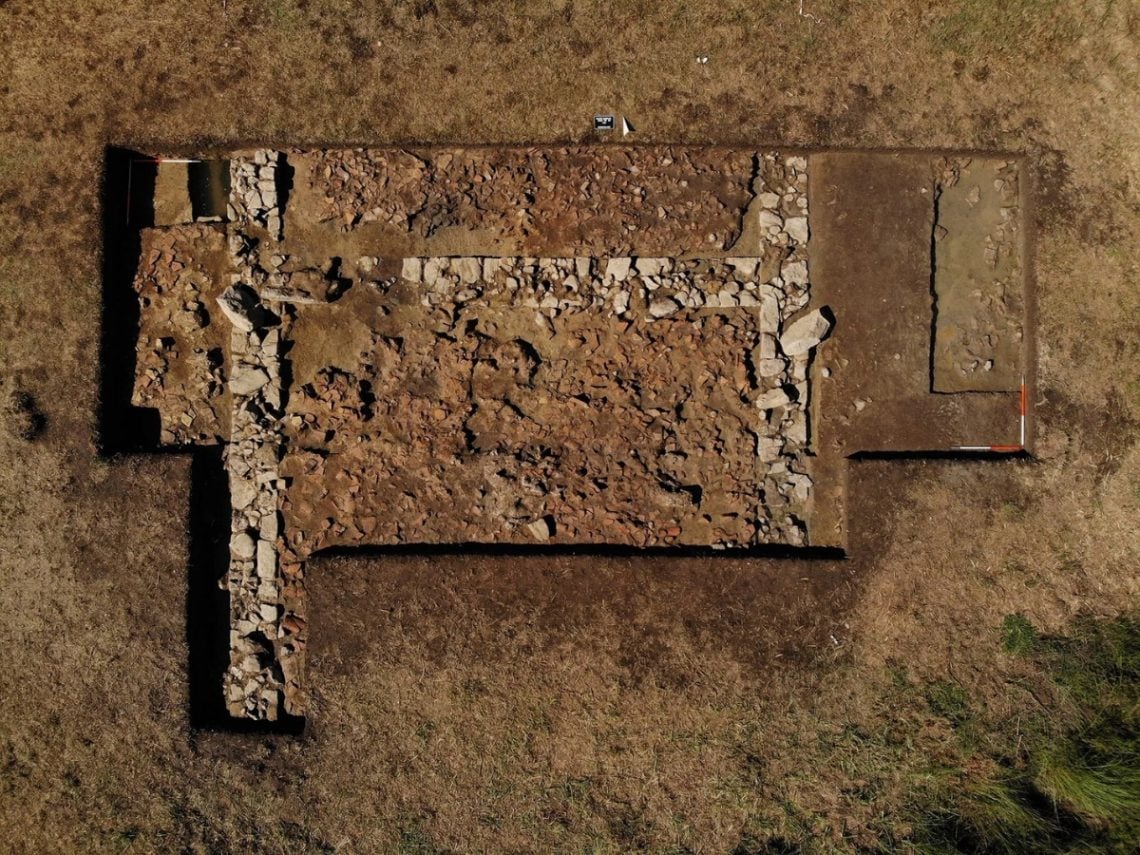
Archaeologists in Greece have identified the Temple of Poseidon in Samikon

Archaeologists working in Greece believe they may have stumbled upon the remains of the Temple of Poseidon. The excavated site is situated at Kleidi, near Samikon, according to a report by Phys. The location matches an area described in writings by the ancient Greek historian Strabo, who described the shrine more than 2,000 years ago.
The site is located on the Peloponnesian coast, an area of intense archaeological activity known to have been struck by several tsunamis in prehistoric times. With Poseidon being the Greek God who governed the ocean and conjured storms, historians believe the coastal location to be a logical site for his temple. Ironically, a strong storm or tsunami could have caused the temple’s destruction, which is now reduced to subterranean foundations.
Alongside his brothers, Zeus, God of the sky, and Hades, God of the underworld, Poseidon is thought to have been one of the most important deities in Greek mythology. If the newly-excavated site were his temple, it once would have been among the holiest structures in ancient Greece.
The remains were initially excavated in 2021, but archaeologists have only recently realised the site’s potential significance. The ruins are subject to ongoing archaeological study and research courtesy of the Austrian Archaeological Institute in collaboration with the Johannes Gutenberg University Mainz, Kiel University, and the Ephorate of Antiquities of Elis.
With further analysis planned over the next few years, it is hoped that more information linking the ruins to their former use can be found.
Elsewhere, last September, archaeologists discovered the remnants of a statue of Hercules, the mythical Roman hero, at a site in Greece. The statue, which dates back to the 2nd century C.E., was uncovered by researchers at Aristotle University of Thessaloniki (AuTH) at a site known to have been the ancient city of Philippi, located in the country’s northern region.
