


How Aqua tackled Barbie’s unrealistic beauty ideals

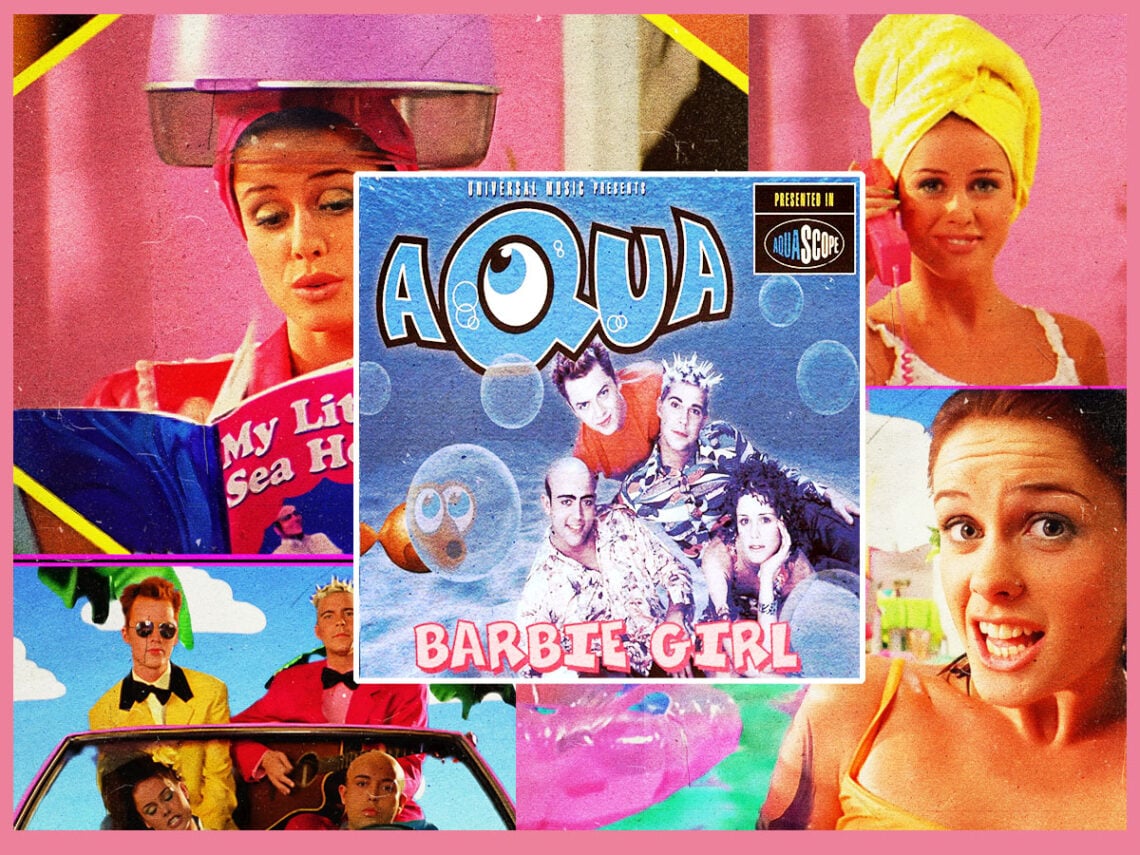
Aqua’s chart-topping hit from 1997, ‘Barbie Girl’, either captivates you as one of the catchiest tunes or tests your patience as one of the most annoying songs ever created. Regardless, it was an instant global success and remains one of the best selling-singles of all time.
Aqua’s approach has been widely interpreted as nothing more than silly, fun satire. The song’s lyrics are about Barbie and Ken – dolls made by American toy manufacturer Mattel – with band members Lene Nystrøm as Barbie and René Dif as Ken. However, many have noted the fundamental differences in messaging at play between Aqua’s rendition of Barbie and her world compared to that of Mattel’s original product. This even resulted in a legal dispute, but we’ll get to that later.
At its crux, Mattel’s Barbie is and always has been for kids, but following the release of Aqua’s hit, there were a few criticisms about its lyrical content. There’s something about “you can brush my hair / Undress me everywhere” that doesn’t seem particularly age-appropriate, and calling Barbie a “blonde bimbo girl in a fantasy world” might give kids the wrong impression.
In September 1997, Mattel sued MCA Records, Aqua’s North American record label, claiming that ‘Barbie Girl’ violated their trademark and turned Barbie into a sex object. Mattel accused the label of ruining the doll’s reputation, but the claims were dismissed by lower courts. In 2002, a Court of Appeals ruled the song was protected as a parody, and Aqua claimed that all copies of the single came with a disclaimer that said the song “was not created or approved by the makers of the doll”.
Truth be told, the song does play into a new realm of sexualised Barbie, but this is less due to Aqua’s intention to produce a trashy, catchy hit and more to comment socially on misogyny and poke fun at unrealistic beauty ideals. What most critics fail to recognise is that, before the disclaimer on the back of the album mentions its detachment from the original manufacturers, it also says: “The song ‘Barbie Girl’ is a social comment”. The song unapologetically wades through Barbie typographies, like her trademark squeaky voice, ‘Barbie pink’ clothing, and materialistic tendencies. Nystrøm embodies this perfectly and has been praised time and time again for her reimagining of the entire concept.
Behind the glossy exterior, there’s a deeper message about the beauty standards of women, particularly in the media and in marketing aimed at children. Billboard’s Larry Flick said: “[Nystrøm] effectively rants about the inherent misogyny of Barbie with a subversive hand”. The lyrics to ‘Barbie Girl’ actually playfully mock Barbie’s idealised image and exaggerated lifestyle, highlighting the superficiality and materialism associated with the doll. The song’s chorus, with lines like “I’m a Barbie girl, in a Barbie world / Life in plastic, it’s fantastic”, juxtaposes the fantasy world of Barbie with the realities of life.
The song, along with its accompanying music video, ultimately offers a critique of the pressure to conform to an unrealistic standard of beauty and encourages listeners to question and challenge such ideals. What’s more, discourse around this topic has resurfaced in recent months with the upcoming release of Greta Gerwig’s Barbie, which was written by her and writer Noah Baumbach with full creative freedom during the Covid-19 lockdown months.
Gerwig has described the film as “completely unhinged” but in a way that hones in on everything that epitomises Barbie in today’s world. She is more than aware of the world’s complex relationship with Barbie. On the one hand, she recognises that the doll has contributed to ideals of body image among children, but she plays into these tropes as a way of commenting on the negative impacts (a facet playfully acknowledged in the film’s opening minutes).
However, Barbie has also been credited with empowering people. In recent years, Mattel has responded to this feedback by introducing dolls with diverse skin tones and body shapes. During her research on Barbie, Gerwig had the opportunity to visit Mattel’s headquarters. “The kind of amazing thing is that Barbie went to the moon before women had the ability to get credit cards,” she says. “That’s crazy. She was always a kind of step ahead.”
