


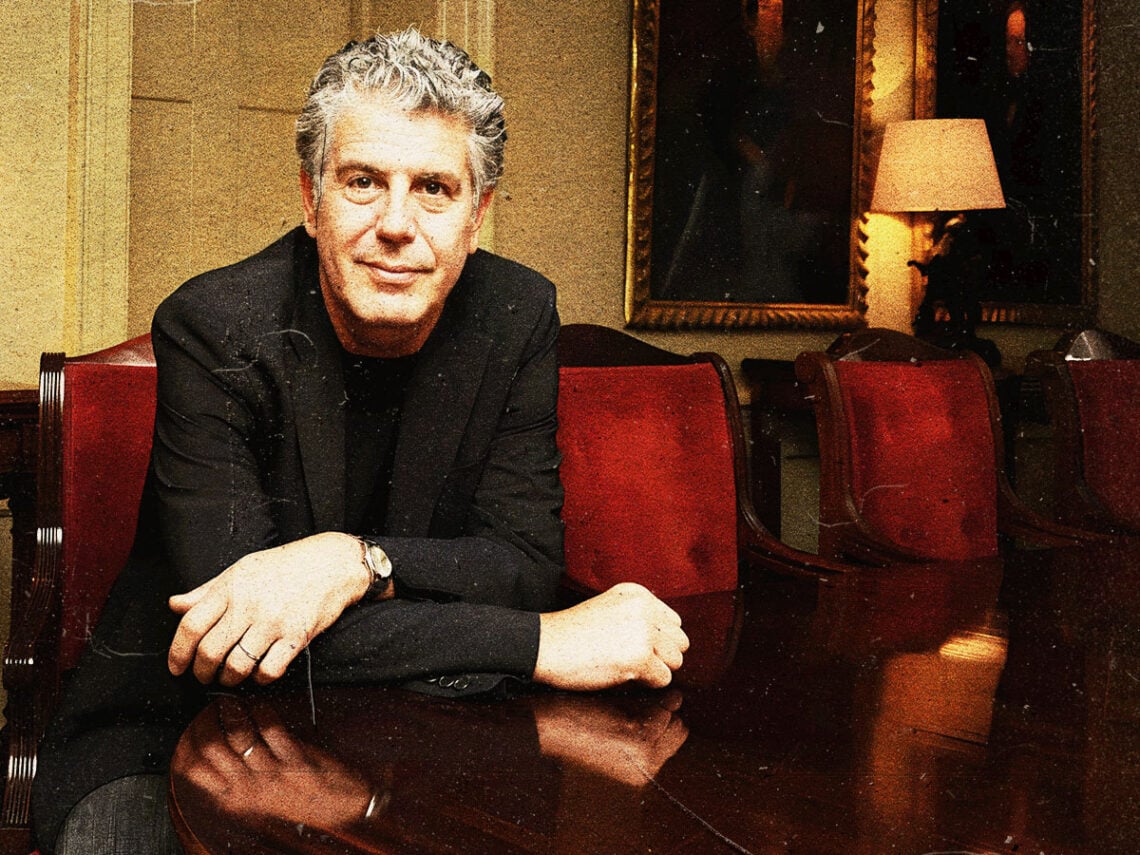
20 tasty years: Anthony Bourdain’s favourite songs of the 1970s and ‘80s

There’s a healthy crossover between the fiery pits of a Michelin-starred kitchen and the studio of a rock ‘n’ roll band. Fertile grounds for authentic personalities, groundbreaking creative ideas, and anti-establishment musings, they’ve produced some of the past 50 years’ loudest and most iconic voices. While bandana-wearing Marco Pierre-White and his musical counterpart Keith Richards have spearheaded the aforementioned culture crossover, it’s always been Anthony Bourdain who sat at the very heart of these two worlds meeting.
A true poet at heart and bastion of the wandering everyman, his book Kitchen Nightmares propelled his voice to one of cultural trust amongst the post-modern city dweller. Cutting to the heart of culinary truth, it spoke to a broader audience and their experience of commercial life. Within that, Bourdain forged a following of people who trusted his take on every aspect of modern life, be it cooking, travelling or music.
A New York native, he dove head first into the city’s thriving punk scene over the years. A societal misfit and observer of cultural structures, a mid-20s Bourdain found comfort and understanding in the city’s late-70s scene. It was sub-cultural and authentic, and the complete antithesis to an environment where he said: “Every douche bag in America who could buy a white suit or some heavily adulterated cocaine was suddenly empowered to show you his back fat and chest hair. It was the triumph of the Ron Jeremys. They were everywhere. This was their time.”
This quote from his essay in 1977 New York, published in Spin, gave insight into the sort of grumbling observer Bourdain was at that time. He continued in the essay, saying: “The music and the musicians who started playing and hanging out with each other at CBGB (a small club in the East Village) were an appropriate reaction to the general feelings of hopelessness, absurdity, futility, and disgust of living in New York at the time. The irradiated spawn of tormented loners who had grown up listening to the Stooges and the Velvets, wannabe poets, failed romantics–anyone with enough enthusiasm or anger to pick up a guitar, it seemed, converged on the only place that would have them. And briefly (and only for a lucky few), music was good again. When the as-New York-as-it-gets Ramones took the stage, they immediately banished all music that preceded it, dooming it to irrelevance”.
While his talents as a chef forged him a career, the now iconic writing style of Bourdain, showcased in that essay, was of a man whose thoughts were moulded by the brutal honesty and gritty poetry of a late-70s New York. Come the turn of the century and the bright lights of the hyper-capitalist 1980s, Bourdain’s undesignated responsibility of voicing the sub-culturally unknown was affirmed as the city’s urban communities sought more contemporary anti-establishment ideas.
Soundtracked by fellow culture commentators NWA, Beastie Boys and The Specials, Bourdain plunged himself deeper into cultural folklore in the ’80s, moulding a man whose culinary fame was created by an insatiable appetite to exist on the verve.
The final episode of his iconic documentary series Parts Unknown was somewhat of a love letter to New York’s Lower East Side in the 1980s. Aired six months after his tragic death, the episode weaved between interviews with New York legends Debbie Harry, Fab 5 Freddy, and Richard Hell, giving Bourdain space to reflect on the vitality of living in the city during those heady years.
During the episode, Bourdain patrolled the broken pavement of downtown New York, reflected on a period of New York’s history so often associated with financial deregulation and capitalist excess with a more off-beat outlook, describing it as a place where “cheap rent brought a lot of people together”. While the bright lights of enterprising New York shone, chefs and creatives learnt to live in the shadows and brought meaning to life lived alternatively.
Bourdain’s favourite songs from two formative decades of his life are appropriate for a man who had a disdain for conformity and a yearning for creative authenticity. While music is a pleasant backdrop for onion cutting and risotto stirring for many, it was a framework for Bourdain. Meaningful, innovative and honest – if that’s what he heard, it was most likely what he would serve.
A selection of Anthony Bourdain’s favourite songs:
- ‘Penetration’ – The Stooges
- ‘Walk on the Wild Side’ – Lou Reed
- ‘What’s Going On’ – Marvin Gaye
- ‘Beat on the Brat’ – Ramones
- ‘Bodies’ – Sex Pistols
- ‘Do The Dog’ – The Specials
- ‘I Saw The Light’ – Todd Rundgren
- ‘In Every Dream Home A Heartache’ – Sly & The Family Stone
- ‘Strawberry Letter 23’ – The Brothers Johnson
- ‘I’m So Bored With the U.S.A’ – The Clash
- ‘Straight Outta Compton’ – N.W.A.
- ‘Fight The Power’ – Public Enemy
- ‘Too Many Creeps’ – Bush Tetras
- ‘Ghost Town’ – The Specials
- ‘This Is Not A Love Song’ – Public Image Ltd.
- ‘Riot Act’ – Elvis Costello
- ‘Give It To Me Baby’ – Rick James
- ‘Once In A Lifetime’ – Talking Heads
- ‘More Than This’ – Roxy Music
- ‘Ace of Spades’ – Mötorhead
