


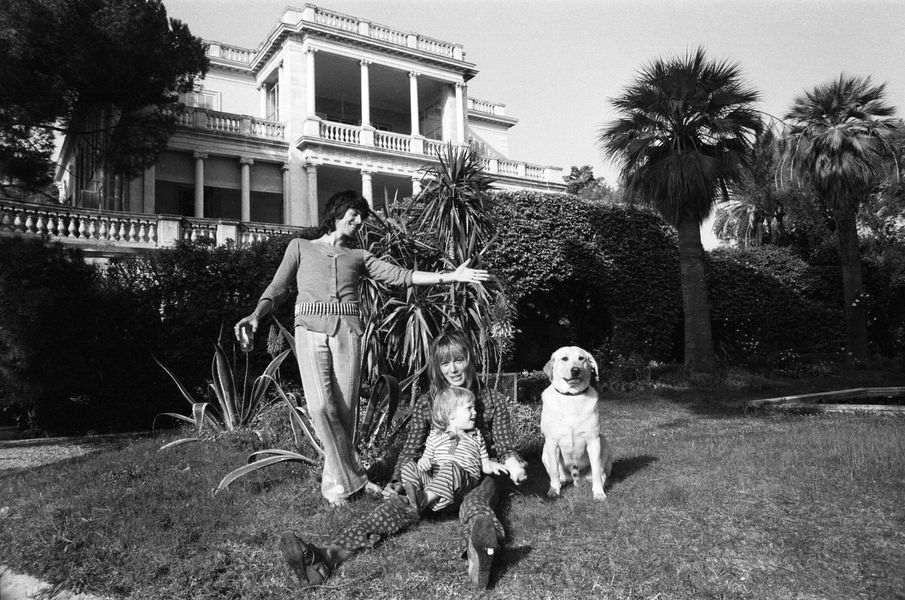
Anita Pallenberg: The witch who changed The Rolling Stones forever

Amid the tired debate of The Beatles or The Rolling Stones, the glaring oversight is how different the two bands were. There is no place for a sentiment like “all you need is love” in the Stones’ oeuvre, just as the ‘Fab Four’ would have no cause to court the devil. Largely, this darkness in the ‘Paint it Black’ boys’ discography comes down to one woman.
“At the centre, like a phoenix on her nest of flames,” Marianne Faithful writes, “[was] the wicked Anita. She was the most incredible woman I’d met in my life. Dazzling, beautiful, hypnotic and unsettling. Her smile—those carnivorous teeth! —obliterated everything. Other women evaporated around her.” This was the enigmatic Anita Pallenberg and when she met The Rolling Stones backstage in Munich in 1965, she changed the band forever.
“Anita Pallenberg scared the pants off me,” Keith Richards wrote of his former wife. “She knew everything, and she could say it in five languages. You knew you were taking on a Valkyrie—she who decides who dies in battle.” While it was Brian Jones who first laid eyes on her, called her an angel and immediately confessed, “I don’t know who you are, but I need you,” her tangled personal relationships with the band are a tale for another day because beyond the tragedy of spurned love was a wider sweeping influence: the introduction of occultism.
You see, in 1965, most of the band were a mere 22 years old. Their cultural horizons were narrowed to the blues field that they loved and foreign fancies like Federico Fellini were a far-flung mystery to them. They were in the shadow of The Beatles who already seemed fully formed with their own pop hits and an established set of iconography. All the while, The Stones were struggling to wrestle their own identity into shape—Pallenberg changed that in a heartbeat.
After all, when a band becomes awed by a self-professed witch, how on earth could things remain the same? Pallenberg was born in Nazi-occupied Rome in 1942. When her father returned from the war, she was already three, and he sent her off to boarding school in Germany. So, from an early age, her independence and cultural grasp were already present. After being expelled from school when she was 16, she quickly mingled with the Dolce Vita crowd in Roman.
Thereafter she became a fashion model – a trait that would transform the bands’ wardrobes – and studied medicine, graphic design and picture restoration but failed to complete any of the courses. Needless to say, she was a free-spirited and viciously sagacious soul. It was exactly this influence that the band needed at a time when confidence was wavering. As Jo Bergman told The Guardian: “Anita is a Rolling Stone. She, Mick, Keith and Brian were the Rolling Stones. Her influence has been profound. She keeps things crazy.”
All of a sudden, the band were fronting up the darker side of the counterculture revolution. Pallenberg – with her garlic necklace warding off vampires – showed them that not everything had to be sunshine and rainbows, that there was art and drama in doom and gloom. She was, as Faithful described her, “evil glamour” and you could barely offer up a more fitting tagline for the decadent band themselves. A moody sense of vigour overtook the band when she entered the picture, turning the young lads from Dartford into the foremost purveyors of darkness in the 1960s.
She inspired the band to write tracks like ‘Sympathy for the Devil’ and later played a hand in the terror of ‘Gimme Shelter’. This brooding sense of stark spiritualism was something she was happy to admit to. “I had an interest in witchcraft,” she admitted, “in Buddhism, in the black magicians that my friend, Kenneth Anger, introduced me to. The world of the occult fascinated me.”
However, film director Anger would later say that the influence was largely the other way around. “I believe that Anita is, for want of a better word,” he said at the time, “a witch.” Well, she certainly bewitched the band and with her wild ways seeding a new direction, the fate of the band was set to only get more moss evading, thanks to the woman who out-‘Keefed’ Keith, and partied the Stones into a pointed new direction.
In this regard, she didn’t just change The Rolling Stones, but also the entire outlook of the counterculture movement by proxy. As Faithful wrote when her late friend passed: “People think of her in one way – a 60s muse, all that shit – but she was so much more than that. A really talented artist, a great actor, intelligent, funny, thoughtful, fearless… she truly didn’t give a fuck what anybody thought of her.”
