


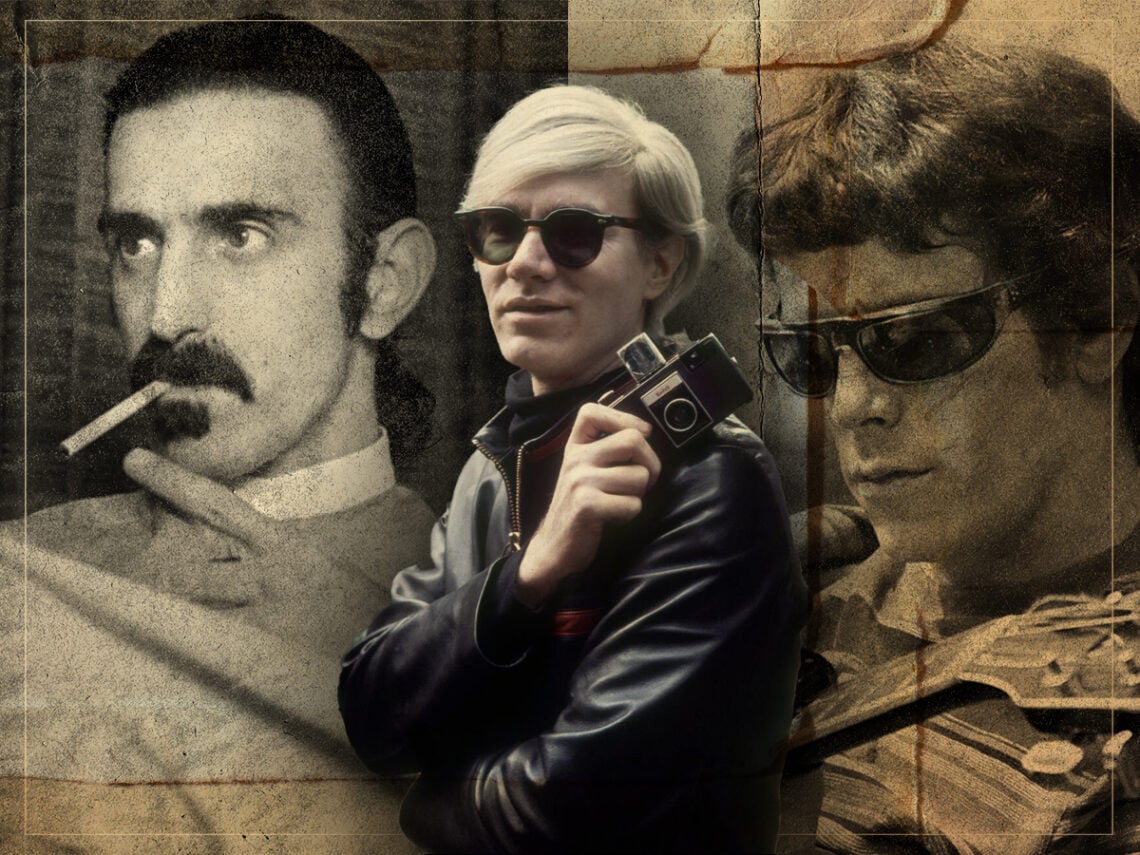
Andy Warhol on the difference between The Velvet Underground and Frank Zappa

In 2024, it’s very difficult to envision Andy Warhol‘s place in the cultural zeitgeist during his mid-1960s prime. His vision of advertising-as-art-as-advertising was genuinely radical, yet he was still one of the world’s most famous artists. Sure, the art world’s response to the chaos of the early 20th century had given the world Dada and Surrealism, but those were still two very heady intellectual movements.
That world could never have seen a figure like Warhol coming, who saw a transcendent beauty in, for lack of a better term, “trash”. In a way, he was one of the ideal figures to realise the artistic potential of rock and roll. By realising that all those cultural reactionaries sneering that rock was a childish, shallow fad had a point, one could then understand that’s what made it great.
Aiming not for the walls of MOMA but instead for teenagers’ bedrooms was precisely what gave it artistic grandeur, and by the mid-1960s, Warhol was aiming to share that vision on a national scale, and he wasn’t the only one. A few blocks down from Warhol’s Factory, Lou Reed, John Cale and Sterling Morrison had formed The Velvet Underground and cut their first demo in their Ludlow Street loft. This demo found its way into Warhol’s hands, and he saw such a kinship with the band that he insisted on becoming the band’s manager and installing them, drummer Mo Tucker in tow, as the Factory’s house band.
The Velvets were soon playing headline sets on Warhol’s multimedia roadshow The Exploding Plastic Inevitable, a project that Warhol wanted on the road as soon as possible. When he started scouting out venues, he hit up San Francisco concert promoter du jour Bill Graham and booked two nights at his famed institution, The Fillmore. Feeling like he had a band to hand that could match The Velvets’ freak, Graham insisted that Pomona mental-cases Frank Zappa and The Mothers of Invention joined the bill.
One would assume this would be love at first sight but with slightly more drugs and butts. What Warhol and Graham didn’t count on was The Velvets and The Mothers hating each other’s guts. You might want to hold on to something sturdy when you hear this; it turns out not everyone was entirely on board with Warhol’s wild artistic vision.
Case in point was the nascent West Coast music scene. While it was evolving from its initial, almost comical straightness into something more wild and free, generally speaking, it was still based around a core tenet of “nice times forever!” The Velvets and their ungodly loud drone-inflected proto-punk about heroin, sex workers, and street violence fit the Haight-Ashbury hippy scene’s Peace and Love ethos like trousers on a walrus, and while the show itself went off OK, the response in the press was diabolical.
Lou Reed responded to these slights with his typical good grace and humility, branding the entire San Francisco scene as “tedious, a lie and untalented. They can’t play, and they certainly can’t write… You know, people like Jefferson Airplane, Grateful Dead are just the most untalented bores that ever came up.”
Warhol himself had the last word in his 1980 memoir Popism, where he said, “The San Francisco scene was bands and audiences grooving together… whereas The Velvets’ style was to alienate people.”
However, considering that pop and rock concerts to this day owe a debt to The Exploding Plastic Inevitable, maybe Warhol himself had the last laugh.
