


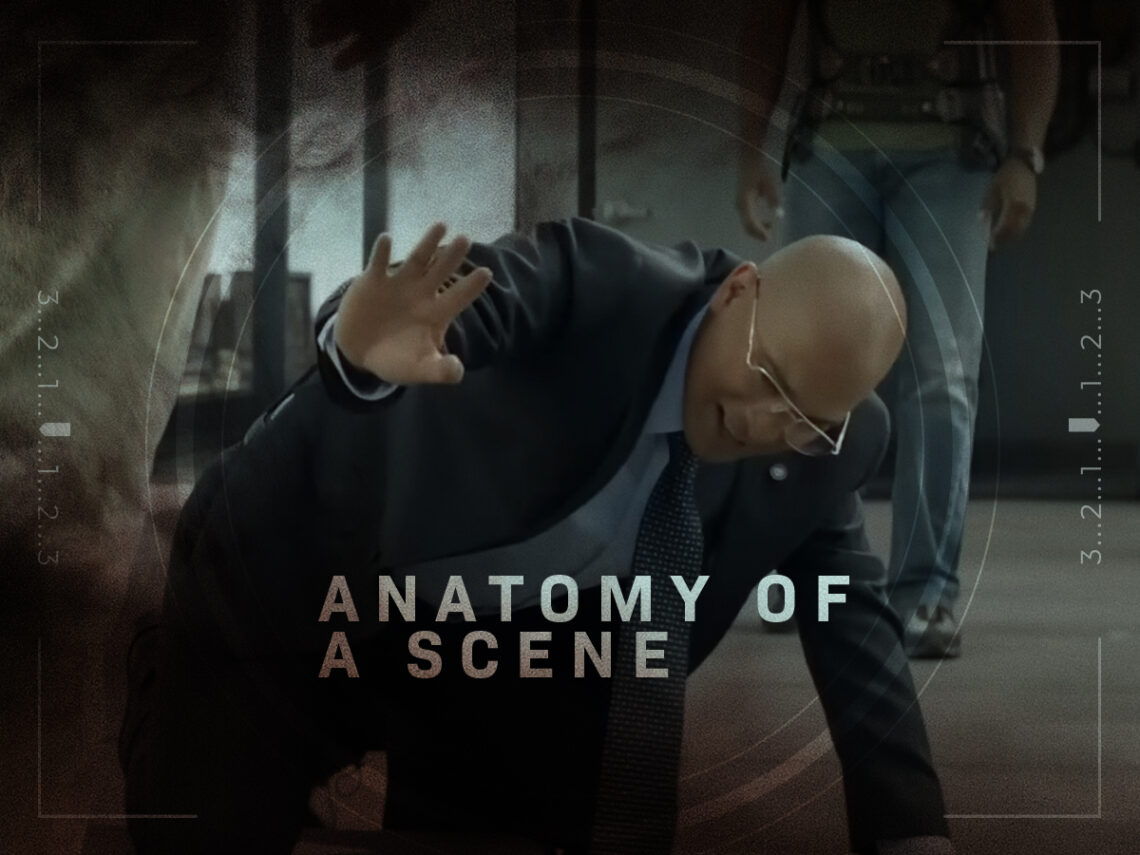
Anatomy of a Scene: Sitwell explains the danger of modernity in ‘The Winter Soldier’

Across different forums, the consensus seems to be that Captain America: The Winter Soldier is the best movie in the entire Marvel Cinematic Universe.
While its action is top-notch, this sleek spy thriller has stood the test of time because of its poignant themes, exploring different facets of what it means to trust institutions as opposed to trusting humanity. Hugely crucial to this instalment’s story is Steve Rogers being unsure of how to serve humanity because of how the government and military function in the 21st century.
Chris Evans plays Steve throughout the MCU as the man out of time, but this gets the most focus in The Winter Soldier, as he jots down pop culture highlights and Scarlett Johansson’s Black Widow quips to him about potential dates. But Steve’s uncertainty about the modern world suddenly has chilling relevance during the scene where Zola’s Algorithm is explained, featuring Maximiliano Hernández as Jasper Sitwell (one of those SHIELD agents they planted in previous films who turned out to be HYDRA).
The segue into this scene is a fun one, with the tease/plot twist of Sam Wilson’s aerial experience and the main characters’ absolute nonchalance about stealing the Falcon gear and kidnapping Sitwell. Once they get up to a skyscraper’s roof, there is more strong tension and amusing superhero moments: some good shots of the standoff with Sitwell, witty humour in Steve and Natasha’s dynamic, and Sam’s badass entrance with the Falcon wings, accompanied by an electric score.
But the thrilling effect of all the heroes being amazingly competent is suddenly no longer the point. After getting thrown off a building and then hauled back up, Sitwell is, for a moment, a typical snivelling villain as he quickly explains the algorithm that identifies everyone in the world who is (or will be) a threat to HYDRA, in order to take them out instantly. Something in the scene just shatters when Steve asks how the program knows who will be a threat in the future, and Sitwell laughs and asks, “How could it not?”
“The 21st century is a digital book,” he continues. As Sitwell goes on, there is a dreadful, dawning realisation that the way this movie’s threat works makes perfect sense. Evans, Johansson, and Anthony Mackie’s reactions are subtle but reflect this. HYDRA, planning to commandeer SHIELD’s helecariers that can shoot down anyone in the world, will have Zola’s Algorithm evaluate people’s bank records, social media, voting patterns, education, and everything else recorded digitally to calculate how likely they are to be dangerous to an authoritarian regime at any point in their lives.
“Then the Insight helicarriers scratch people off the list. A few million at a time,” Sitwell finishes, with Hernández conveying how the character believes in horror but also the brilliance of this plan. We, as the audience, may chalk up Steve’s generally anxious characterisation to his temporal displacement and brush off his concerns. There is less trust in the government nowadays, and we all somehow deal with it. But the theme of the new dangers of a modern, changing world hits much harder in this critical scene, which hypothesises one of the ways the digital age could be deadly.
Steve is ultimately the perfect set of eyes through which to see this story, essentially experiencing the culture shock of how society has sped into a contract that could destroy it. If there is anything to take away from Steve, Natasha, and Sam’s simply cool moments in this scene, it’s that they will always be there to protect the world, coupled with the sinister feeling of how hard that can be when the world plays right into the villains’ hands.
