


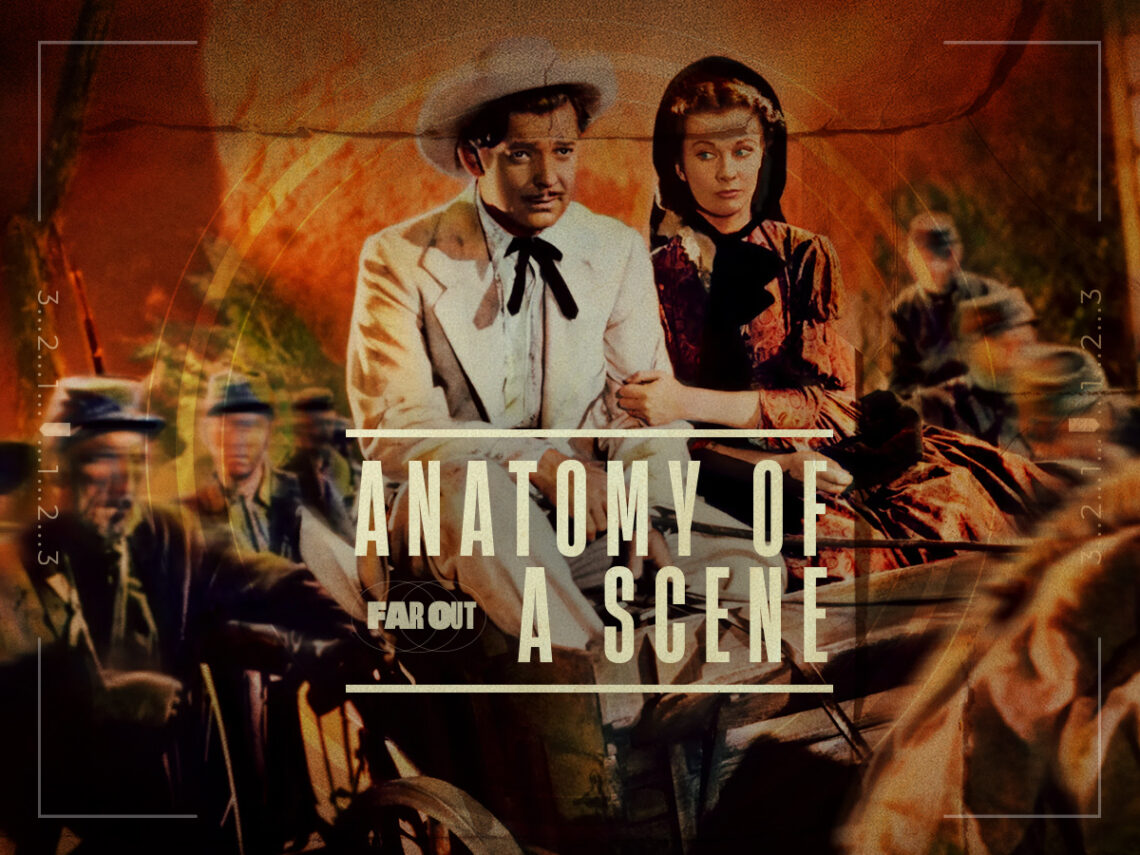
Anatomy of a Scene: ‘Gone with the Wind’ and the aftermath of Atlanta

Though not all of its aspects have aged well, Gone with the Wind remains one of the most important and celebrated films ever made. Over eight decades from its initial release, it is still the highest-grossing movie (when adjusted for inflation) of all time. From its iconic quotes to gorgeous technicolour hues to standout performances from Vivian Leigh, Clark Gable, and Hattie McDaniel, the movie is as impressive now as it was when it packed cinemas all the way back in 1939.
There are many tremendous scenes in the gargantuan Oscar-winning film, but one stands head and shoulders above the rest in terms of technical excellence. In the first half of the film, set amidst the American Civil War, Scarlett O’Hara (Leigh) finds herself working as a nurse in Atlanta. Following a bloody battle between the Union and Confederate forces, O’Hara runs through the streets of the decimated city. In front of her lies a truly breathtaking sight.
The camera begins tight on O’Hara before slowly pulling out to reveal rows and rows of injured or dead southern soldiers. As the former socialite weaves her way through the wounded, the camera keeps zooming out, filling the frame with more and more men writhing on the ground in pain. Eventually, Scarlett is lost in the crowd as the full extent of the carnage is laid bare. To top it all off, the shot concludes with a tattered confederate flag blowing in the wind.
Even knowing what the south stood for and what the world would look like if they’d won, this is still an incredibly powerful shot in the way it slowly reveals more death and destruction, steadily immersing the audience into the full-scale scene of the war. When you think it’s over, it just keeps going. O’Hara getting ‘lost’ in the madness is the perfect metaphor for how this carefree southern Belle’s life has completely changed since the onset of war. She was once an important rung on the societal ladder but is now reduced to a speck.
According to self-professed Gone with the Wind expert Pauline Bartel, this scene was planned for four months before shooting began. Director Victor Fleming, who took over the troubled production midway, was concerned that he would be unable to get the camera high enough to take in the full scope of his idea. The camera needed to be 90 feet in the air, but Hollywood’s tallest crane only reached 25 feet. Producer David O Selznick had to rent a 125-foot crane from a construction company in order to fulfil the brief. To ensure that vibrations from the truck carrying the crane wouldn’t disrupt the shot, a huge 150-foot concrete ramp was constructed, down which it was driven smoothly, capturing the chaos in all its macabre glory.
Once the crew had figured out how to film the scene, they then had to work out how to fill it out. Unsurprisingly, an ungodly number of extras were required for the film’s various military scenes. Legend has it that Selznick asked the Screen Actors Guild for 2,500 people to fill out a scene in a train station. When they got back to him and said they could only give him 1,500, he was forced to use dummies to reach his desired numbers. Reports indicate that around 800 real people were used for the Battle of Atlanta scene, with a similar number of mannequins rounding things out.
The crane scene in Gone with the Wind is equal parts breathtaking, beautiful, harrowing, and baffling. Given how shoestring filmmaking could be in the 1930s, it’s nothing short of miraculous that a shot of this scale could be pulled off. It remains one of the picture’s more enduring images, a captivating reminder that, even on a set as tumultuous as this one, the final product can touch our very souls.
