


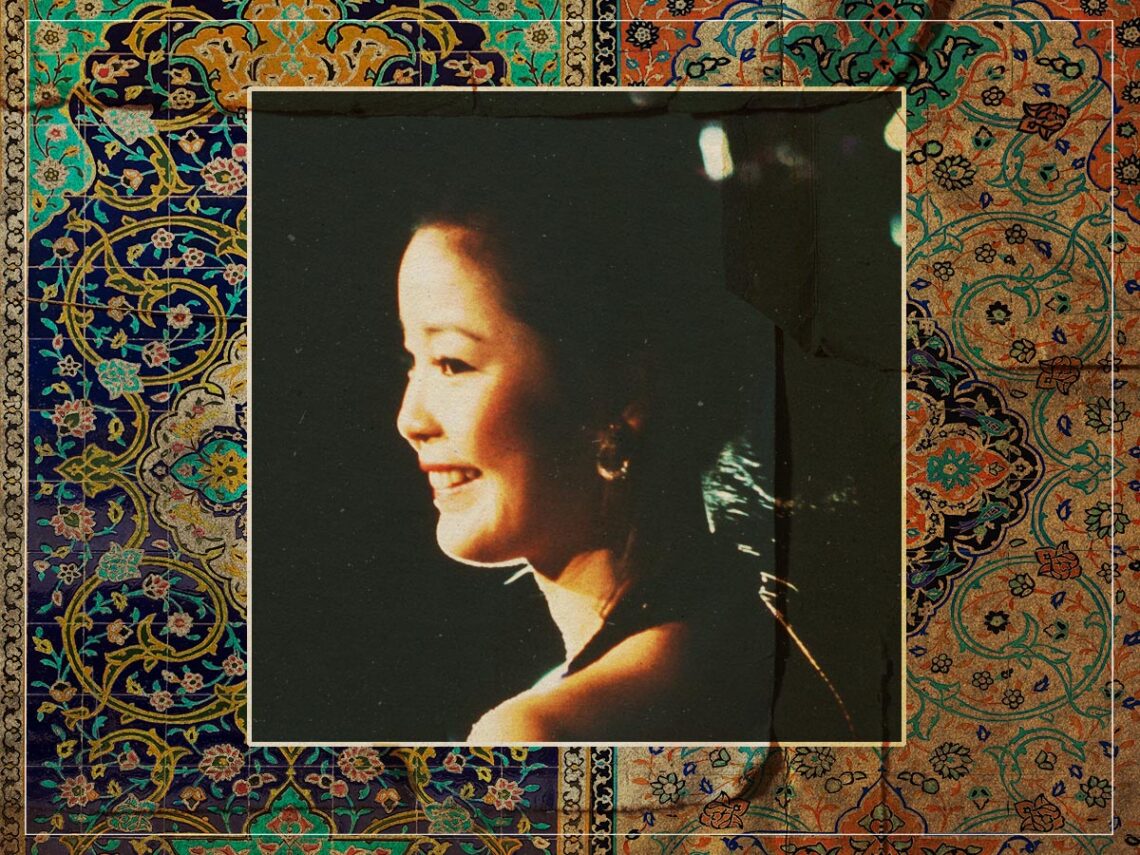
An enduring pop icon: Delving into the story and legacy of Teresa Teng

Some singers have the ability to captivate listeners from the very first note. Their vocals are so beautiful, so moving, so natural in their delivery that it seems like they were always destined to be up on stage and in recording studio booths. Taiwanese vocalist Teresa Teng is one of them. There’s an ethereal quality to her voice that entrances you on the very first listen, showing off her understanding of the craft while maintaining an understated quality at the same time.
Teng had this effect on countless listeners over the course of her career. Born in Tawain, where her parents had fled, her interest in music and performance began at a very young age. By her mid-teens, she had swapped school for singing, but not because of her talent or her love for the field. Rather, she was looking to help provide for her family, a feat she would quickly achieve above all expectations.
Teng eventually landed a record deal with Polydor, which led her to move to Japan. She began singing in Japanese, collecting more languages through which she could deliver her dulcet tones. This would become one of her trademarks—she didn’t just sing in Mandarin and Chinese but in a myriad of other languages, including English and Italian.
Though she had released a number of projects in Mandarin before, Teng released her debut album with Polydor, translated as Love Songs of the Island: Goodbye My Love, in the autumn of 1975. The title and the album set into motion what would become Teng’s characteristic sound. The lead single, ‘Goodbye My Love’, was a string-driven, sombre song about enduring love.
“Goodbye, my love,” Teng began, “Not knowing when we will meet, I give you everything.” The lyrics and Teng’s vocal delivery were steeped in devotion and devastation. Her soft but emotional tones would become her primary appeal, winning over audiences across Asia. She would continue to prove and improve them on tender signature tracks like ‘The Moon Represents My Heart’ and ‘I Only Care About You’.
With her mournful approach to pop and love songs, Teng won over audiences in Japan, China, Hong Kong, and beyond. Even though her music was sometimes banned in China, audiences grew to view her voice and music as a form of escapism. They began to refer to her as “little Teng”, placing her at odds with politicians like Deng Xiaoping, who became “old Deng”.
While they were forced to listen to Deng, they listened to Teng by choice. With her sad love songs and widespread appeal, Teng became one of the most important pop stars in the region. But by the mid-1990s, she had seemingly begun to struggle with fame and took a trip to Chiang Mai in Thailand to get away.
“She didn’t want to be a superstar any more,” Praphan Bonsook, a butler at the hotel where she stayed, remembered during a conversation with South China Morning Post, “So she escaped.” During her holiday to Thailand, Teng passed away from what many thought to be an asthma attack, while doctors would attribute it to heart failure.
Teng’s death sent shockwaves throughout Asia, which had just lost one of its most beloved stars. Fans were left devastated by the loss, pouring out onto the streets for her funeral to pay their respects to the singer. The death also sparked a number of conspiracy theories. As no autopsy had been carried out, theories ranged from assassination to the idea that she hadn’t really passed away at all.
Almost three decades after her death, Teng’s melancholy vocals seem all the more poignant given her strange death and enduring legacy. She remains one of the most important stars in Asian pop music, and her voice remains just as stirring as ever.
