


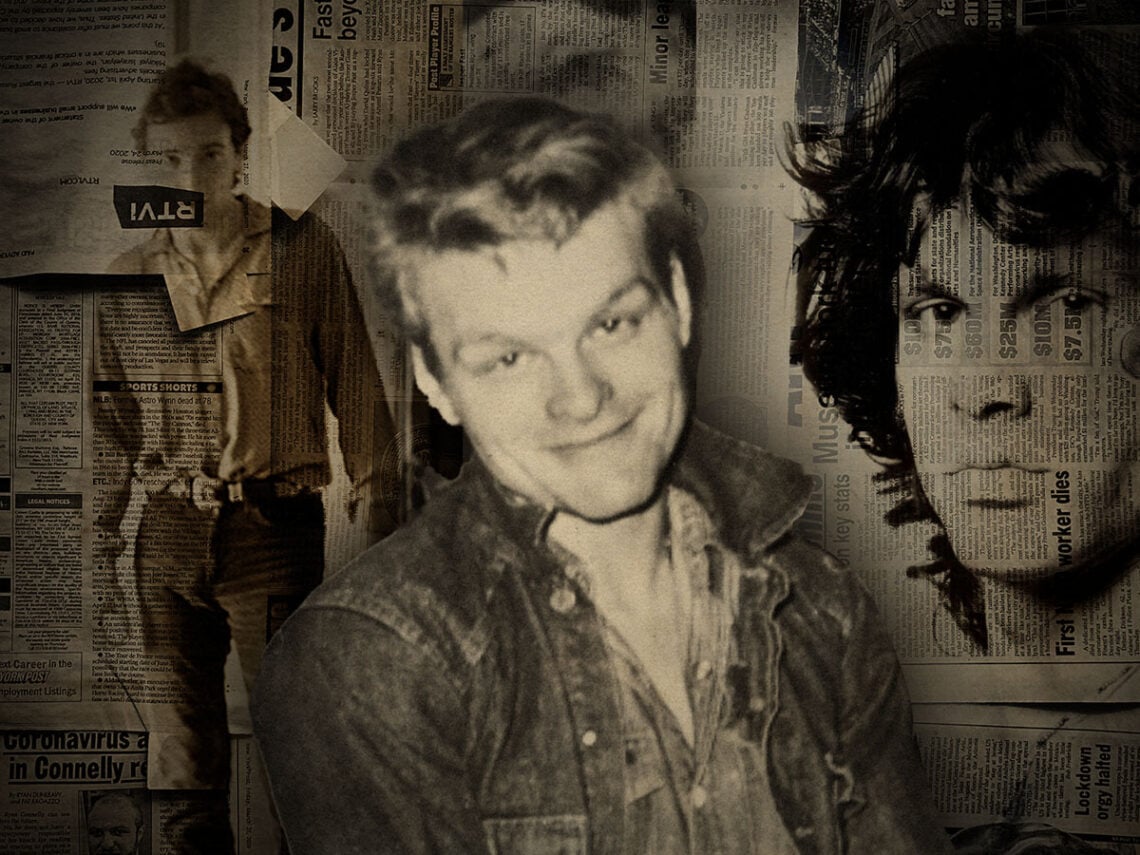
The serial killer who terrified 1950s America inspired two classic rock songs

Western culture’s macabre fascination with true crime and serial killers goes back long before Silence of the Lambs; before Ted Bundy; before the Zodiac Killer; even before Jack the Ripper.
Grouped in with outlaw gunfighters and mafia kingpins, these loathsome characters are so horrific and bewildering to the general populace that we feel weirdly obliged to celebrate them for doing something memorable, because the only thing we’re all more afraid of than being murdered is being forgotten.
Serial killer stories aren’t just the stuff of pulp fiction paperbacks and trashy true crime documentaries, either. A lot of respectable and high-minded artists have found themselves drawn to the psychology of these criminals, as well, hoping to unearth some larger ideas about the human condition by studying or inhabiting the minds of its worst people. In folk and country music, murder ballads were always part of the songwriting tradition, but that style of song started to evolve as rock and roll entered its more introspective period in the late 1960s and onward.
Songwriters who’d grown up hearing about the famous serial killer cases during their own childhoods were now in a position to reassess those stories and think about the people behind the headlines, and for kids of the 1950s, one memorable example was the infamous Charlie Starkweather, a 19-year-old who, along with his 14-year-old girlfriend, killed 11 people in a terrifying and seemingly random spree across Nebraska and Wyoming in the winter of 1957-1958.
The Starkweather case, which ended with his death on the electric chair in 1959, inspired a huge upsurge in the already growing panic around juvenile delinquency in America. It also inspired countless dime-store novels about similarly dangerous and deranged characters travelling the long, dusty roads of the Great Plains.
The Doors’ Jim Morrison, who was only a few years younger than Starkweather, certainly remembered the story, along with the similar tale of the murdering hitchhiker Billy Cook in the early ‘50s. Morrison would return to these uniquely American archetypes in his work, including a 1969 short film he wrote and starred in, called HWY: An American Pastoral.
“It started out, I had an idea for a film about a hitchhiker who becomes a mass murderer,” Morrison told the Village Voice in 1970, “you know, the kind of thing that happens every year or so. Kind of like this zodiac character, except, you know, Starkweather and Billy Cook… We went out in the desert to start shooting it; while we were out there, the film took over and just went in its own direction and became something a little different.”
As it turned out, it was a bad time to make a film about a murderous hippie in California, as Charles Manson and his followers began their spree at virtually the same time Morrison was working on HWY. Still, Jim was interested enough in the idea to revisit it again in his music, specifically in one verse from the last song he recorded with the Doors, ‘Riders on the Storm’: “There’s a killer on the road / His brain is squirmin’ like a toad / Take a long holiday / Let your children play / If you give this man a ride / Sweet family will die / Killer on the road.”
Two years later, Terrence Malick’s film Badlands used the Starkweather story as the basis for a dark drama starring Martin Sheen and Sissy Spacek. That film, in turn, would have a big impact on Bruce Springsteen, who wrote a song from Starkweather’s perspective as the title track to his 1982 album Nebraska: “I can’t say that I’m sorry / For the things that we done / At least for a little while, sir / Me and her, we had us some fun.”
Springsteen would later explain that he saw Starkweather’s apparent nihilism as a useful entry point for looking at the potential vulnerabilities of a lot of people in America, any of whom could similarly go off the deep end.
“Nebraska was about that American isolation,” Springsteen told Rolling Stone in 1984. “What happens to people when they’re alienated from their friends and their community and their government and their job. Because those are the things that keep you sane, that give meaning to life in some fashion.”
He concluded, “And if they slip away, and you start to exist in some void where the basic constraints of society are a joke, then life becomes kind of a joke. And anything can happen.”
