


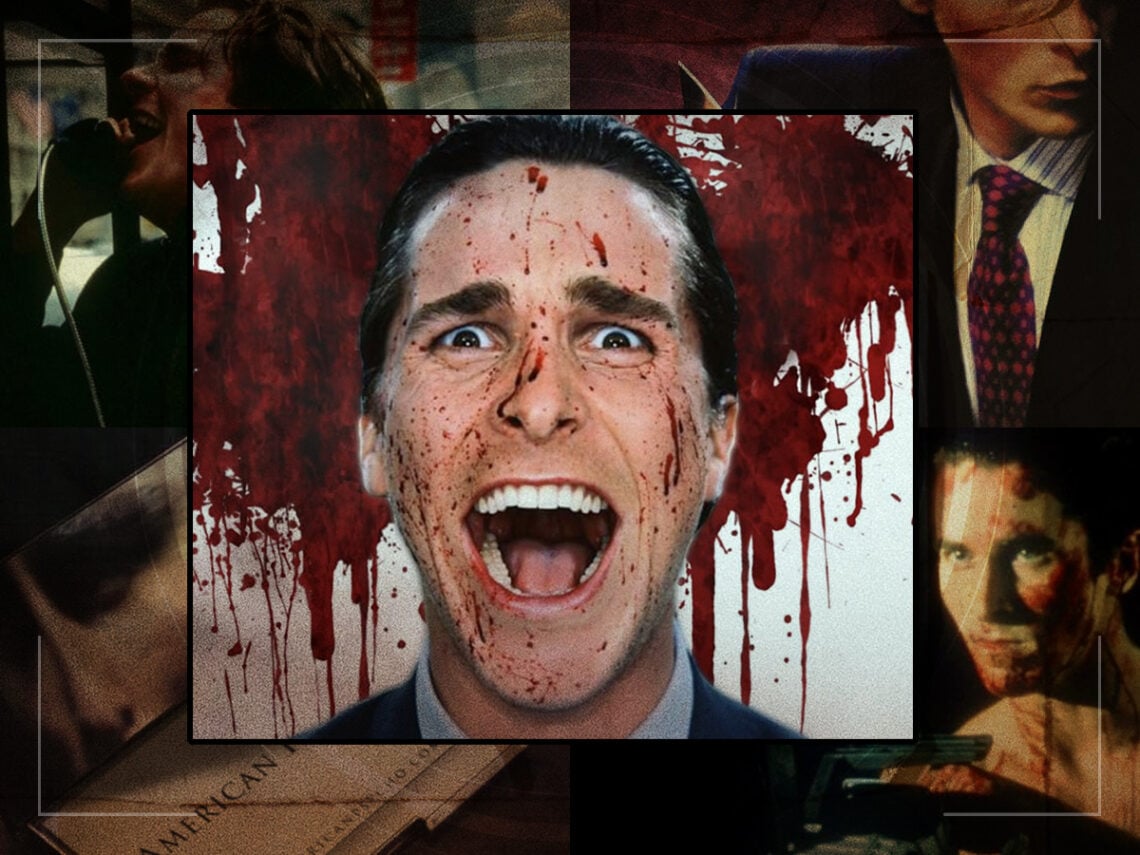
‘American Psycho’ explained: how much only happens inside Patrick Bateman’s head?

Mary Harron’s iconic satire American Psycho is now 25 years old, but its depiction of soulless businessmen and vapid capitalist culture is still as painfully relevant today. Based on Bret Easton Ellis’ book of the same name, the film has endured as a popular horror-comedy for years, not just because of Christian Bale’s scarily perfect performance as Patrick Bateman, but also because it keeps audiences guessing.
The ambiguity at the heart of American Psycho has caused fans to return to the movie time and time again, leaving people to wonder whether the murders that take place in the film actually happened. Or did Patrick imagine them all, committing the murders in the confines of his mind? As the film progresses, Patrick’s bloodlust becomes more out of control, and many moments feel incredibly far-fetched, like when he guns down a security guard for no reason.
We see him go from killing the homeless man to axing Paul Allen, keeping heads in the fridge, chasing prostitutes with a chainsaw fully naked and drenched in blood, and even seeing a message on an ATM telling him to ‘FEED ME A STRAY CAT’. Patrick seems delusional, there’s no denying, and we can tell that he is deeply preoccupied with keeping up appearances and looking after himself, as evidenced by his extensive wellness routine.
However, at the end of the film, Patrick confesses everything to his lawyer in a voicemail, who meets him the next day and laughs off the message as a joke. Even though Patrick killed several members of the police in the streets of New York, no one seems out for Patrick’s arrest, and his lawyer even admits he saw Paul Allen in London just a few days before.
So, did Patrick Bateman actually imagine everything?
Many fans have debated whether Bale’s character was merely fantasising about being a murderer, with certain scenes, like the ATM cat sequence, clearly spawned from his twisted mind. Yet, it seems likely that Patrick hallucinated the message in a state of hysterical, murderous mania while actually holding the cat, rather than imagining the whole scene.
The ambiguity of the movie serves the story’s idea that these shallow and empty businessmen, whose souls have been drained by corporate demands, can get away with anything, their identities blending into one as they all do similar jobs and dress the same. Perhaps Bateman’s lawyer mistakenly thought he met Paul Allen, who was really killed by Bateman, or maybe he never killed him at all.
Popular theories suggest that some of the events were real and others were hallucinations, but Harron and Ellis want audiences to take what they want from the narrative. Maybe Bateman killed as many people as he claimed to have done, maybe he killed none at all – we are not given a concrete answer. American Psycho highlights the surreal nature of American society, where individuality is wiped out, money and power is everything, competitiveness is endless, and people simply aren’t free to express themselves.
It’s an excellent satire that contains many unforgettable scenes, like the business card comparisons to the ‘Hip To Be Square’ sequence, but whether all of those murders happened, or whether Patrick progressed into a state of metal insanity, unable to differentiate between fantasy and reality, is up for us, the viewer, to decide.
