


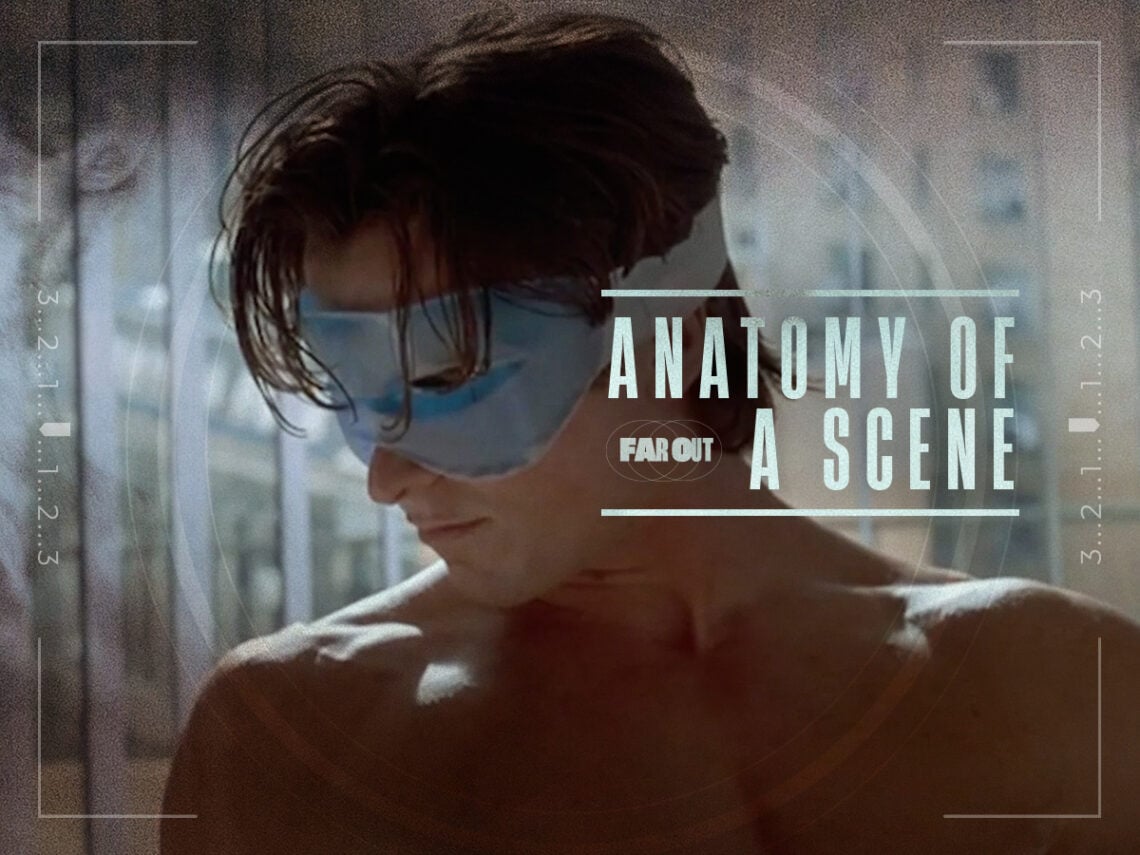
Anatomy of a Scene: Patrick Bateman’s morning routine in ‘American Psycho’

Patrick Bateman is one of the most iconic characters in cinema history, surpassing the realms of the silver screen and becoming an archetype, a symbol of everything wrong with toxic masculinity and capitalism, a meme. Christian Bale played the character perfectly, leaning into both the deliberate seriousness and the over-the-top nature of Bateman’s personality, to the point that his fellow cast mates were initially confused by his performance.
Satire runs deep through American Psycho, which was directed by Mary Harron and released in 2000, adapted from Bret Easton Ellis’ novel of the same name. Attacking the yuppie culture that infected New York during the late 20th century, Bateman is the quintessential soulless businessman, obsessed with being the best, being perfect.
Near the start of the film, Bateman is introduced through a sequence detailing his morning routine, which is incredibly meticulous, emphasising his narcissism and lack of warmth. When we enter his apartment, which features predominantly black and white decor, we can see a solitary long-backed chair, a telescope, and absolutely no clutter. Here, we’re given a peek into his mental state, which is laid out for us to inspect. It’s sterile and plain, reflecting his lack of soul, and as classical music plays over the top, we’re thrown into a bizarre world of supposed zen, when really, the atmosphere is shielding something much darker.
Why does Bateman have a telescope? He doesn’t seem the kind to stargaze; it seems as though the precise set-up of a telescope pointing out of his window suggests his preoccupation with analysing others – the people in New York that he wants to do better than, keep an eye on, or kill. As the camera pans through the building, we’re met with Bateman in his tighty-whities, his entrance into the bathroom framed by a canvas of a cowboy on a horse. Like the telescope, it might seem like a strange choice of decor for Bateman, but it presents an image of a lonesome cowboy, which is how the protagonist seems to view himself. He is trying to ride through New York alone, not on a horse but in a taxi, lacking the need for anyone else to stand by his side. He doesn’t care about his fiancé or friends; he just wants success.
Through voice-over, Bateman tells us where he lives before he tells us who he is, flaunting his wealth, as well as letting us know that he can do “1,000” stomach crunches and has the time and money to invest in a rigorous skincare and exercise routine. He uses the toilet, his face reflecting in a Les Misérables theatre poster, and once again, we’re left to question this seemingly random choice of decor. But as we later find out, Bateman loves some surprising musicians, like Huey Lewis and the News and Phil Collins, which stand in stark contrast with his cold and icy demeanour. Perhaps the only sense of relief Bateman gets is through showtunes, pop music – and killing.
You’d think that watching someone go to the toilet and showering would make them feel more human, shattering the illusion of perfection initially crafted by shots of a flawless apartment and a chiselled, statuesque body, but somehow, Bateman remains beyond human – almost a robot. We’re then shown inside his freezer, one of professional standard no less (his whole kitchen looks like the kind you’d find in a five-star restaurant), which foreshadows his later storing of body parts in it, although we initially see him keeping frozen yoghurt and eye-masks in there. Even the detail of frozen yoghurt is important here – his preoccupation with a “balanced diet and rigorous exercise routine” prevents him from picking ice-cream instead.
Bateman does his exercises before explaining his skincare routine in detail, and Harron allows the satirical tone of the movie to be firmly established. This is a character who, while looking like the perfect vision of masculinity on the outside, will go to extreme lengths to get there, going into unexpected detail about the products he uses and his methods of keeping himself looking good. He mentions his fear of looking old several times, suggesting his need for control and vitality, which he also tries to take hold of in much more drastic efforts as the film goes on.
Then, as he peels off his face-mask, as though he is revealing a deeper layer of himself to us, he says the iconic lines: “There is an idea of a Patrick Bateman. Some kind of abstraction. But there is no real me. Only an entity. Something illusory. And though I can hide my cold gaze, and you can shake my hand and feel flesh gripping yours and maybe you can even sense that our lifestyles are probably comparable, I simply am not there.”
Bateman is aware of his ability to hide his darker side, so he says, and he knows how to navigate the world to get what he wants – he is a beacon of white male privilege – but under all of that, what’s left? He can’t be quite sure, and neither can we. It’s the perfect introduction.
