


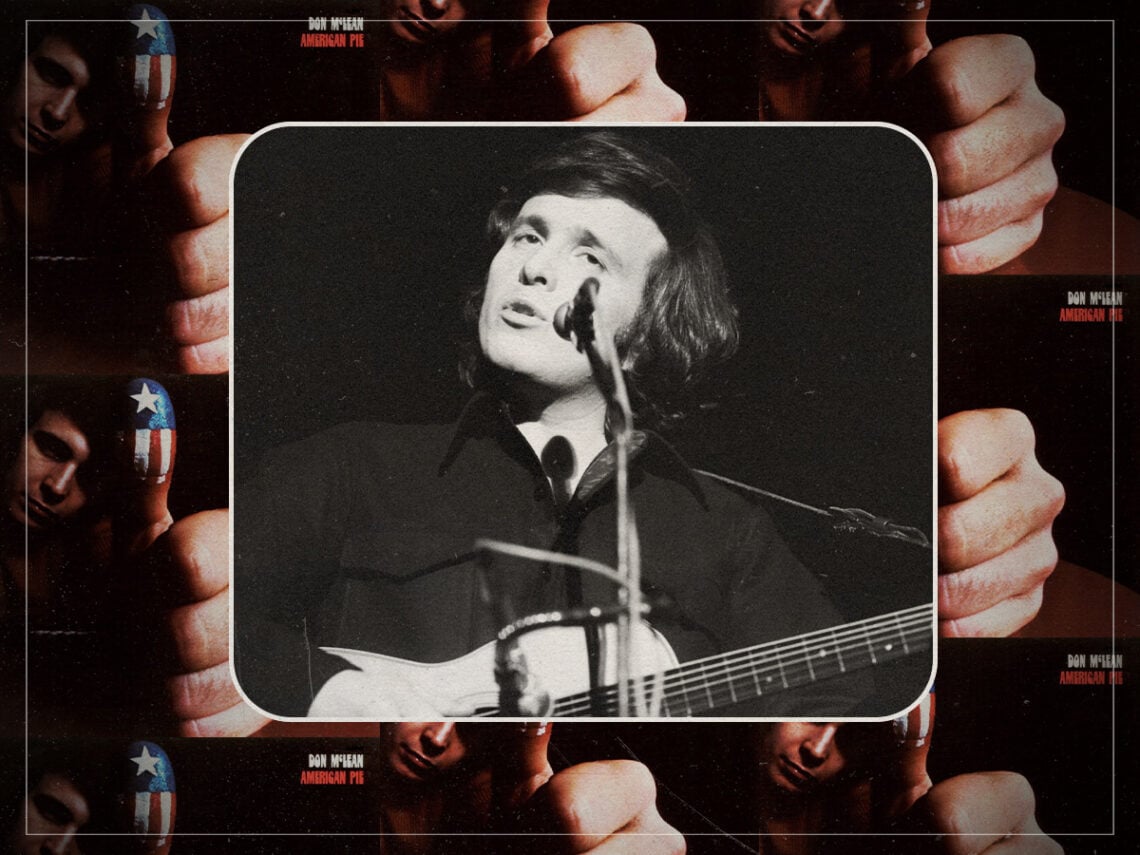
‘American Pie’: a 1971 song of three deaths and three million more

No matter how upbeat ‘American Pie’ might be on a sunny day, how raucous the drunken singalong might be at a wedding, there is always a tinge of melancholy to the track.
Don McLean’s near-nine-minute anthem is scattered with a litany of nods to Americana and pop culture, from potential barbed references to Bob Dylan (the jester in the coat borrowed from James Dean) to allusions to The Beatles in the form of the enigmatic ‘sergeant’ leading the marching band. But this fanfare and mystery shrouds a darker disposition.
At its core, it “is a death song, really,” McLean admits. Forget its G Major key, here, it is the E Minor tinge that matters. Of course, the most obvious funereal flourish in the song is the mainstay of the Day the Music Died. But beyond the obvious, McLean had plenty of other passings in mind.
“[Buddy] Holly’s plane crash in 1959 foreshadowed a series of deaths” in the life of the ‘Vincent’ singer. He told Uncut that the first arrived just two years later when his father passed away. He was only 15 at the time, and he had no bones about admitting that it “shattered” his life. Then, another two years on from that came the assassination of JFK.
Together, along with the evidently changing times, these combined to demystify the illusion of stability and order that can abide so firmly in youth. Rocked by these invasive realities, McLean could no longer be so certain of Manifest Destiny and the virtues of being prim and proper.
“I came from a conservative, white middle-class background,” McLean explained, “And all this destroyed my belief in everything I had been taught.”
“It was a summation of music, politics, life in America: everything,” he would go on to say of his masterpiece. And none of that could be divorced from death. Released in 1971, music hadn’t just been shaken by The Day the Music Died, but the tragic 27 Club had also acquired a fair few members. As for politics, assassinations were odiously commonplace. But it was general “life in America” where the reaper lingered most ominously.
The dreaded ‘draft’ was a formidable ghost that tormented the lives of many young people. At any given moment, a fair chunk of the population could be plucked up and placed in a living hell. Beyond that possibility, there was also the bloodshed that the nation was behind to contend with.
All in all, most estimates range from two to three million casualties from the Vietnam War. The wide gulf in those figures tells you a lot about the nature of the conflict and its aftermath. The whole mishuga of it all haunts ‘American Pie’, just as it haunted the nation, embodying the melancholy in the mix that no single Em could offer.
“Friends of mine who’d died in Vietnam were being brought back. There were flag-draped coffins,” McLean recalls. But what about the upbeat side of the song? What about the drunken sing-alongs millions have had to it? Well, perhaps on that front, the track personifies the catharsis of reconciling the realities of mortality, politics, and how liberating that can be.
As the producer Ed Freeman reflected in the song’s aftermath, “I was very aware of what the song was about: the loss of American innocence in the ‘60s, and the horrible, crushing death of the hippie movement,” he recalled in Uncut. Distinctly aware of the song’s brave importance, Freeman kept a close eye on its ripples after the release.
He recalls reading a letter in Life magazine two weeks on from ‘American Pie’ making waves. “It was a woman whose husband had been missing in action in Vietnam,” Freeman continued. “And she said that she used to cry and feel sorry for herself until she heard ‘American Pie’, and it made her realise how much we had all lost. ‘American Pie‘ was one of the first pieces of pop culture that acknowledged that there was a wound, that there had been a death.”
