


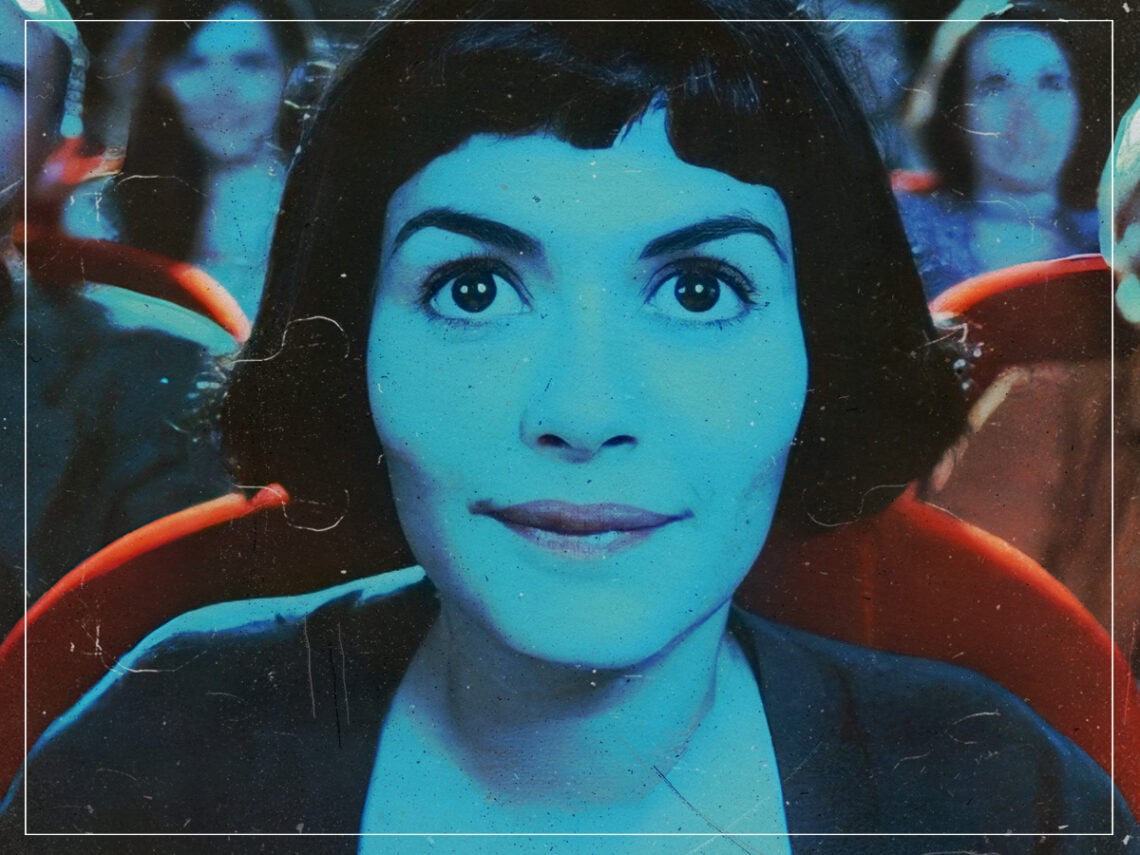
‘Amélie’: the perfect Valentine’s Day movie

When it comes to picking out the perfect Valentine’s Day movie, you want something that is romantic but not sickly, celebratory without being overly sentimental. Jean-Pierre Jeunet’s movie Amélie has often been criticised for being too optimistic, saccharine and whimsical. Yet I would argue that his tender romantic comedy is actually the perfect watch for February 14th.
Amélie redefines the cinematic concept of love, extending these concepts beyond romantic intimacy between two people to include self-love, love of our surroundings and community, love of family and friends and love of life’s everyday joys. When we are introduced to adult Amélie, her preoccupation with small habits, such as sticking her fingers in a bag of grains or skimming stones, is highlighted. These seem like arbitrary facts, but they highlight how everyone is made up of their idiosyncracies and quirks, no matter how random they seem. We learn similar facts about other characters, with Jeunet inviting audiences to appreciate the tiny parts of everyday life that make life feel a little brighter.
Working in a café with a unique cast of characters, Amélie feels alone at the start of the film, although she soon finds a sense of purpose when she successfully reunites a memory box with its owner. Thus, she embarks on a quest to do good to those around her, whether that be helping a blind man cross the street, playing cupid for some of her peers, or seeking out revenge on a nasty greengrocer who torments his mentally disabled colleague.
Amélie charts the titular character’s journey towards finding purpose and fulfilment, and these acts of love for others simultaneously become an act of love to herself. However, as she continues to make others happy, she realises that she has no one for herself, returning to an empty apartment every night. Her quest for love is playful; she seeks out Nino, an old childhood friend, by leaving clues for him around Paris.
The incorporation of a romantic love story does not signify that Amélie’s loneliness could simply be cured by a man. Rather, the movie suggests that Amélie’s quest for fulfilment started way before then – when she started going out of her way to make her friends, family and acquaintances happy. Through these acts, she realises that she is equally worthy of finding love and companionship, leading her to gather the strength to chase Nino.
Jeunet’s film celebrates the beautiful areas of Paris that Amélie calls home, and the stylish and nostalgic red, green and yellow hues that paint the screen make the movie feel warm and homely. While the romantic poets celebrated the beauty of the natural world, Jeunet adapts this idea for his city setting, lingering on stunning architecture, train stations, public gardens, bridges, café, apartments and shops with the same appreciative eye as those 18th-century writers. This is a world full of opportunity – for friendship, romance, and happiness – and you can’t help but fall in love with the city through the director’s precise lens.
Paired with an effortlessly romantic score by Yann Tiersen and a beautiful end sequence where Amélie and Nino ride on a motorcycle, looking directly into the camera as though they’re filming a home video, the movie is the perfect celebration of life and love. The movie posits that we can find a sense of love and fulfilment outside of simply finding a romantic partner – this is just one aspect of experiencing love. Love can mean appreciating our surroundings, finding the good in others, standing up for others, building friendships, prioritising your own sense of happiness, and enjoying the smallest things life has to offer.
Of course, for those with a naturally nihilistic sensibility, it can be easy to write off such a movie as eye-roll-worthy and unrealistic. Yet, the whimsical nature of the movie demands us to suspend our disbelief – this is a world where a pig figurine can come to life and turn off Amélie’s bedside lamp – and revel in the hopefulness that there is still pure and inherent good in the world. We are encouraged to acknowledge that life has plenty of love on offer for those willing to receive it; you just have to lean into a sense of hopefulness rather than give up.
At the same time, the film doesn’t hide aspects of negativity, loneliness, and struggle, which makes it feel less saccharine. Amélie is a figure of perseverance, inspiring us to go after what we want, asking us to consider what we want out of life, and demonstrating how love can subsequently show up in many different ways.
