


Does Óliver Laxe even understand ‘Sirāt’?

I’ll say this once, but I can’t say it loud enough: if you haven’t seen Sirāt, leave, go watch it, then come back. In recent history, I can’t think of another film where going in blind feels quite as crucial to the experience because its greatness lies in the shock factor: its impact in being completely unexpected.
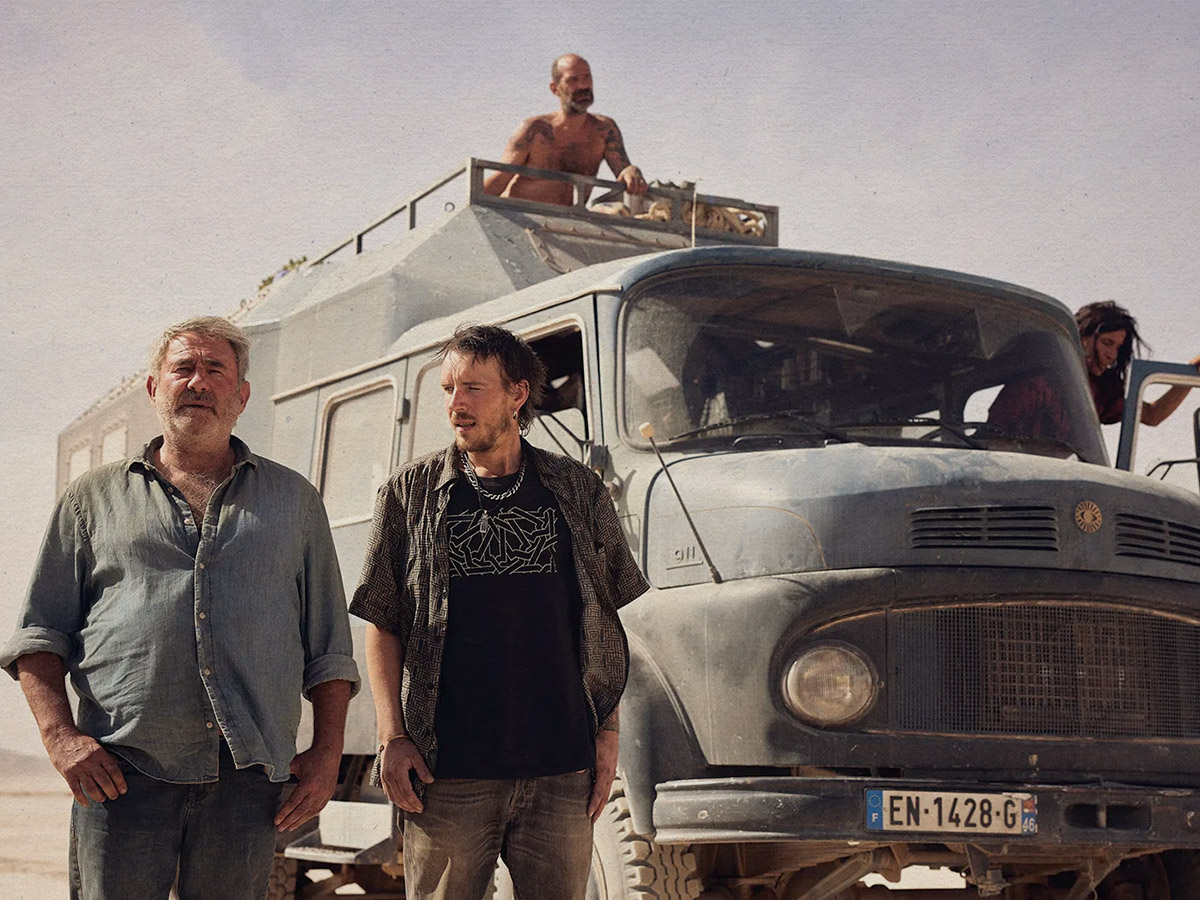
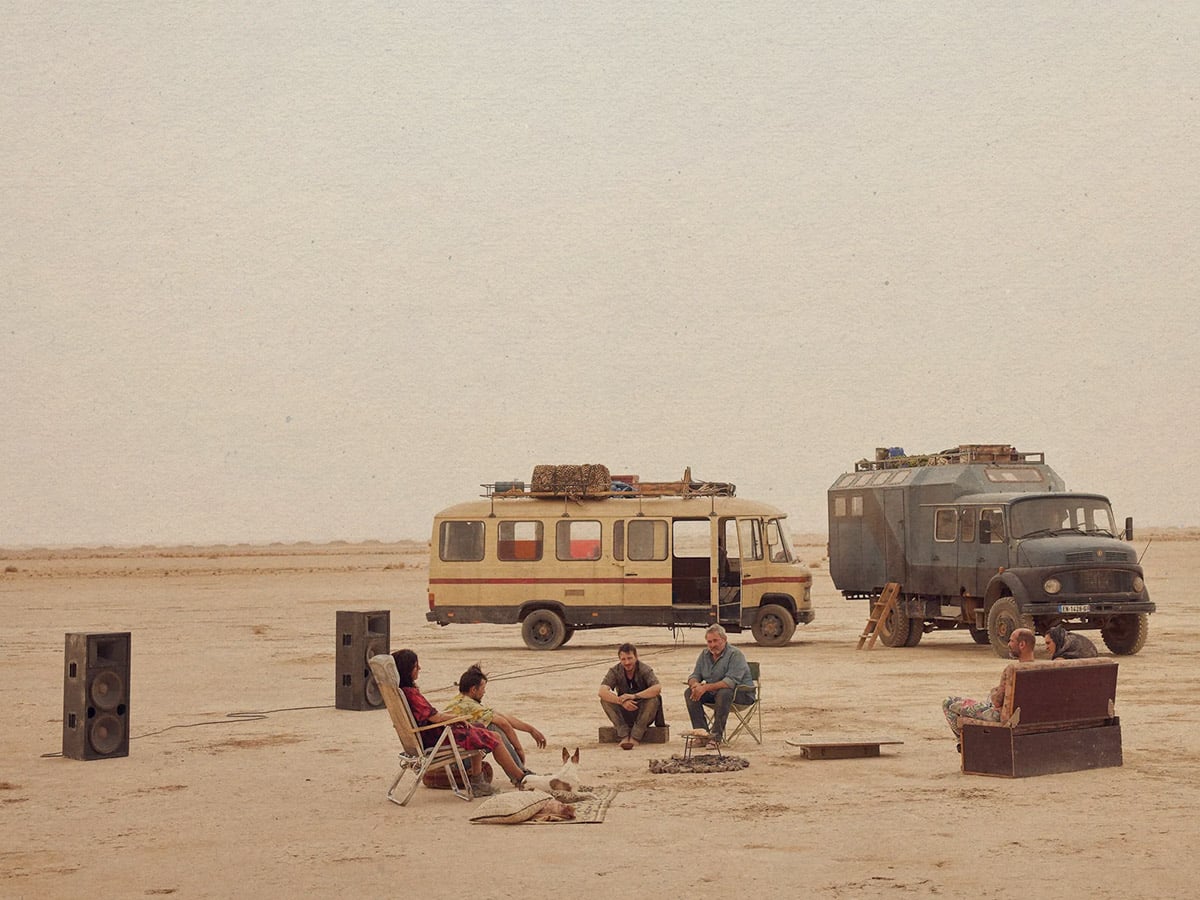
In the trailer, the audience is presented with what appears to be a simple enough film about ravers in the desert while war breaks out. All of it is vague; you’re not given a location beyond the loose mention of Morocco, there’s no explanation of the cause of the conflict, and all you have is the landscape, the music, and the faux-plot of a father and his son, Luis and Esteban, looking for their missing daughter and sister, connecting with a group of ravers to travel from one party to the next, and for half of the film, that’s exactly what you get.
That would be a good enough film in itself, but then Esteban dies, and the swiftness of the child’s death as the car suddenly and randomly rolls off the side of the cliff makes it one of the more jarring deaths I’ve maybe ever seen in a movie, partly because Laxe doesn’t even give you a moment to process as the narrative just keeps on moving.
It keeps moving to what you think could be a beautiful scene as Luis and the ravers try to get into some somatic therapy, setting up some speakers, drinking some psychoactive tea, and starting to dance, but Laxe tricks you again, keeping the focus on Luis as his emotions bubble to the top. And then Grace blows up, launching into a completely breathless, panic-inducing, shatteringly loud, then terrifyingly quiet finale quarter that leaves the cinema crowd muttering quiet little prayers either begging the characters to survive or even just pleading for the sequence to be over.
Trapping the viewer in a minefield of jump scares where you never know when the next horrific boom will come, the crowd are curled into their seats with hearts almost audibly pounding. However, does that make a movie good? Does the high-intensity stress of Sirāt make it a job well done? Does it have anything to say beyond that?
Does Sirāt actually have anything to say?
While Sirāt is a film that benefits from going in blind, it also benefits from taking a moment afterwards to sit and think about it.
Under the booms, it seems as though there’s an interesting point being made. Luis, Esteban, and the whole group of ravers they fall into are white Europeans, all on a jaunt to Morocco to party, or find someone there to party. As the first event gets shut down by the army, they all more than happily flee off into the desert, ignoring the warnings of an escalating conflict. In the final shot, where the surviving party stands out amongst the masses, it seems like the message is being hammered home: here we have privileged Europeans playing carelessly amidst a war.
In that way, it seems like Sirāt is a film about colonial ignorance, but did anyone tell Laxe that? In interviews, it doesn’t even seem to cross the director’s mind that the film is set against a backdrop of African conflict.
Does Óliver Laxe understand what Sirāt actually says?
Sirāt’s director sees the film purely as a kind of spiritual metaphor. If Laxe believes it has any message, it’s simply that humans should party more, which is exactly the mindset that gets his characters killed.
He said that “the script of Sirāt was written on a dance floor, on a rave…. When you are dancing on a dance floor, you are connected with your strength, but also with your vulnerability.” In his eyes, he’s more aligned with the ravers than anything else, as basically, any conversation to do with this film comes down to the hedonism of a party.
Despite directing the project, he seems to completely ignore the fact that his characters die on an active minefield during a war, and instead, he talks of the film as being about “preparing yourself to die with dignity.” Rather than seeing the brutality of them being blown to smithereens, he sees their deaths as glorious, spiritual ones, completely buying into the same kind of woo-woo thinking that fuels the pack of partiers.
“I’ve been interested in psychotherapy with LSD and ayahuasca for a long time,” he told Interview, harking back to the fact that his characters decide the best way to handle intense grief and fear is to do more drugs. Laxe’s reading of the film gets even worse when he begins talking about how he believes it has what he calls “white sorcery”, or “baraka”, talking about the anxiety-inducing movie as if it’s magical and blessed and not what it really is, which is basically a war film.
As for the setting and why the director chose Morocco, once again, he has nothing to add. “Morocco was, for me, a mirror,” he said, adding, “The landscape is something that really penetrates you, and changes you. The mountains, the desert, it’s really a place for initiation.”
Laxe seems to truly only see Sirāt as an extended dance sequence in which the intense deaths are merely another twirl. He’s always too busy talking about the community of the dance floor, or the power of fear facing, or how “this film is not only a film, it is a ceremony.” He is too busy being committed to his own role as a grand artist to seem to actually see the reality of the art he’s made, and in an ironic way, it means that life and art imitate one another. Instead of dying in the desert, Laxe’s ignorance lands him at Cannes.
Yet still, no one can deny the visceral and powerful experience of watching Sirāt. It’s an immense project, but, if it’s even possible, it feels as though the film has taken on meaning that its maker doesn’t see, only making the question of whether Sirāt is good or merely shocking even more complex.
